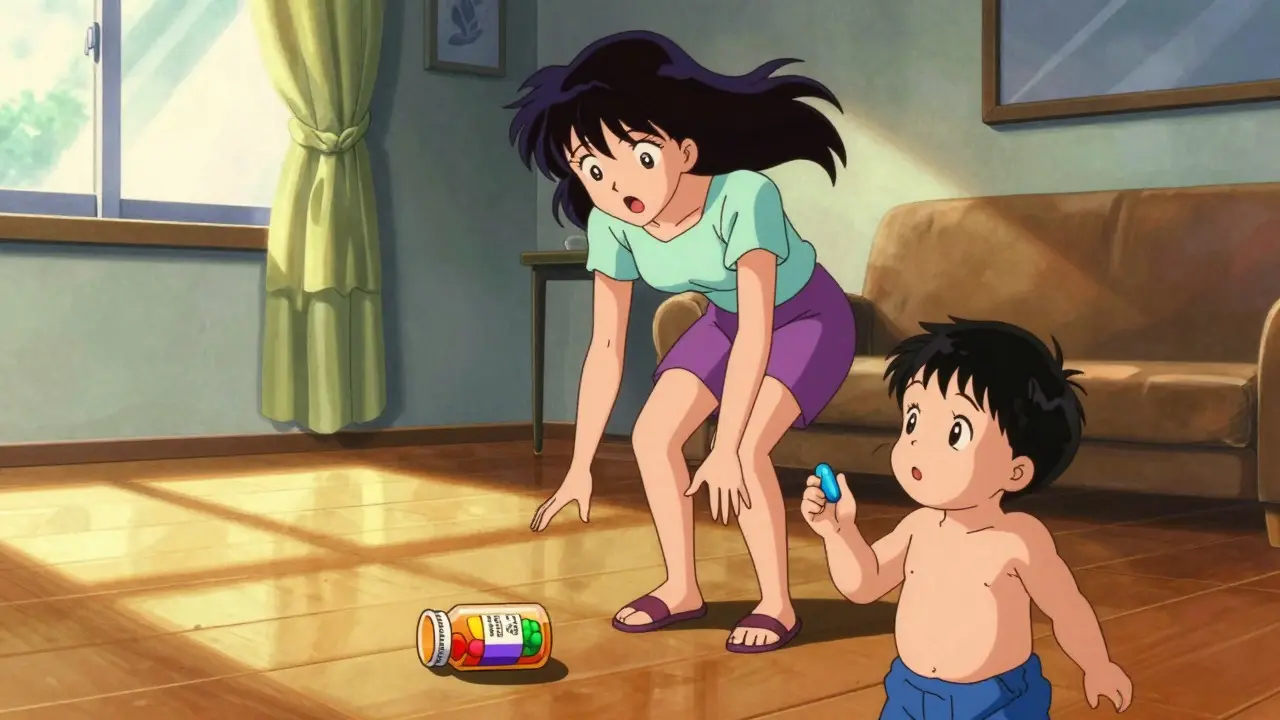
It happens in a split second. You turn your back for three seconds, and you see it: an empty bottle on the floor and your toddler holding a colorful tablet. Panic sets in instantly. Your heart races, and your mind starts screaming questions. What did they take? How much? Is it fatal?
This is one of the most terrifying scenarios a parent can face. But here is the good news: if you act correctly and quickly, the outcome is usually positive. Child medication poisoning is a serious risk, but it is manageable with the right knowledge. According to data from the American Association of Poison Control Centers (AAPCC), children aged five and under account for nearly 40% of all human exposure cases reported annually. That’s hundreds of thousands of incidents where parents had to make quick decisions.
The key isn’t guessing; it’s following a proven protocol. This guide breaks down exactly what to do, what not to do, and how to prepare your home so this nightmare never happens.
Immediate Steps: The First Five Minutes Matter
When you discover your child has swallowed medication, time is your most valuable resource. Don’t freeze. Follow these steps in order.
- Remove remaining pills or liquid: Gently check your child’s mouth. Use your fingers to remove any visible tablets or residue. Do not stick your hand too deep, as this might trigger gagging or cause them to swallow more.
- Call Poison Control immediately: In the United States, dial 800-222-1222. This number connects you to the Poison Control Center, which provides 24/7 expert medical advice for poisoning emergencies. They are available every hour of every day. If you are outside the US, look up your national equivalent (for example, 13 11 26 in Australia).
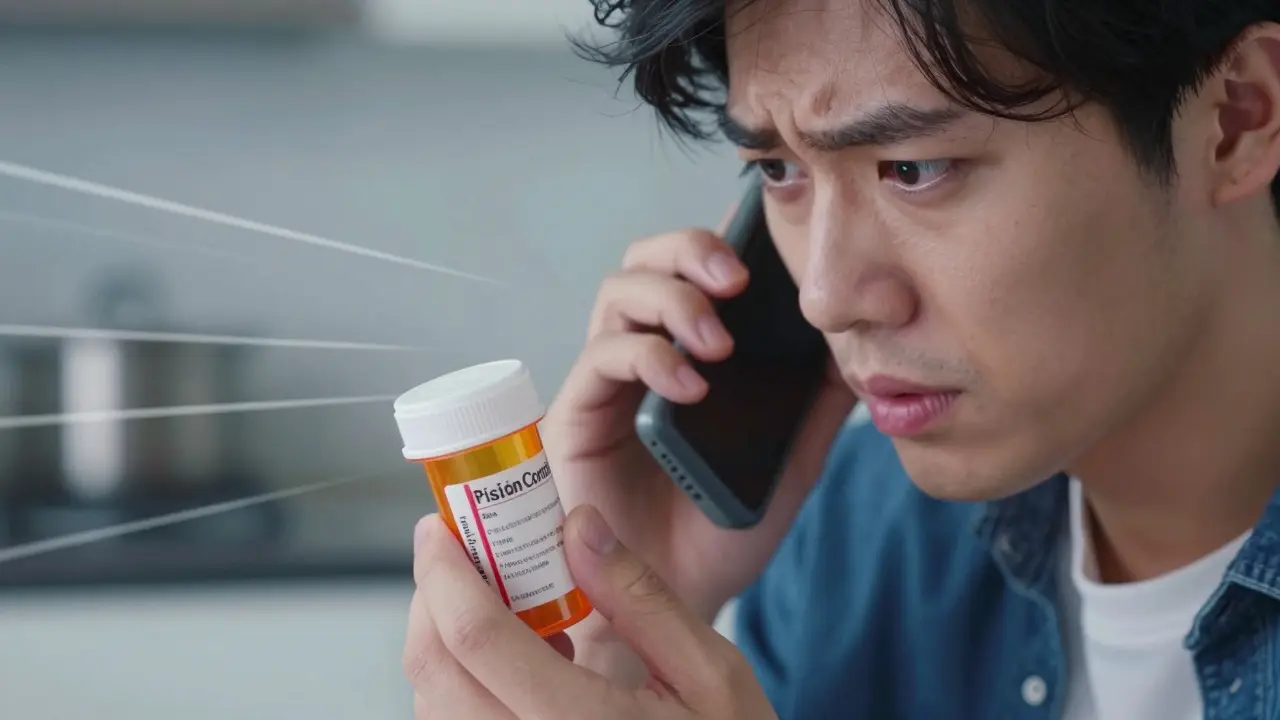
- Gather information: While waiting for the call to connect, grab the medication container. The specialist will need to know the exact name of the drug, the strength (dosage), and the time of ingestion. If you don’t have the bottle, try to recall what it was. Even a partial description helps.
- Do NOT induce vomiting: Unless explicitly told to do so by the poison specialist, keep your child upright and calm. Old advice about using syrup of ipecac is outdated and dangerous. It hasn’t been recommended since 2004 because it rarely changes outcomes and can cause aspiration pneumonia.
Why call Poison Control before rushing to the hospital? Because specialists can triage the situation. For many minor ingestions, they can advise you to monitor the child at home, saving you a stressful trip to the emergency room. For serious cases, they will tell you exactly what to watch for while you head to the nearest facility.
Symptoms to Watch For
Not all medication ingestions cause immediate symptoms. Some drugs, like acetaminophen (Tylenol), can seem harmless at first but cause liver damage hours later. Others, like heart medications, can act within minutes. You need to know the red flags.
| Symptom | Severity Level | Action Required |
|---|---|---|
| Drooling excessively | Moderate | Call Poison Control; monitor closely |
| Lethargy or unusual sleepiness | High | Seek immediate medical attention |
| Seizures | Critical | Call 911/emergency services immediately |
| Difficulty breathing or stopping breathing | Critical | Call 911/emergency services immediately |
| Unconsciousness | Critical | Call 911/emergency services immediately |
| Vomiting persistently | Moderate | Call Poison Control; seek evaluation if frequent |
If your child shows signs of respiratory distress, loss of consciousness, or seizures, skip Poison Control and call emergency services (911 in the US) directly. These are life-threatening situations that require advanced life support. While waiting for paramedics, place your child in the recovery position (on their side) to prevent choking if they vomit.
Common Dangerous Medications
Not all pills are created equal. Some household medicines are far more toxic to small bodies than others. Understanding which drugs pose the highest risk can help you prioritize your response.
- Pain Relievers (Acetaminophen/Ibuprofen): Acetaminophen is particularly tricky because it doesn’t always cause immediate symptoms. However, an overdose can lead to severe liver failure days later. Ibuprofen can cause stomach bleeding and kidney issues.
- Heart Medications: Beta-blockers and calcium channel blockers can slow a child’s heart rate dangerously low within 30 minutes. Blood pressure can drop critically fast. These require hospital monitoring.
- Opioids: Prescription painkillers like codeine or oxycodone can suppress breathing. This is why naloxone (Narcan) is often used in hospitals to reverse opioid effects.
- Blood Pressure Pills: Drugs like amlodipine can cause extreme drowsiness and low blood pressure. Even a single adult-sized pill can be significant for a toddler.
- Antidepressants: Tricyclic antidepressants are highly toxic and can affect heart rhythm. SSRIs are generally less dangerous but still require professional assessment.
If you suspect your child took any of these, treat it as a high-priority emergency. Have the bottle ready when you call Poison Control.
Hospital Treatment Protocols
If Poison Control advises you to go to the hospital, here is what typically happens. Doctors follow standardized algorithms based on what was ingested and how long ago.
First, they stabilize the patient. This means checking vital signs-heart rate, blood pressure, oxygen levels-and ensuring the airway is clear. Monitoring usually continues for at least 12 hours for unknown ingestions. For specific drugs, observation periods vary.
Treatments may include:
- Activated Charcoal: Given orally within one hour of ingestion, this substance binds to the drug in the stomach, preventing absorption into the bloodstream. It looks like black sludge and tastes terrible, but it works well for many pharmaceuticals.
- Antidotes: Specific drugs have specific antidotes. For example, naloxone reverses opioids, and sodium bicarbonate treats certain antidepressant overdoses.
- Intravenous Fluids: Used to maintain hydration and support kidney function, especially if there is a risk of dehydration from vomiting.
- Blood Glucose Monitoring: Critical for ingestions involving diabetes medications (sulfonylureas), which can cause dangerously low blood sugar.
Most children recover fully with timely intervention. The goal of hospital care is supportive treatment while the body metabolizes and eliminates the toxin.
Prevention: Locking It Down
The best way to handle medication poisoning is to prevent it entirely. Statistics show that homes using locked storage report 85% fewer ingestion incidents. Here is how to childproof your medicine cabinet effectively.
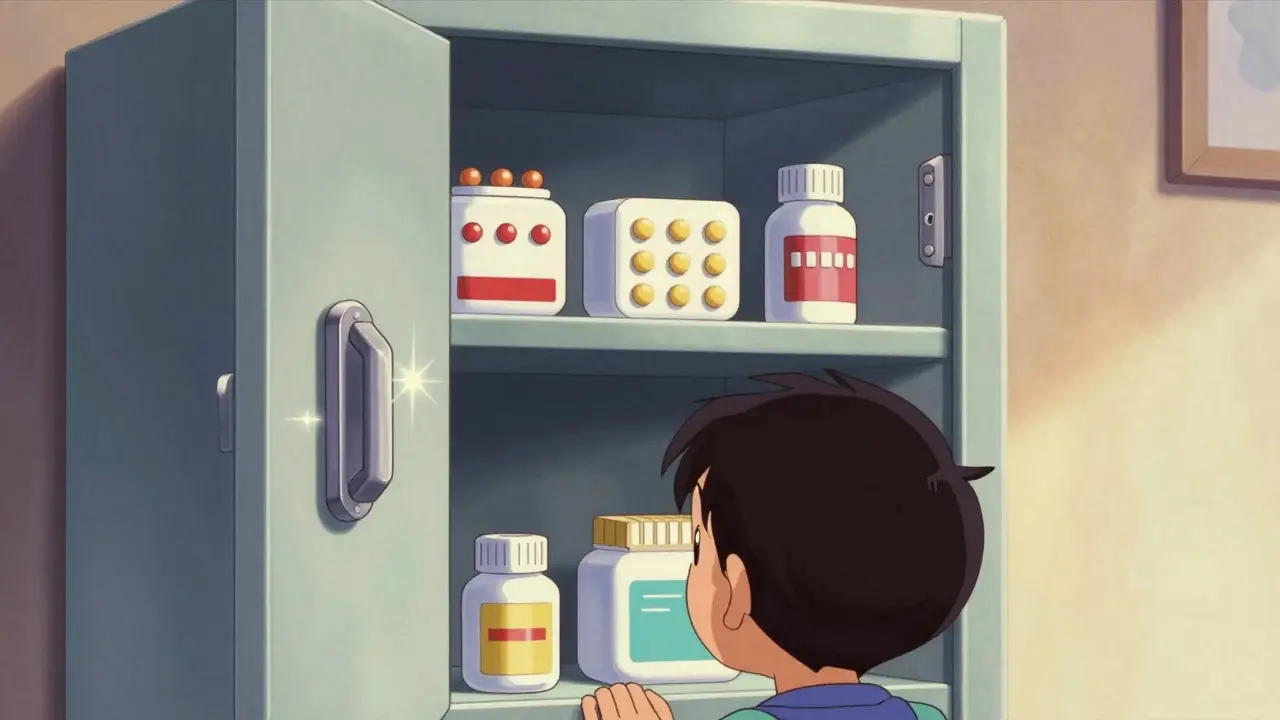
- Use High Storage: Keep all medications out of sight and reach. Top shelves in closed cabinets are ideal. Don’t rely on "child-resistant" caps alone; kids are smarter and stronger than we think, and older siblings can open them easily.
- Install Latches: Add magnetic latches or knob covers to kitchen and bathroom cabinets. A $10 latch can save a life.
- Check Liquid Medications: Ensure all liquid meds have flow restrictors. These devices limit how much liquid can be poured out at once, reducing the volume a child can ingest accidentally.
- Never Say "Candy": Avoid calling medicine "candy" or "treats." This confuses children and makes them more likely to seek out pills when unsupervised. Call it by its proper name: medicine.
- Smart Technology: Consider smart pill bottles or lockboxes with fingerprint access. Services like Hero Health offer subscription-based smart dispensers that reduce accidental access by over 70% in studies.
Also, clean up after every dose. Don’t leave pills on countertops or nightstands. If you’re taking your own medication, do it in a secure location, not at the coffee table where your toddler plays.
Myths vs. Facts
Misinformation spreads quickly during emergencies. Let’s clear up some common myths that could hurt your child.
Myth: I should give milk to neutralize the drug.
Fact: Milk does not neutralize most medications. In fact, it might delay the effectiveness of activated charcoal if given before hospital arrival. Only give fluids if instructed by Poison Control.
Myth: Syrup of ipecac is safe to use at home.
Fact: Medical experts stopped recommending ipecac in 2004. It causes prolonged vomiting, which increases the risk of inhaling vomit into the lungs (aspiration). It also interferes with the absorption of activated charcoal later.
Myth: If my child seems fine, it’s okay.
Fact: Many drugs have delayed effects. Acetaminophen toxicity, for instance, may show no symptoms for 24 hours. Always consult a professional even if your child appears normal initially.
Myth: Child-proof caps are foolproof.
Fact: They are only resistant, not proof. Studies show that children can open standard child-resistant caps within minutes if motivated. Never leave opened bottles within reach.
Preparing for Emergencies
Hope for the best, but prepare for the worst. Having a plan reduces panic when seconds count.
- Save the Number: Save 800-222-1222 in your phone contacts as "Poison Control." You won’t remember digits when you’re stressed.
- Download the App: The AAPCC offers a mobile app and web tool (webPOISONCONTROL) that uses AI-assisted triage. It’s free and validated by medical professionals.
- Keep a List: Maintain a list of all medications in your house, including dosages and who takes them. Keep this list near your phone or in your wallet.
- Educate Siblings: Teach older children that medicine is not a toy. Explain that they must ask an adult before touching any pills.
Remember, you are not alone. Poison Control centers handle millions of calls a year. Their specialists are calm, knowledgeable, and ready to help. By knowing the steps ahead of time, you empower yourself to act confidently in a crisis.
What is the first thing to do if a child swallows medication?
The first step is to remove any remaining pills or liquid from the child's mouth gently. Then, immediately call Poison Control at 800-222-1222 (in the US) or your local emergency number. Have the medication container ready to provide details about the drug and dosage.
Should I induce vomiting if my child eats a pill?
No, do not induce vomiting unless explicitly instructed by a medical professional. Inducing vomiting can cause aspiration pneumonia and is no longer recommended by medical authorities since 2004. Keep the child upright and wait for guidance from Poison Control.
How long does it take for medication poisoning symptoms to appear?
Symptoms can appear within minutes for drugs like heart medications or opioids. However, other drugs like acetaminophen may show no symptoms for 24 hours or more despite causing internal damage. Always seek professional advice regardless of immediate symptoms.
Is it safe to give milk to a child who swallowed medicine?
Milk does not neutralize most medications and may interfere with later treatments like activated charcoal. Only give fluids if directed by Poison Control or a doctor. Generally, keeping the child NPO (nothing by mouth) is safer until evaluated.
What are the most dangerous medications for toddlers?
The most dangerous medications include pain relievers (especially acetaminophen), heart medications (beta-blockers, calcium channel blockers), opioids, blood pressure pills, and tricyclic antidepressants. These can cause rapid and severe health complications even in small doses.