
Pharmacy Consolidation Risk & Savings Calculator
Your Situation
Enter details about your current medication habits.
Analysis Results
Use the tool to see your specific risk profile.
Imagine picking up a new prescription from your doctor, only to have it filled at a different pharmacy than the one where you get your daily blood pressure meds. It sounds harmless, right? You just want the convenience or maybe a lower price. But here is the hard truth: that split-second decision could put your health at serious risk. When you spread your prescriptions across multiple pharmacies, you are essentially blinding the experts who are supposed to keep you safe.
We are living in an era of polypharmacy, a term that simply means taking multiple medications at once. According to research from the University of Southern California, about 45% of people take at least one prescription drug, and 15% of adults juggle five or more. That is a lot of chemistry happening inside your body. The safest way to manage this complexity isn't by shopping around for the cheapest pill-it is by consolidating your care with one pharmacy. This single change acts as a central hub for your health data, catching dangerous errors before they reach your bloodstream.
The Hidden Danger of Split Prescriptions
Why does using two or three pharmacies matter so much? Think of your pharmacist as a traffic controller for your medications. Their job is to ensure that no two drugs crash into each other. When you use multiple pharmacies, that traffic controller loses visibility. Each pharmacy only sees the cars on their own road, not the entire highway.
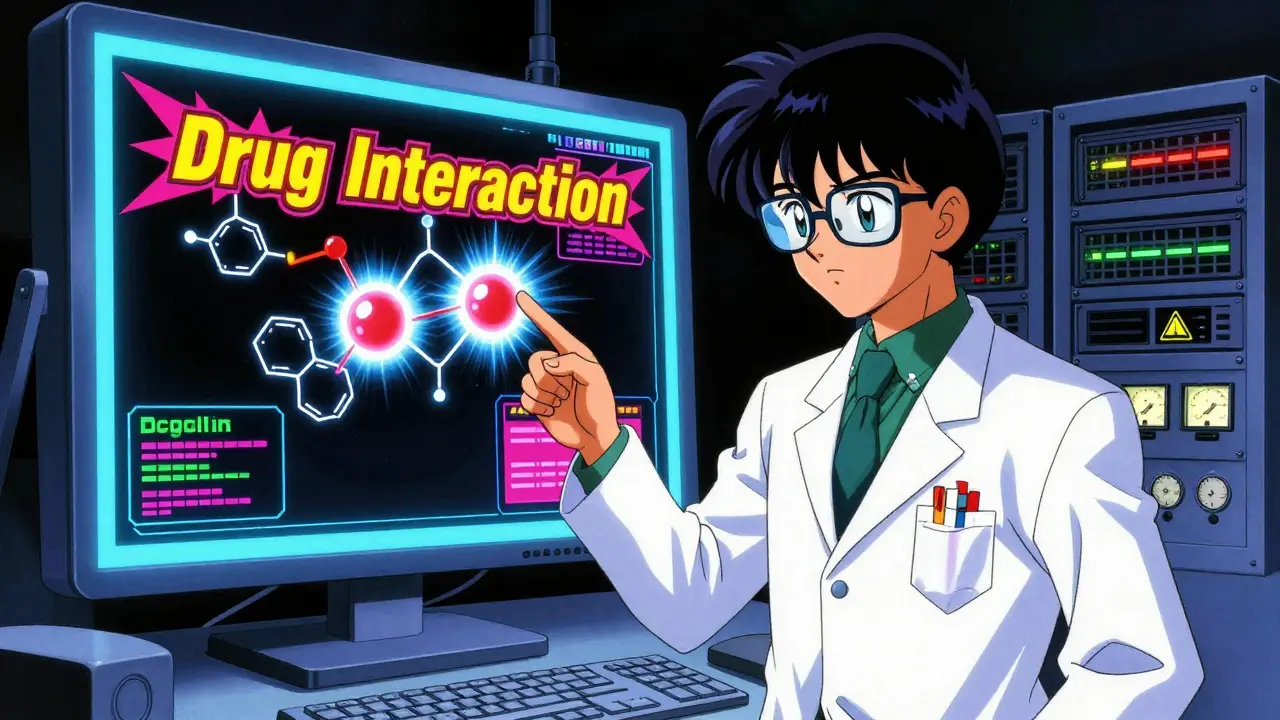
A pivotal study published in the Journal of Managed Care & Specialty Pharmacy (PMC4115075) by Kanaan et al. in 2014 revealed a startling statistic. Patients who used multiple pharmacies concurrently faced a 34% higher risk of experiencing potential drug-drug interactions compared to those who stuck to a single provider. To put that in perspective, consider the combination of warfarin (a common blood thinner) and NSAIDs (like ibuprofen). This specific interaction can increase the risk of serious gastrointestinal bleeding five-fold. If both prescriptions are handled by the same pharmacist, the alert system flags this danger immediately. If they are split between two locations, that warning often goes unseen.
What exactly is a drug-drug interaction?
A drug-drug interaction occurs when one medication changes the activity of another drug when both are taken together. This can make a drug less effective, cause toxic side effects, or create dangerous new reactions in the body. For example, mixing certain antidepressants can lead to serotonin syndrome, a potentially life-threatening condition.
How Pharmacists Protect You
Pharmacists are not just pill counters; they are medication experts. When you consolidate your prescriptions, you give them the full picture. They utilize sophisticated pharmacy management software that screens your complete history against over 10,000 potential interactions in real-time. However, there is a catch known as "alert fatigue." Community pharmacists report overriding about 80% of these alerts because many are false positives or low-risk warnings. This happens partly because incomplete histories from multiple pharmacies generate noise, making it harder to spot the true dangers.
By using one pharmacy, you reduce this noise. Dr. Amit Kakar, Pharm.D., emphasizes that monitoring all prescriptions prevents duplicate medication and ensures patients take their drugs on time. When a pharmacist knows your full regimen, they can distinguish between a critical warning and a routine alert. This leads to fewer overrides and higher safety standards. You also benefit from personalized support. Instead of being a random customer number at three different stores, you build a relationship with a specific team who understands your health conditions, allergies, and lifestyle.
The Problem of Therapy Duplication
One of the most common errors in fragmented care is therapy duplication. This happens when you accidentally end up taking two different medications that contain the same active ingredient. For instance, you might be prescribed a brand-name pain reliever by one doctor and buy an over-the-counter generic version at another store, unaware they are chemically identical. Taking both can lead to an overdose.
Data from the Diabetes Care Community shows that therapy duplication occurs in approximately 7% of patients using multiple pharmacies. In contrast, among single-pharmacy users, this error rate drops to a negligible 0.3%. This is virtually eliminated because the pharmacist sees every refill request. If a new prescription matches an existing one, they will call your doctor to clarify rather than dispensing a duplicate. This is especially critical for patients managing chronic conditions like diabetes, where complex regimens are the norm and small errors can have severe, immediate consequences.
Medication Synchronization: A Game Changer
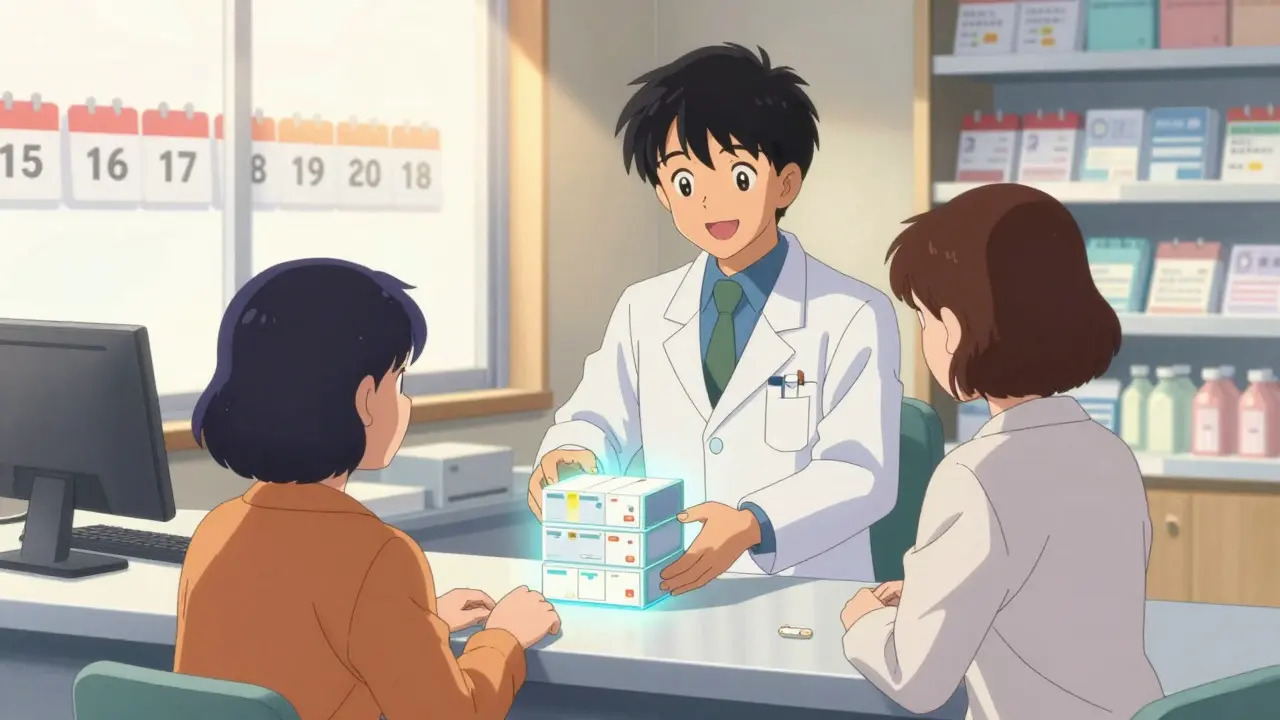
Sticking to one pharmacy unlocks a powerful tool called medication synchronization, or "med sync." This program coordinates all your prescription refills to occur on a single monthly date. It transforms the chaotic process of running to the pharmacy every few days into a simple, predictable routine.
Here is how the med sync process typically works:
- Enrollment: You sign up for the program with your chosen pharmacy.
- Comprehensive Review: The pharmacist reviews all your current medications and schedules.
- Strategic Short Fills: They issue smaller quantities of some drugs to align all refill dates to the same day.
- Consistent Pickup: You pick up all your medications once a month.
Leading chains like CVS and Walgreens have implemented proprietary versions of this, achieving 85-90% adherence rates according to internal metrics cited by SingleCare. This consistency reduces missed doses. Avalon Pharmacy’s patient survey found that 41% of patients using multiple pharmacies miss at least one dose per month due to confusion. Med sync eliminates that confusion. You know exactly when to go, and you get everything in one trip.
The Cost vs. Safety Trade-off
Let's address the elephant in the room: money. Many people use multiple pharmacies to shop for the lowest price. SingleCare’s 2023 analysis found that 63% of patients do this to save $150-$300 annually. It makes sense to want to save money, but we have to look at the bigger financial picture.
| Factor | Multiple Pharmacies | Single Pharmacy |
|---|---|---|
| Annual Medication Savings | $150 - $300 | $0 - $100 (potential loss) |
| Risk of Adverse Drug Events | 27% Higher | Baseline Risk |
| Avg. Cost of Preventable Hospitalization | $8,750 per event | Avoided |
| Therapy Duplication Rate | 7% | 0.3% |
The Agency for Healthcare Research and Quality (AHRQ) estimates that preventable adverse drug events cost the system $29 billion annually. More personally, each prevented adverse drug event saves an average of $8,750 in hospital costs. Is saving $200 on pills worth risking an $8,750 hospital stay? For most people, the answer is no. Furthermore, many single pharmacies offer discount programs or coupons that can narrow the price gap significantly. Ask your pharmacist about cost-saving options within their network before switching stores.
How to Make the Switch
Transitioning to one pharmacy takes a little effort upfront, but it pays off quickly. Here is a step-by-step guide to consolidating your care:
- Choose Your Pharmacy: Pick a location that is convenient and offers services like med sync. Local independent pharmacies often provide more personalized attention, while large chains may have robust tech integration.
- Gather Your Information: Bring a list of all your current medications, including dosages and prescribing doctors. Include over-the-counter drugs and supplements.
- Transfer Prescriptions: Contact your old pharmacies to transfer your active scripts. This usually takes 2-5 business days according to the National Community Pharmacists Association.
- Schedule a Consultation: Book a comprehensive medication review. This takes 30-45 minutes but is crucial for identifying any hidden interactions or duplicates.
- Align Your Schedule: Work with your pharmacist to set up med sync. They may issue short fills initially to get all your dates aligned.
Expect the full synchronization to take 2-4 weeks. During this time, maintain open communication with your healthcare providers. Let them know you are consolidating your pharmacy care so they can update their records. This ensures that future prescriptions are automatically routed to your primary pharmacy.
The Future of Medication Safety
The healthcare industry is recognizing the value of single-pharmacy coordination. Regulatory pressures are increasing, with the 2023 Pharmacy Quality Alliance measures now including "comprehensive medication review completion" as a key performance indicator. This incentivizes pharmacies to build deeper relationships with patients. Additionally, electronic health record integrations from companies like Epic Systems and Cerner are improving shared medication history features, though they don't yet eliminate the risks of multi-pharmacy use entirely.
Looking ahead, AI-assisted tools are on the horizon. The USC Polypharmacy Research Group is developing decision support tools expected to launch in 2025 that will analyze medication combinations for therapeutic benefits and side effects with even greater precision. However, technology alone cannot replace the human element. The trust and continuity you build with a dedicated pharmacy team remain the strongest defense against medication errors.
Is it safe to switch pharmacies frequently?
Frequent switching is generally not recommended for safety reasons. While sequential use (switching after finishing a course) showed slightly lower interaction rates in some studies, concurrent use of multiple pharmacies significantly increases risk. Stability allows your pharmacist to monitor trends and adjust care proactively.
What if my insurance requires me to use a specific pharmacy?
If your insurance plan restricts you to certain networks, choose one pharmacy within that network and stick to it. You can still consolidate your care even if you don't have unlimited choice. The goal is to avoid splitting prescriptions between multiple providers regardless of the network size.
Can I still buy over-the-counter meds elsewhere?
Yes, but inform your primary pharmacist about any OTC medications or supplements you take. These can also interact with prescription drugs. Keeping your main pharmacy updated on your full intake ensures they can screen for these interactions during your regular reviews.
How long does it take to transfer prescriptions?
Transferring prescriptions typically takes 2-5 business days. Controlled substances may require a new prescription from your doctor due to legal regulations. Plan your transition carefully to avoid running out of medication during the transfer period.
What is "alert fatigue" in pharmacy?
Alert fatigue occurs when pharmacists receive too many computer-generated warnings, causing them to overlook critical ones. By consolidating your history, you help reduce irrelevant alerts, allowing your pharmacist to focus on genuine safety threats.