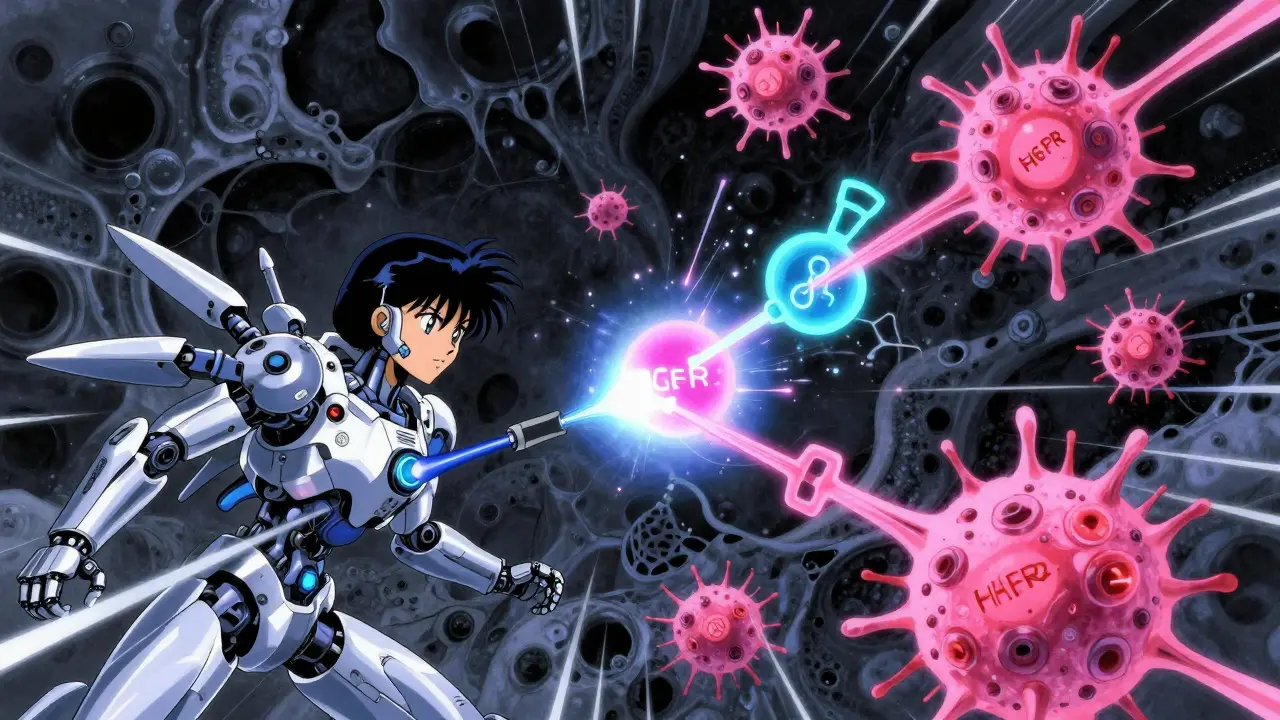
Imagine treating cancer not by the organ it started in, but by the specific genetic code driving its growth. That is exactly what Targeted Therapy is. It represents a massive shift away from traditional chemotherapy, which attacks all rapidly dividing cells-healthy and cancerous alike. Instead, targeted therapies use drugs or other substances to precisely identify and attack cancer cells based on their unique molecular characteristics.
This approach minimizes damage to normal cells, often leading to fewer side effects and better quality of life for patients. But how does it work, who qualifies, and what are the real-world limitations? Let’s break down the science, the costs, and the future of this precision medicine revolution.
The Science Behind Targeted Therapy
To understand targeted therapy, you first need to understand why cancer happens at a cellular level. Cancer is driven by changes in DNA. These changes can turn healthy cells into malignant ones. There are two main types of genetic alterations that drive cancer:
- Gain-of-function (GoF) mutations: These occur in oncogenes, genes that normally help cells grow. When mutated, they send constant "grow" signals. Examples include EGFR, ALK, and BRAF.
- Loss-of-function (LoF) mutations: These happen in tumor suppressor genes, which normally act as brakes on cell division. When these genes stop working, cells divide uncontrollably. Key examples are TP53 and PTEN.
Most approved targeted therapies focus on GoF mutations because it is pharmacologically easier to block a signal than to restore a lost function. As of 2024, about 92% of genetically targeted therapies address oncogene mutations.
The foundation for this approach was laid by the The Cancer Genome Atlas (TCGA) project, launched in 2006 by the National Cancer Institute (NCI). This initiative mapped genomic alterations across 33 cancer types using over 20,000 patient samples. This data allowed researchers to move beyond treating "lung cancer" or "breast cancer" as single entities and start looking at them as collections of genetic subtypes.
How It Works: Mechanisms of Action
Targeted therapies generally fall into two categories based on how they interact with cancer cells:
- Small Molecule Inhibitors: These drugs are small enough to penetrate the cell membrane and block signaling pathways inside the cell. For example, Osimertinib targets EGFR-mutant lung cancer by blocking the abnormal protein that tells the cancer to grow.
- Monoclonal Antibodies: These are larger proteins that attach to specific targets on the outside of cancer cells. They can block signals, mark the cell for destruction by the immune system, or deliver toxic agents directly to the tumor. Trastuzumab is a well-known example used for HER2-positive breast cancer.
A major breakthrough in this field is the concept of "histology-agnostic" treatments. This means a drug works based on the genetic mutation, regardless of where the cancer started. For instance, Larotrectinib shows a 75% objective response rate across multiple tumor types if they harbor NTRK fusions. Similarly, Selpercatinib achieves an 85% overall response rate in lung cancers with RET mutations, compared to just 30-40% with conventional chemotherapy.
Finding the Right Target: Biomarker Testing
You cannot use targeted therapy without knowing your tumor’s genetic profile. This process is called biomarker testing. The standard method today is Next-Generation Sequencing (NGS). Unlike older tests that looked at one gene at a time, NGS panels analyze hundreds of genes simultaneously.
| Provider | Genes Analyzed | Approximate Cost (2023) | Key Feature |
|---|---|---|---|
| Foundation Medicine CDx | 324 genes | $5,500 | Most comprehensive FDA-approved panel |
| MSK-IMPACT | 467 genes | $5,500 | High depth of coverage for rare mutations |
| Guardant360 | Liquid Biopsy (ctDNA) | Variable | Non-invasive blood test for monitoring |
For reliable results, labs typically need 20-50ng of DNA with at least 20% tumor cellularity. The turnaround time averages 14-21 days. However, access is uneven. While 65% of advanced cancer patients in the US receive genomic profiling, only 22% do in Europe and 8% in Asia, according to a 2023 ESMO survey.
Pros and Cons: Is Targeted Therapy Right for You?
Targeted therapy offers significant advantages, but it is not a magic bullet. Here is a realistic look at the trade-offs.
The Advantages:
- Better Outcomes: In specific populations, targeted therapies outperform chemotherapy. For EGFR-mutant non-small cell lung cancer (NSCLC), osimertinib provides a median progression-free survival of 18.9 months versus 10.2 months with platinum-pemetrexed chemotherapy.
- Reduced Toxicity: Patients experience grade 3-4 adverse events at rates of 15-30%, compared to 50-70% with conventional chemo. This means less nausea, hair loss, and fatigue.
- Chronic Disease Management: Dr. Charles Sawyers of Memorial Sloan Kettering notes that targeted therapies have transformed certain cancers from acute threats into manageable chronic conditions.
The Limitations:
- Low Applicability: Only 10-15% of solid tumors currently have actionable targets. Data from the AACR Project GENIE shows that only 13.8% of cancer patients qualify for genomically matched therapies.
- Resistance: Resistance develops in 70-90% of patients within 9-14 months. Tumors evolve, finding new ways to bypass the blocked pathway.
- High Cost: Targeted agents cost $15,000-$30,000 per month, compared to $5,000-$10,000 for chemotherapy. Financial toxicity is real, with 40% of patients reporting treatment-related financial hardship.
- Tumor Heterogeneity: A biopsy from one part of the tumor might not reflect the entire disease. About 63% of metastatic cancers show significant spatial heterogeneity, meaning different parts of the tumor may have different mutations.
The Role of Molecular Tumor Boards
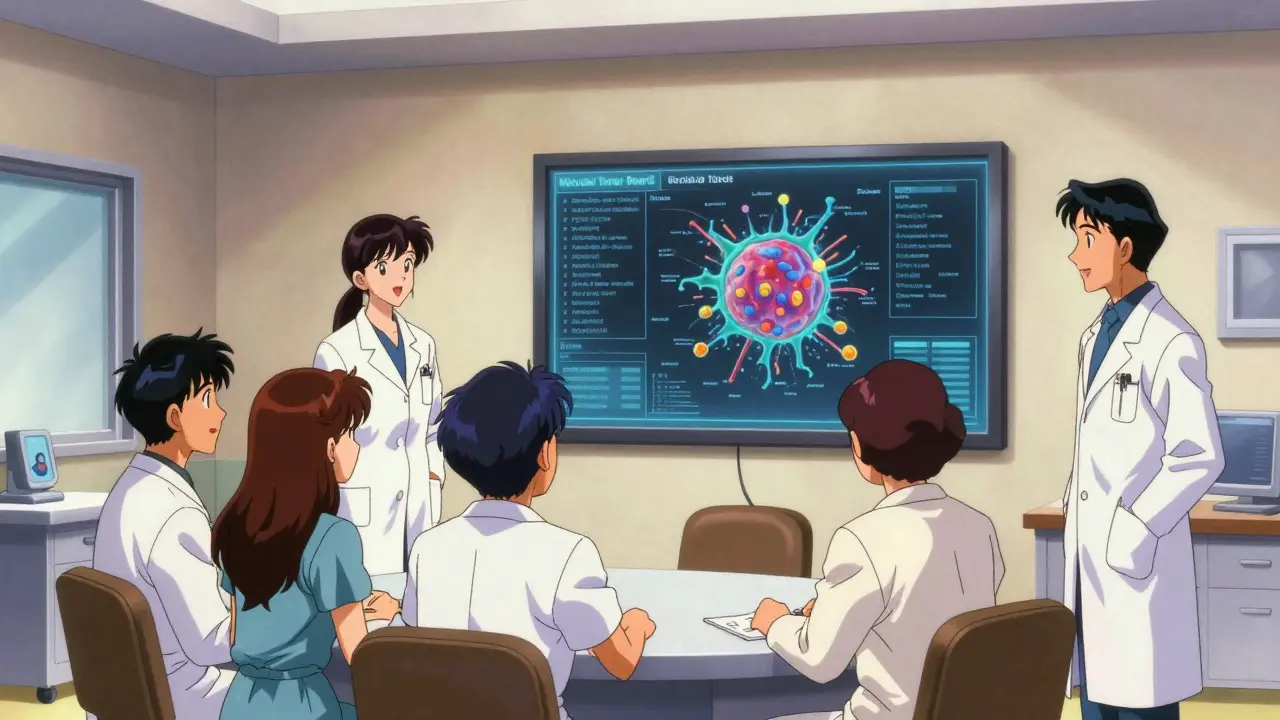
Interpreting complex genomic reports requires expertise. This is where Molecular Tumor Boards (MTBs) come in. An MTB is a multidisciplinary team including oncologists, pathologists, bioinformaticians, and genetic counselors.
They review individual cases to determine if a mutation is "actionable" or a "variant of unknown significance" (VUS). VUS findings make up 20-30% of NGS results and can be confusing for patients. According to ASCO guidelines, optimal programs employ one genetic counselor per 150 patients. While 89% of NCI-designated cancer centers have MTBs, only 32% of community hospitals do. Organizations like the Personalized Oncology Alliance help bridge this gap by providing free consultations to community practices.
Future Directions: Liquid Biopsies and AI
The field is moving faster. One exciting development is the integration of Liquid Biopsies. Instead of invasive tissue biopsies, doctors can draw blood to detect circulating tumor DNA (ctDNA). Guardant360 received FDA approval in 2023 for this purpose. Liquid biopsies can detect resistance mutations 3-6 months earlier than imaging scans, allowing doctors to switch therapies before the cancer progresses visibly.
Artificial Intelligence is also playing a larger role. IBM Watson for Oncology demonstrated 93% concordance with molecular tumor boards in a 2024 study, helping to streamline decision-making. Looking ahead, the next frontier is targeting tumor suppressor genes, which account for 80% of driver mutations but currently have no approved therapies. Additionally, combination approaches that target both the cancer cell and the tumor microenvironment are showing promise in early trials.
What is the difference between targeted therapy and chemotherapy?
Chemotherapy kills all rapidly dividing cells, including healthy ones like hair follicles and gut lining, leading to significant side effects. Targeted therapy specifically attacks cancer cells based on their genetic mutations, sparing most healthy cells and resulting in fewer side effects. However, targeted therapy only works if your tumor has a specific, actionable mutation.
How do I find out if I am eligible for targeted therapy?
You need to undergo biomarker testing, typically Next-Generation Sequencing (NGS), on a sample of your tumor tissue. Your oncologist will order this test, which analyzes hundreds of genes for mutations. If an actionable mutation is found, such as EGFR or ALK, you may be eligible for a matching targeted drug.
Why do targeted therapies eventually stop working?
Cancer cells are adaptable. Over time, they can develop new mutations that allow them to bypass the blocked pathway or activate alternative growth signals. This is known as acquired resistance and occurs in 70-90% of patients within 9-14 months of starting treatment.
Are targeted therapies covered by insurance?
Coverage varies widely. While many plans cover FDA-approved targeted therapies, prior authorization can be difficult. About 55% of patients cite insurance denials for genomic testing, and 28% wait more than four weeks for approval. Drugs approved for "tissue-agnostic" indications may face additional hurdles if your insurer considers them off-label for your specific cancer type.
What is a liquid biopsy?
A liquid biopsy is a non-invasive blood test that looks for circulating tumor DNA (ctDNA) shed by cancer cells. It is increasingly used to monitor treatment response and detect resistance mutations earlier than traditional imaging scans, potentially allowing for quicker adjustments in therapy.
Nisha Koshti
May 7, 2026 AT 11:43lol another pharma scam!! they just want your money!!! :(((( why do we trust these big corps??
Abhimanyu Pandey
May 7, 2026 AT 19:36The 'genetic' narrative is a carefully constructed illusion designed to obscure the reality of environmental toxins and systemic corruption. You are being manipulated into believing that biology is destiny, when in fact, it is merely a convenient excuse for corporate profit margins! The data presented here is cherry-picked to ignore the thousands of patients who suffer from 'variants of unknown significance'-a euphemism for 'we have no idea what's wrong with you, but pay us anyway.' It is absolutely terrifying how easily people accept this pseudoscience without questioning the source of the funding behind TCGA. Who benefits? Big Pharma. Who loses? You. Wake up!
Dat Alexander
May 8, 2026 AT 01:17i think its important to look at both sides though maybe the science is real but the access is the problem not the drug itself we should focus on equity rather than conspiracy theories which dont help anyone really
Raymond Roberts
May 9, 2026 AT 07:58honestly i had my mom go through this last year and it was a mess but also kinda worked out she got the ngs test done and found a mutation nobody expected so yeah its hit or miss but better than chemo side effects definetly less hair loss which is huge for her confidence lol anyway long story short its complicated but good to know about
Amelia Vaughan
May 10, 2026 AT 11:49Only 8% in Asia? Typical. We need to stop relying on foreign research. American medicine leads because we innovate. If you cant afford it thats your fault for not planning ahead.
Jannet Suen
May 10, 2026 AT 19:07Oh honey, please. 😂 Your comment is giving major 'red flag' energy. Access to healthcare is a human right, not a reward for financial planning. Also, calling out specific countries while ignoring the massive insurance denials in the US (55% denial rate!) is rich. Maybe try reading the whole article before typing hot takes?
Laura ciotoli
May 11, 2026 AT 14:42You are fundamentally misunderstanding the economic model of pharmaceutical development. High costs reflect R&D expenses, not greed alone. However, your aggressive tone is unproductive. Stick to facts.
Kevin S
May 12, 2026 AT 03:35Hey everyone! 👋 Just wanted to say thanks for sharing this info. My dad is currently looking into liquid biopsies and this helps explain why his doctor mentioned ctDNA. Fingers crossed 🤞 that the resistance mutations can be caught early like the post says. Keep spreading knowledge! 💪✨
andrew iregbayen
May 14, 2026 AT 03:26so if resistance happens in 9 months does that mean we just keep switching drugs forever? like is there an end point or does it just get more expensive each time? curious about the long term strategy here
Madison Jones
May 14, 2026 AT 10:02Great question! Typically, doctors sequence again after resistance develops to find new targets. It’s a cat-and-mouse game, yes, but combination therapies are helping extend the timeline significantly. Don’t lose hope! There are always options being researched. 😊
Claire A
May 15, 2026 AT 11:41This gives me so much hope! I’ve been scared of chemo for years. Knowing that targeted therapy exists makes the future feel a little brighter. Thank you for writing this clearly!
Sarah Grenberg
May 15, 2026 AT 18:39It is crucial to remember that while targeted therapy is revolutionary, it is not a universal cure. The disparity in access remains a critical ethical issue that we must address collectively. Let us continue to advocate for equitable care.