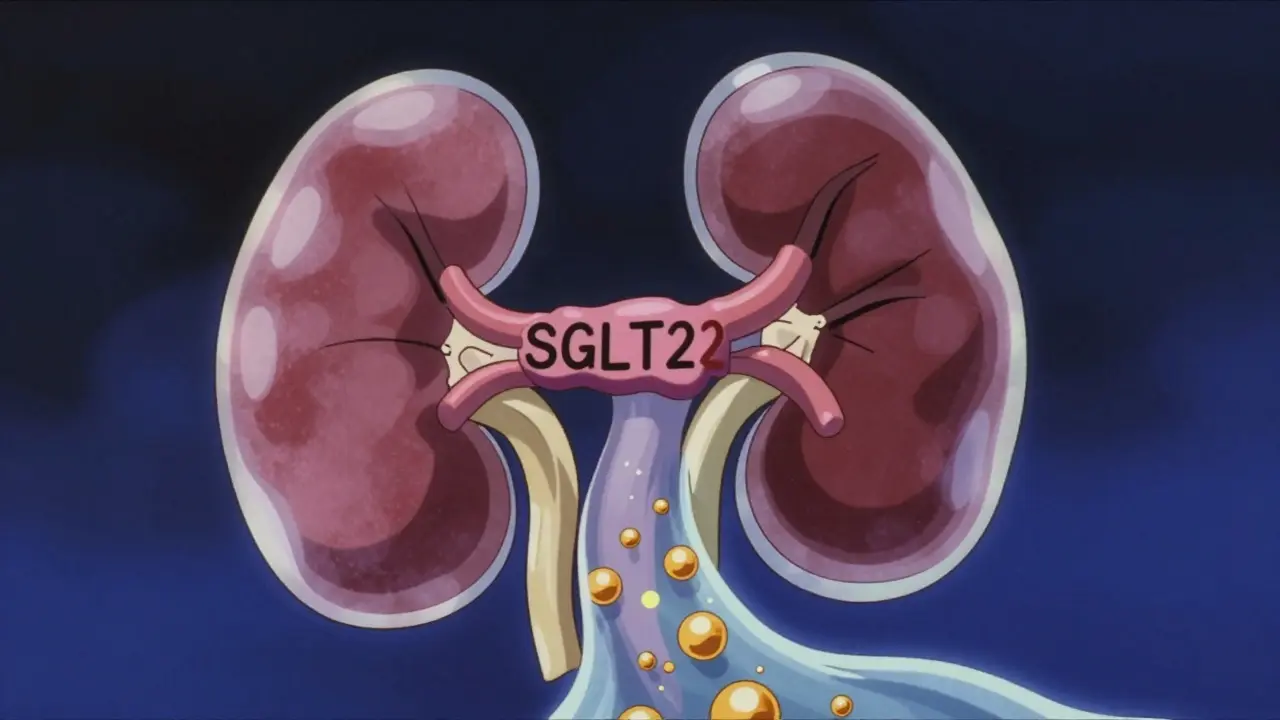
For years, treating type 2 diabetes meant focusing almost entirely on blood sugar numbers. If your A1c dropped, you were winning. But that mindset has shifted dramatically in the last decade. Today, doctors look beyond sugar levels to protect your heart and kidneys first. SGLT2 Inhibitors area class of oral medications that block glucose reabsorption in the kidney, lowering blood sugar while offering significant heart and kidney protection. They represent a major change in how we manage chronic disease. You’ve likely heard names like Jardiance or Farxiga, but understanding what they actually do-and what they might cost you-is crucial before starting.
How These Medications Actually Work
Your kidneys act as filters for your blood. Normally, they catch glucose so your body can use it for energy. With SGLT2 inhibitors, we tell those filters to let the sugar pass through instead. Think of it like opening a window in a stuffy room; letting some things out makes space for fresh air. By excreting glucose in your urine, these drugs lower your blood sugar levels directly. Unlike older drugs that stimulate insulin production, SGLT2 inhibitors don't rely on your pancreas working harder. This means there is virtually no risk of hypoglycemia-those scary low sugar episodes that make you shake and sweat. That’s a huge win for patient safety.
The mechanism is precise. These drugs target the proximal convoluted tubule in the kidney. About 40 to 100 grams of sugar leaves your body every day. That caloric loss also explains why many people lose weight. You aren’t just burning fat; you’re dumping calories. Most patients see their systolic blood pressure drop by 3 to 5 mmHg as well. It's a multi-tasking medication that handles more than just the glycemic marker.
Critical Cardiovascular and Kidney Benefits
This is where SGLT2 inhibitors stand apart from almost everything else in the pharmacy. We aren't guessing anymore; we have hard data. Large clinical trials involving over 60,000 people globally changed the rules of medicine. For instance, the EMPA-REG OUTCOME trial showed that empagliflozin reduced cardiovascular death, nonfatal heart attacks, or strokes by 14% compared to placebo. That isn't a small stat; it changes life expectancy.
If you have heart failure, this is even more critical. Whether your heart pumps weakly or normally, these drugs reduce hospitalization risks significantly. Data from the DAPA-HF trial showed a 26% reduction in heart failure hospitalizations. Doctors now recommend these as a primary defense against heart failure for patients with T2D. Your kidneys get protected too. The CREDENCE trial found that canagliflozin reduced the risk of end-stage kidney disease by 30%. This protection works even if you don't have diabetes yet, which is why recent approvals expanded to treat chronic kidney disease regardless of diabetes status.

Common Side Effects You Need to Know
Every tool comes with friction, and these drugs are no exception. Because these medications push sugar and fluid out of the body, they change the environment in your urinary tract. The most common issue is genital yeast infections. Men and women both experience this because the excess sugar creates food for fungi. Rates range from about 5.7% to 10.9%, which is higher than the 1.3% seen with placebos. Good hygiene helps, but it remains the top reason people stop taking the medication.
Urinary tract infections are the second concern. While rare serious complications exist, like Fournier's gangrene (a severe infection of the groin), they occur in fewer than one person per 50,000 prescriptions. However, acute kidney injury is a more frequent worry, especially during dehydration events like heatwaves or flu. The FDA requires black box warnings on these labels. Monitoring hydration is non-negotiable. If you feel dizzy or nauseated, checking your kidney function is vital immediately.
| Brand Name | Generic Name | Dosing Options | Key Clinical Trial |
|---|---|---|---|
| Jardiance | Empagliflozin | 10 mg, 25 mg | EMPA-REG OUTCOME |
| Farxiga | Dapagliflozin | 5 mg, 10 mg | DECLARE-TIMI 58 |
| Invokana | Canagliflozin | 100 mg, 300 mg | CANVAS Program |
| Steglatro | Ertugliflozin | 5 mg, 15 mg | VERTIS CV |
Risk of Diabetic Ketoacidosis (euDKA)
This is the rarest but most dangerous risk. Normally, ketones form when your body burns fat instead of sugar. With these drugs, you can enter a state called euglycemic diabetic ketoacidosis. The "euglycemic" part is the trap-it means your blood sugar looks normal on the meter, often below 250 mg/dL, but your body is still acidic. It happens during illness or low carb diets. The rate is roughly 0.1 to 0.3%, much higher than typical background rates. If you have symptoms like vomiting, fatigue, or stomach pain, you must test for ketones in your blood or urine. Ignoring this feeling is the most dangerous mistake you can make.

Who Should Consider These Drugs?
You probably fit the profile if you have established cardiovascular disease or heart failure. Guidelines now list them as Class 1 recommendations for these conditions. Even if your heart feels fine, early signs of kidney strain make you a candidate. Your doctor will check your eGFR (glomerular filtration rate) first. If your kidney function drops below 30 mL/min, starting these drugs becomes risky, though new data allows them to stay on board longer than before. Older patients need extra care regarding hydration due to fluid loss.
Cost is a real barrier. Without insurance assistance, a monthly supply can exceed $600. However, manufacturer programs often bring costs down to around $25 for insured individuals. Adherence studies show about 68% of patients keep taking the drug after one year. The main drop-off reasons are usually cost, infection worries, or simply getting sick enough to hold the dose temporarily.
Managing Treatment in Real Life
Starting therapy means being ready to monitor. Check your kidney numbers before beginning. If you have surgery coming up, doctors typically tell you to pause the medication for three days before and after. This prevents volume depletion during anesthesia. Keep a log of any unusual symptoms. Don't assume dizziness is just aging; it could be dehydration. Many patients report energy improvements because the weight loss is real-you might see 5 to 10 pounds off within months. That physical boost motivates sticking with the regimen despite the urinary risks.
Are SGLT2 inhibitors better than GLP-1 agonists?
Both classes have strong evidence. SGLT2 inhibitors offer slightly better protection for heart failure, while GLP-1 receptor agonists generally provide superior reduction in heart attacks and strokes. Many doctors prescribe both together to cover all bases. Studies suggest combining them provides additive weight loss and blood sugar benefits.
Can I take these if I have Type 1 Diabetes?
Generally, no. The FDA does not approve them for Type 1 diabetes due to the high risk of ketoacidosis. There have been experimental uses under strict supervision, but standard guidelines advise against it.
What should I do if I get sick while on this med?
If you have fever, vomiting, or limited fluid intake, pause the medication temporarily until you recover. Dehydration accelerates kidney risks and ketoacidosis. Consult your physician before restarting.
Do these drugs help lose weight?
Yes, most users lose between 2 to 4 kg (4.4 to 8.8 lbs). The weight loss comes from losing glucose calories in urine and slight fat oxidation. It is not a diet pill, but it supports metabolic health.
How much does insurance typically cover?
Coverage varies widely. Prior authorization is often required. Manufacturer coupons can reduce copays to under $30 for many plans. Cash prices remain high near $600 a month.
Goodwin Colangelo
April 2, 2026 AT 12:54Hydration monitoring is non-negotiable when starting empagliflozin. Dehydration events during flu season trigger unnecessary hospitalizations. Patients often overlook the fluid loss mechanism entirely. We lose significant glucose calories every single day. This caloric dump explains why weight drops occur without diet changes. Blood pressure readings typically shift lower on the systolic scale. Heart failure patients see massive reductions in admission rates. The clinical data supports these outcomes clearly enough now. Don't ignore the yeast infection risks because hygiene helps prevent them. Urinary tract infections remain a statistical concern to monitor closely. Surgical pauses are critical to maintain stable volume status. Three days off before procedure prevents acute kidney injury spikes. Ketoacidosis risks rise significantly during low carb diets specifically. Symptoms include vomiting fatigue and unexplained stomach pain mostly. Always keep ketone strips available when sick to test quickly.
Joseph Rutakangwa
April 2, 2026 AT 19:58This is exactly what the guidelines missed back then.
simran kaur
April 3, 2026 AT 07:39Pharma companies push this to keep us buying new boxes forever. They dont care about our health profits matter more. Look at the patent expiry dates coming soon.
Brian Shiroma
April 3, 2026 AT 12:23Sure profit motives explain everything conveniently in your head. Ignore the actual patient outcomes for a moment please. Data does not lie about survival rates.
HARSH GUSANI
April 4, 2026 AT 05:02In india we do not get these pills easily. The west monopolizes the supply chain unfairly. Prices are way too high for normal people here. We deserve better access globally soon.
Jenna Carpenter
April 4, 2026 AT 06:46Yer wrong bout the cost stuff man. Most places cover it no problem now. Why are you complaining so much?
Mark Zhang
April 4, 2026 AT 14:16Great points everyone just remember to listen to your body signals. Small changes in routine can help manage the fluid shifts well. We are all learning together on this journey honestly.
Rachelle Z
April 4, 2026 AT 22:03Oh WOW!!! Did anyone else notice the foot note about surgeries??? 😱🚑⚠️ That part scares me the most honestly!!!
Sakshi Mahant
April 4, 2026 AT 22:38Thank you for sharing such comprehensive information here today. It really helps clarify the confusion surrounding insurance coverage policies. Wishing everyone good health moving forward.