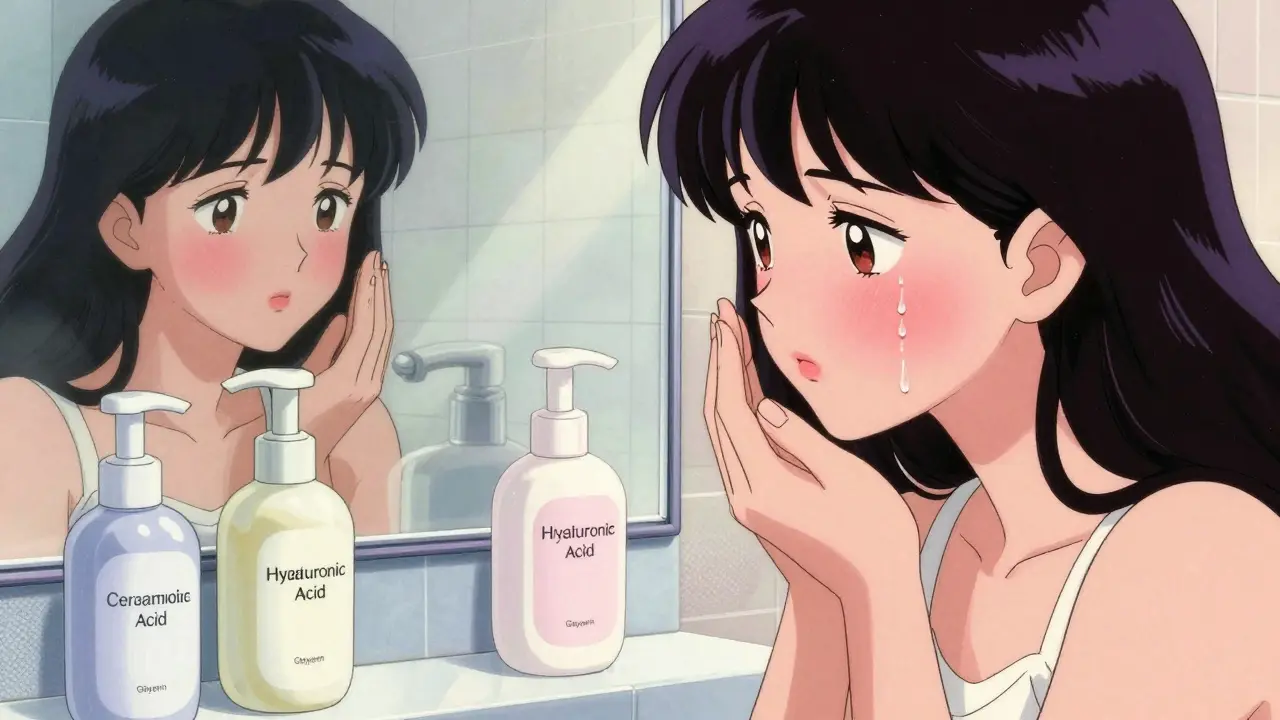
If your skin stings when you wash your face, turns red after using a new cream, or feels tight even after moisturizing, you’re not alone. Millions of people deal with sensitive skin - and many of them are reacting to something hidden in their products: fragrance.
Why Fragrance Is the Hidden Problem
Fragrance isn’t just about smell. It’s one of the top triggers for skin irritation, especially for people with compromised skin barriers. According to the American Contact Dermatitis Society, fragrance compounds cause 30-45% of all cosmetic-related contact dermatitis cases. That means nearly half of all skin reactions from lotions, cleansers, and serums come from something labeled as “fragrance” or “parfum” on the ingredient list. Even products marketed as “natural” or “essential oil-based” aren’t safe. Lavender, citrus, and tea tree oil - often seen as gentle - can trigger reactions in up to 22% of sensitive skin users, according to Dr. David J. Leffell from Yale School of Medicine. The truth? There’s no such thing as a “safe” natural fragrance for reactive skin. If it smells, it can irritate. And here’s the kicker: “Unscented” doesn’t mean fragrance-free. Many unscented products contain masking fragrances to cover up the smell of other ingredients. Only “fragrance-free” means no added scent compounds at all - even if the product smells like nothing.What Makes a Fragrance-Free Product Actually Work?
Not all fragrance-free products are created equal. A good one doesn’t just remove scent - it rebuilds your skin’s natural defense. Dermatology experts agree that the best products contain three key ingredients:- Ceramides (0.5-3%): These are the lipids that hold your skin cells together. When your barrier is broken, ceramides act like mortar between bricks.
- Hyaluronic acid (0.5-2%): Draws water into the skin without clogging pores.
- Glycerin (3-10%): A humectant that locks moisture in and prevents dryness.
How to Test a Product Before You Use It
You wouldn’t drive a car without checking the brakes. Don’t apply a new product to your face without testing it first. The standard 24-hour patch test isn’t enough. Dermatology Seattle recommends a 72-hour test behind the ear - the skin there is thin and reactive, just like your face. Here’s how to do it:- Apply a pea-sized amount of the product behind your ear.
- Leave it on for 72 hours. Don’t wash it off.
- Check daily for redness, itching, swelling, or flaking.
- If nothing happens after 3 days, it’s likely safe to try on your face.

The Minimalist Routine That Actually Works
You don’t need 10 steps. You need three:- Fragrance-free cleanser: Use once a day, preferably at night. Over-cleansing strips your barrier. Look for creamy or balm textures - foaming cleansers are too harsh.
- Fragrance-free moisturizer with ceramides: Apply to damp skin within 30 seconds of washing. This traps water in your skin before it evaporates. Vanicream Moisturizing Cream, tested by Dermstore, showed 42% higher hydration over 8 hours than scented versions.
- Mineral sunscreen (zinc oxide, SPF 30+): Chemical sunscreens often contain fragrances and preservatives that irritate. Zinc oxide sits on top of the skin - it’s less likely to trigger a reaction.
What to Look For (and Avoid) on Ingredient Lists
You need to read labels like a detective. Here’s what to watch for:- AVOID: Fragrance, Parfum, Aroma, Essential Oils, Lavender Oil, Citrus Oil, Peppermint, Rose, Jasmine, Vanilla Extract
- LOOK FOR: Ceramide NP, Hyaluronic Acid, Glycerin, Squalane, Niacinamide (in low doses), Zinc Oxide, Colloidal Oatmeal
The Trade-Offs: What You Give Up - and What You Gain
Fragrance-free skincare isn’t perfect. Many users say the products feel “clinical,” “bland,” or “like hospital soap.” That’s because they lack the sensory appeal of scents. In a Skincare.com survey, 63% of users admitted they missed the smell - and some quit because of it. Cost is another issue. Fragrance-free products average $28.50, while regular ones are $22.75. But think of it this way: if you’re spending $100 a month on products that make your skin worse, switching to one effective routine saves you money - and discomfort - in the long run. What you gain is more than just calm skin. You get predictability. You stop guessing what caused the breakout. You stop avoiding social events because your face is red. You stop feeling like your skin is betraying you.
Real Results from Real People
Reddit’s r/SkincareAddiction community has 1.2 million members. Of those with sensitive skin, 78% say switching to fragrance-free routines improved their condition within 4-6 weeks. The top reasons?- 83% saw less redness
- 76% noticed fewer reactions to weather, pollution, or stress
- 71% said their skin felt less “on edge”
What’s Changing in the Industry
The market for fragrance-free skincare is growing fast - up 17% in 2023, compared to just 6.2% for the overall skincare industry. It’s now worth $3.8 billion globally. New regulations are coming. The EU already requires disclosure of 26 common fragrance allergens. In the U.S., the proposed CARES Act and California’s AB 1234 would force full ingredient disclosure - meaning brands can’t hide “fragrance” behind a single word anymore. Brands are responding. Cleure launched a clinical trial kit for dermatologists in January 2023. SVR’s SENSIFINE Cleansing Balm saw 200% sales growth in 2023. Even big names like CeraVe are now generating over $1.2 billion annually from their fragrance-free lines. This isn’t a trend. It’s a medical necessity.Final Advice: Start Small, Stay Consistent
You don’t need to overhaul your entire bathroom overnight. Pick one product - a cleanser or moisturizer - that’s verified by the National Eczema Association. Patch test it. Use it for 4 weeks. Then add the next. If your skin improves, you’ll know why. If it doesn’t, you’ll have eliminated the most common trigger. Either way, you’re in control. Your skin doesn’t need more products. It needs fewer irritants. And sometimes, silence is the most powerful ingredient of all.Can I still use essential oils if I have sensitive skin?
No. Essential oils like lavender, citrus, tea tree, and peppermint are common triggers for sensitive skin. Even though they’re natural, they can cause inflammation, redness, and itching. Studies show 22% of people with sensitive skin react to essential oils - the same rate as synthetic fragrances. Avoid them completely in your skincare routine.
Is ‘unscented’ the same as ‘fragrance-free’?
No. ‘Unscented’ means the product has no noticeable smell - but it may still contain masking fragrances to cover up the smell of other ingredients. ‘Fragrance-free’ means no added scent compounds at all. Always check the ingredient list for ‘fragrance,’ ‘parfum,’ or ‘aroma’ - if it’s there, it’s not truly fragrance-free.
How long does it take to see results from a fragrance-free routine?
Most people notice less redness and tightness within 2-4 weeks. Full improvement - including fewer reactions to weather or stress - usually takes 4-6 weeks. Skin barrier repair is a slow process. Don’t rush it. Stick with the same three products for at least a month before adding anything else.
Do I need to use a special cleanser if I have sensitive skin?
Yes. Regular foaming cleansers strip your skin’s natural oils and disrupt the barrier. Use a gentle, fragrance-free cream or balm cleanser instead. Products like CeraVe Hydrating Cleanser or SVR’s SENSIFINE Cleansing Balm remove makeup and dirt without drying. Wash once a day - usually at night - and avoid hot water.
Are expensive fragrance-free products better than drugstore ones?
Not necessarily. Vanicream, CeraVe, and Cleure are all affordable and clinically proven. What matters is the ingredients - ceramides, glycerin, and no fragrance - not the price tag. Many high-end brands still add fragrance for sensory appeal. Always check the label, not the price.
Can I use makeup with sensitive skin?
Yes, but choose carefully. Look for mineral-based makeup with zinc oxide or titanium dioxide. Avoid products with fragrance, talc, or preservatives like parabens. Cleanse your makeup off every night with a fragrance-free cleanser. Patch test new makeup behind your ear before using it on your face.
What should I do if a product irritates my skin?
Stop using it immediately. Wash your face with cool water and your most gentle fragrance-free cleanser. Apply your trusted moisturizer. Avoid anything with alcohol, acids, or exfoliants for the next 5-7 days. If irritation doesn’t improve, consult a dermatologist. Keep a log of products and reactions - it helps identify triggers.
Is sunscreen really necessary if I have sensitive skin?
Absolutely. Sun exposure worsens sensitivity and damages your skin barrier. Use a mineral sunscreen with zinc oxide (SPF 30 or higher). Avoid chemical sunscreens like oxybenzone and avobenzone - they’re common irritants. Reapply every 2 hours if you’re outside. Many fragrance-free sunscreens are now available and feel lightweight on the skin.
Virginia Seitz
December 16, 2025 AT 17:51OMG YES. I switched to CeraVe last year and my face stopped looking like a tomato after I washed it 😭 No more burning, no more red patches. Fragrance-free is the only way now. 🙏
Peter Ronai
December 18, 2025 AT 13:46Let me guess-you also believe in ‘skin barriers’ like they’re magical force fields? This whole ‘fragrance-free’ thing is a marketing scam invented by dermatologists to sell overpriced lotion. I’ve been using lavender oil for 15 years and my skin’s fine. You’re just scared of natural ingredients.
Michael Whitaker
December 19, 2025 AT 07:34While I appreciate the general sentiment of the post, one must acknowledge the methodological limitations inherent in anecdotal evidence presented via Reddit forums. The statistical validity of claims regarding ‘78% improvement’ is questionable without peer-reviewed sourcing. Furthermore, the conflation of ‘natural’ with ‘safe’ is a classic logical fallacy-a point which, ironically, the author themselves rightly condemn in other contexts.
One must also interrogate the commercial motivations behind the National Eczema Association’s certification program, which, while ostensibly benign, operates within a highly monetized dermatological-industrial complex.
Naomi Lopez
December 19, 2025 AT 09:17‘Unscented’ ≠ ‘fragrance-free.’ This is such a critical distinction-and yet so many people miss it. I used to buy ‘unscented’ products thinking I was being safe. Then I read the ingredient list: ‘fragrance’ hiding behind ‘masking agents.’ Total betrayal. Now I only buy NEA-certified. Worth every penny.
Salome Perez
December 21, 2025 AT 02:40Hi there, fellow sensitive-skin warrior! 🌿 I just wanted to say how much I appreciate this post-it’s clear, compassionate, and actually helpful. I used to spend hundreds on ‘luxury’ skincare that left me in tears. Then I found Vanicream and my skin finally stopped screaming at me. It’s not glamorous, but it’s real. And honestly? That’s better than any rose-scented serum. You’re not alone. Keep going. Your skin will thank you.
Kent Peterson
December 21, 2025 AT 14:40FRAGRANCE-FREE?! You’re telling me I can’t use my $80 ‘artisanal’ face oil with bergamot and sandalwood?! That’s a crime against humanity!! I’ve been using essential oils since college-I don’t need some lab-made ‘ceramide mortar’ to tell me what my skin needs!! And who even is this ‘Dr. Leffell’? Is he funded by Big Pharma?!?!?!
Jonathan Morris
December 23, 2025 AT 12:02Did you know that ‘fragrance-free’ labels are often a front? The FDA doesn’t regulate the term. Companies just remove the obvious scents and replace them with synthetic isolates that aren’t listed as ‘fragrance’-because they’re not classified as such under current loopholes. This whole movement is a distraction. The real issue? Preservatives like phenoxyethanol and parabens. Fragrance is just the scapegoat.
And the ‘72-hour patch test’? That’s not standard. It’s a cult practice invented by skincare influencers. Real dermatologists use 48-hour tests. You’re being manipulated.
Linda Caldwell
December 24, 2025 AT 13:40You got this. Start with one thing. Just one. Maybe the cleanser. Try it for two weeks. That’s it. No pressure. No rush. If it feels better? Awesome. If not? Try something else. Skin healing isn’t a race. You’re doing better than you think.
Anna Giakoumakatou
December 25, 2025 AT 13:26How poetic. ‘Silence is the most powerful ingredient.’ How very… minimalist. Like a Japanese Zen garden, but for your face. I suppose the next step is to stop washing your face entirely and just stare thoughtfully at your reflection while humming Gregorian chants. I’ll be in the corner, sipping chamomile tea with my 17-step routine, wondering if my skin is finally ‘enlightened.’
Donna Packard
December 27, 2025 AT 00:28I tried this routine for 6 weeks and my skin hasn’t broken out once. I didn’t think it would work either. But it did. Thank you for sharing this. I’m not a skincare expert, but I know what feels good on my face now. And that’s enough.