
Penicillin Desensitization Protocol Estimator
Protocol Summary
Select a route to see the estimated timeline and requirements.
Imagine being in a situation where the only drug capable of saving a patient's life is the one thing their body is programmed to reject. For patients with a documented penicillin allergy facing severe bacterial endocarditis or neurosyphilis, this isn't a hypothetical-it's a clinical crisis. When no suitable alternative antibiotic exists, Penicillin Desensitization is a medically supervised process that temporarily induces tolerance to penicillin by administering the drug in tiny, increasing doses. While the idea of giving an allergic person the very drug they react to sounds counterintuitive, it is a precise science that allows the immune system to "ignore" the medication for a limited window of time.
Why Desensitization is Necessary Today
You might wonder why we don't just use a different antibiotic. In a perfect world, we would. However, we are currently fighting a massive battle against Antimicrobial Resistance is the ability of bacteria to resist the effects of antibiotics, making infections harder to treat. When doctors swap penicillin for a broader-spectrum alternative just because of an allergy label, they often use "stronger" drugs that accelerate this resistance.
The stakes are high. Research published in the Journal of Allergy and Clinical Immunology in 2017 showed that using inappropriate antibiotic substitutes due to penicillin allergy labels can hike up healthcare costs by $3,000 to $5,000 per hospital admission. Moreover, the CDC is the national public health agency of the United States providing health information and guidelines
reports that while about 10% of the population carries a penicillin allergy label, roughly 90% of those people can actually tolerate the drug after a proper evaluation. This means we are over-labeling patients and under-utilizing the most effective tools in our arsenal.
Who Should (and Should Not) Undergo the Process
Desensitization isn't for everyone. It is a high-risk, high-reward intervention reserved for cases where the benefits clearly outweigh the potential for a reaction. It's typically used for life-threatening conditions like Group B streptococcal infections in pregnancy or severe bacterial endocarditis.
However, there are absolute red flags. You cannot perform this procedure on patients who have a history of severe cutaneous reactions. Specifically, if a patient has experienced Stevens-Johnson Syndrome is a rare, serious disorder of the skin and mucous membranes causing peeling and blisters
, Toxic Epidermal Necrolysis (TEN), or DRESS (Drug Reaction with Eosinophilia and Systemic Symptoms), the risk is far too high. These conditions involve systemic features that make the process dangerous.
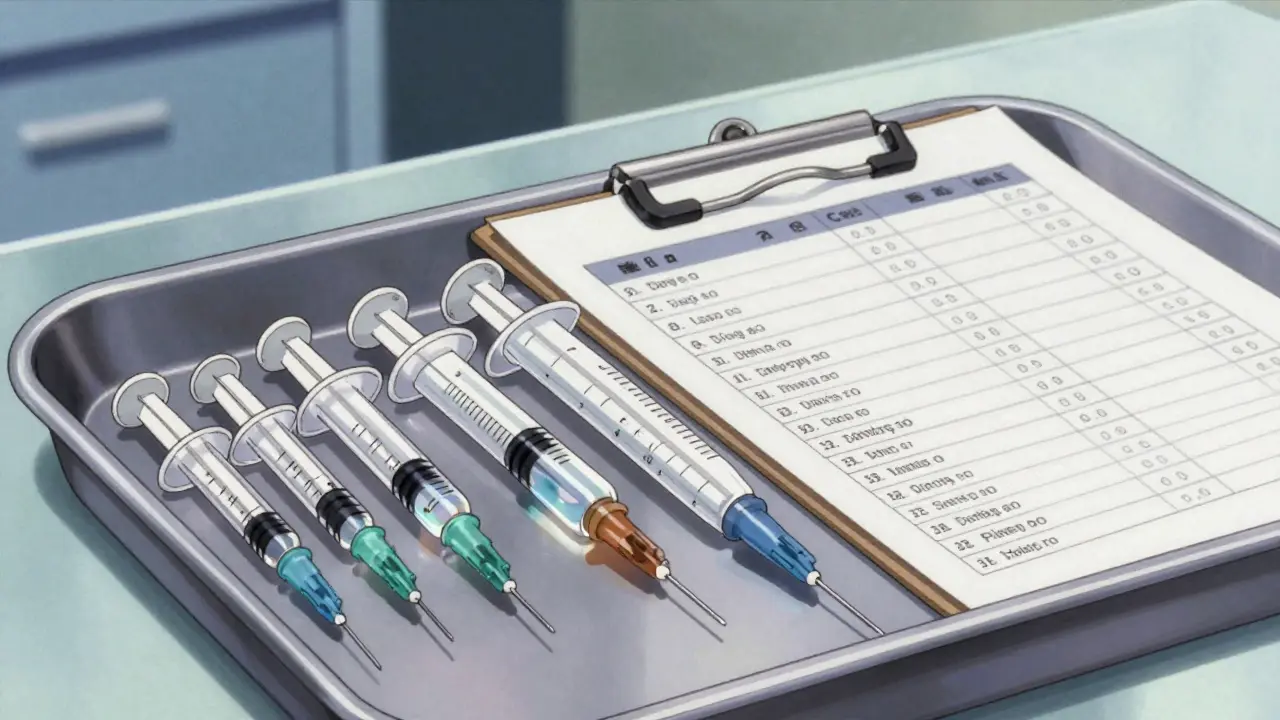
| Feature | Oral Route | Intravenous (IV) Route | |
|---|---|---|---|
| Ease of Use | Easier and generally safer | More complex; requires intensive monitoring | |
| Dosing Interval | 45-60 minutes between doses | 15-20 minutes between doses | |
| Dosing Precision | Less precise | Highly precise control | |
| Common Reactions | ~33% experience minor pruritus/urticaria | Higher risk of rapid systemic reactions |
The Mechanics: How It Actually Works
The goal is to trick the immune system. By starting with a dose so small it doesn't trigger a full-scale attack, and slowly increasing it, the body becomes temporarily desensitized. It is important to distinguish this from a "graded challenge." A graded challenge is for low-risk histories to see if an allergy still exists; desensitization is for people who *are* allergic but need the drug anyway.
For an IV protocol, such as the one outlined by Prisma Health is a healthcare system providing standardized clinical guidelines for allergy assessment
, the process usually starts with a very low concentration (e.g., 100 units/mL at 0.2mL) and progresses through about 12 incremental doses over four hours. If the patient shows signs of flushing or a rash, the team slows down the protocol or administers antihistamines.
To make this safer, patients are often pre-medicated an hour before the first dose. A typical regimen includes:
- Ranitidine (50mg IV or 150mg oral)
- Diphenhydramine (25mg oral or IV)
- Montelukast (10mg oral)
- Cetirizine or Loratadine (10mg oral)
Safety Protocols and the Hospital Environment
You won't find this happening in a standard clinic. Because of the risk of anaphylaxis, the CDC mandates that desensitization be performed by allergists in a monitored inpatient environment. If you're treating a pregnant patient with syphilis, for instance, the procedure should happen in Labor and Delivery for immediate access to emergency equipment.
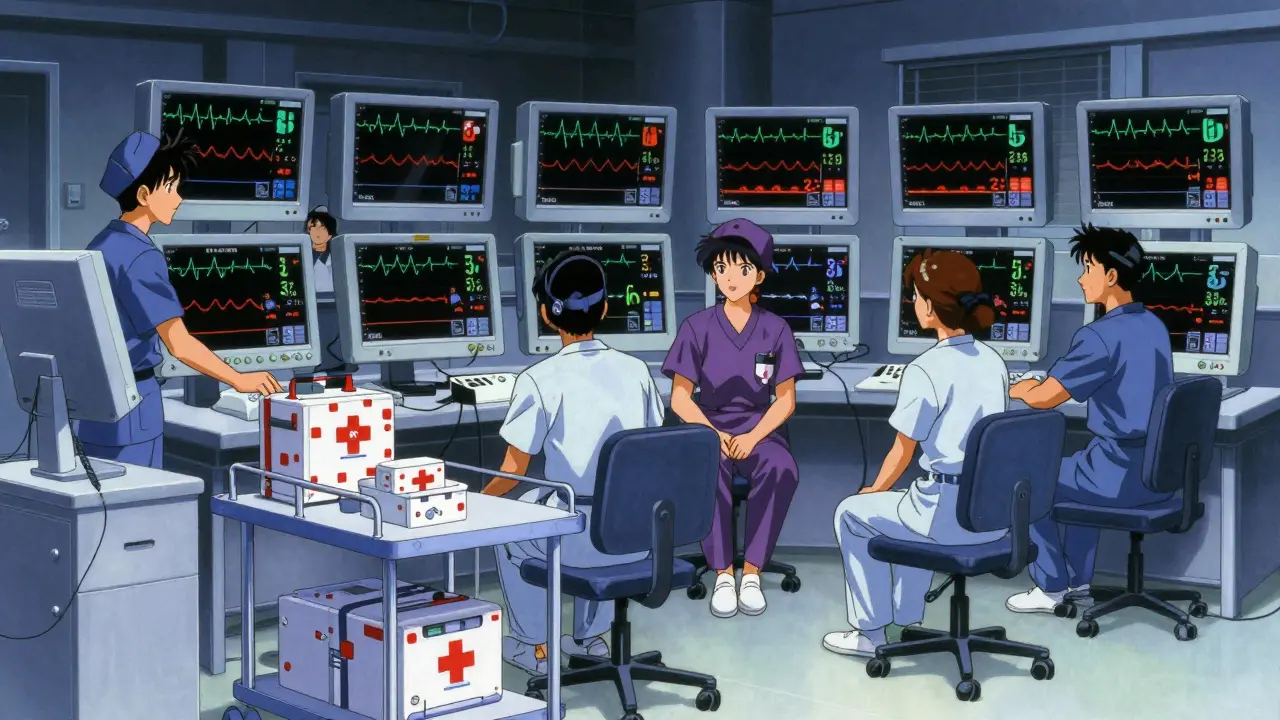
What happens if something goes wrong? Nursing teams must monitor vital signs every 15 minutes. The protocol must be stopped immediately if the patient develops angioedema (swelling), respiratory changes, or a drop in blood pressure (hypotension). For this reason, advanced airway management and anaphylaxis treatment must be at the bedside-not in another room.
One of the biggest pitfalls is the "forgetting" factor. Desensitization is temporary. It usually lasts only 3 to 4 weeks. To maintain this tolerant state, the patient must continue receiving the penicillin without interruption. If they stop the drug for a few days, the tolerance vanishes, and they will need to undergo the entire desensitization process again from the start.
Implementation Challenges for Medical Teams
The learning curve for this procedure is steep. The AAAAI is The American Academy of Allergy, Asthma & Immunology, which sets competency standards for drug desensitization
recommends that providers complete at least five supervised desensitizations before practicing independently. There is also a surprising lack of standardization. One study found 47 different protocols across 50 different U.S. hospitals, which is a recipe for inconsistency.
From a pharmacy perspective, it's a logistical hurdle. A single "IP Penicillin Intravenous Desensitization" order can require up to 19 different labels to ensure the nursing staff administers the precise concentration at the exact right time. One mistake in the gradient can lead to a preventable anaphylactic event, which occurs in roughly 2-3% of cases when protocols are applied improperly.
Is penicillin desensitization a permanent cure for the allergy?
No, it is not. Unlike traditional allergy shots (immunotherapy), desensitization is a temporary state of tolerance. It typically lasts only 3 to 4 weeks. To keep the patient tolerant, the antibiotic must be administered continuously. Once the course of treatment ends, the patient will likely be allergic to penicillin again.
What is the difference between a graded challenge and desensitization?
A graded challenge is used for patients with a low-risk history of allergy to see if they can tolerate the drug. It involves a few doses to confirm if a reaction occurs. Desensitization is a much slower, more rigorous process used for patients who are known to be allergic but absolutely require the medication for a life-threatening condition.
What are the most common side effects during the process?
Minor systemic reactions are quite common, appearing in about one-third of patients. These usually manifest as pruritus (itching) or urticaria (hives). These are typically managed by slowing the administration rate or using antihistamines. However, severe reactions like hypotension or respiratory distress require immediate cessation of the protocol.
Why is this process so important for antimicrobial resistance?
When clinicians avoid penicillin due to an allergy label, they often use broader-spectrum antibiotics. Overusing these "big guns" encourages bacteria to evolve and become resistant. By safely returning allergic patients to penicillin (the narrower-spectrum choice), we reduce the evolutionary pressure on bacteria and preserve more effective drugs for the future.
Can this be done at home or in a private clinic?
Next Steps and Troubleshooting
If you are a clinician preparing for a desensitization case, your first step should be a thorough allergy history. If the patient has a history of SJS or TEN, stop immediately and look for non-beta-lactam alternatives. If the patient is a candidate, ensure your pharmacy has a precise labeling system for the concentration gradients to avoid dosing errors.
For those who have successfully completed the process, the focus shifts to maintenance. Ensure the patient understands that they cannot "skip" doses, as this will reset their tolerance. Once the treatment is complete, it's often recommended that the patient follow up with a specialist for skin testing to see if their allergy was perhaps overestimated to begin with, potentially saving them from future desensitization cycles.
dallia alaba
April 19, 2026 AT 12:49It is absolutely critical that we emphasize the role of multidisciplinary communication here. In my experience, the pharmacist and the nurse often face the most stress during these protocols because the titration is so precise. Ensuring that the pharmacy has a standardized kit for the 19 different labels could drastically reduce the risk of dosing errors. We should really be pushing for a universal protocol across hospital systems to stop the inconsistency mentioned in the text.
Olushola Adedoyin
April 21, 2026 AT 02:58This sounds like a total nightmare!
They want to trick your body into taking the very thing it hates? That is some wild science right there. I bet the big pharma companies just want us on these cycles so they can keep us coming back for more. Absolute madness!
Tanya Rogers
April 22, 2026 AT 03:31The obsession with "efficiency" in antimicrobial stewardship is a banal exercise in utilitarianism. While the authors argue for the preservation of penicillin, they overlook the inherent fragility of a system that relies on such precarious temporary tolerances. It is quite quaint to believe that a few incremental doses can override a biological imperative. One must wonder if the pursuit of a narrower spectrum is merely a vanity project for the medical establishment to feel superior in their control over nature.
julya tassi
April 22, 2026 AT 19:25Wow, I had no idea 90% of people with labels can actually tolerate it! 😮 That's a huge number. It's kind of scary how much we just assume based on a label from years ago. Thanks for sharing this! 😊
Wendy Ajurín
April 23, 2026 AT 11:10The distinction between a graded challenge and desensitization is a point that frequently causes confusion among junior residents. It is imperative that the clinical team recognizes that a graded challenge is a diagnostic tool, whereas desensitization is a therapeutic intervention. Maintaining this clarity ensures that the patient is monitored according to the appropriate risk profile.
Aman Tomar
April 24, 2026 AT 12:16It is truly heartwrenching to think about a patient in a critical state of endocarditis facing such a risky procedure.
The throught of the immune system fighting itself is just so dramatic and intense. I wondder if the anxiety of the patient makes the reaction worse during the process. It is such a delicate balance between life and death!
Grace Grace
April 25, 2026 AT 22:04OH MY GOODNESS!!! 😱 The stakes are simply too high!!
It is absolutely tremendouse that we have these protocols, but the throught of it failing is just... HEARTSTOPPING!
We must support our medical staff who take on this burden!!
They are true warriors in the face of such laurging odds!!
Charlotte Boychuk
April 27, 2026 AT 17:59The way the body just "forgets" the tolerance after a few days is honestly wild. It's like a glitch in the system. I love how we can basically hack the immune system to get a life-saving drug in there, even if it's just for a short ride. Pretty groovy science if you think about it.
Akshata Kembhavi
April 28, 2026 AT 04:53Really interesting stuff. Just goes to show how different things can be handled in different hospitals. 47 protocols for 50 hospitals is just wild lol.
caesar simpkins
April 29, 2026 AT 02:59Man, imagine being the nurse tasked with that 19-label pharmacy order. The level of stress must be absolutely off the charts! One slip-up and it's total chaos. It's a heavy burden to carry for the sake of the patient.
William Young
May 1, 2026 AT 00:19I agree with the need for cautious implementation. It is best to follow the AAAAI guidelines and ensure the five-supervised-cases threshold is met before proceeding independently to protect the patients.