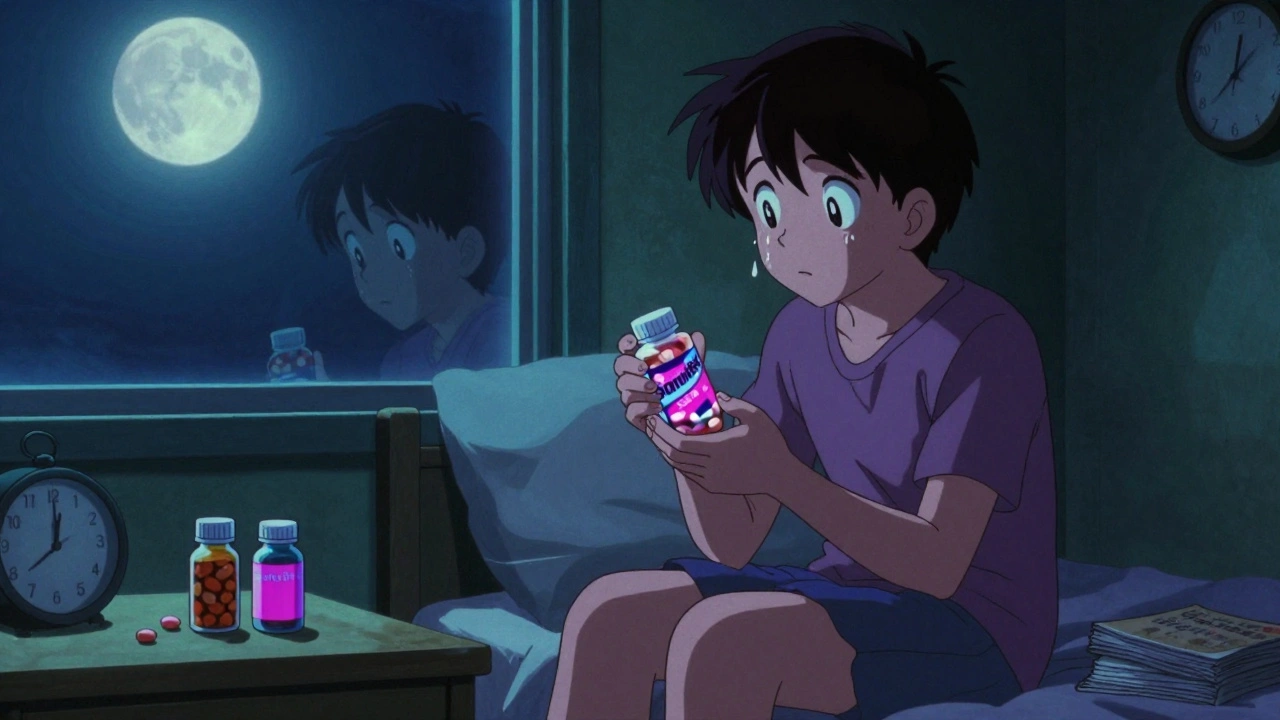
Everyone’s had that night - eyes wide open at 2 a.m., mind racing, clock ticking. So you reach for the bottle of pills in the bathroom cabinet. Maybe it’s a white tablet labeled "Sominex" or a little melatonin gummy from the supplement shelf. You’ve used it before. It worked last time. But is it still safe? And what happens if you keep using it?
What’s Actually in OTC Sleep Aids?
Most over-the-counter sleep aids fall into two buckets: antihistamines and supplements. The first group includes drugs like diphenhydramine and doxylamine. These are the same ingredients found in allergy meds like Benadryl and Unisom. They don’t work because they’re "sleep pills" - they work because sleepiness is a side effect. These drugs block histamine, a brain chemical that keeps you alert. Knock that down, and you feel drowsy.
The second group is supplements: melatonin, valerian root, chamomile. Melatonin is the most popular. It’s a hormone your body naturally makes to signal it’s bedtime. Supplements try to mimic that signal. But here’s the catch - melatonin isn’t regulated like a drug. A 2017 study found that 7 out of 10 melatonin products had way more or way less than what was on the label. One had nearly five times the stated amount. That’s not a typo. That’s the market.
Valerian and chamomile? They’re herbal. No strong evidence they work for most people. But they’re safe for short-term use. The problem isn’t the herbs - it’s the false hope they create.
How Much Do They Actually Help?
Let’s cut through the marketing. Clinical trials show OTC sleep aids don’t turn insomniacs into Olympic sleepers. They might help you fall asleep 3 to 13 minutes faster. And you might get 20 to 60 extra minutes of sleep total. That’s not much. For comparison, a good night’s sleep is 7 to 9 hours. These pills barely nudge the needle.
And here’s the kicker: they don’t improve sleep quality. You might be asleep longer, but you’re not getting deeper, restorative sleep. That’s why people wake up feeling just as tired. The body doesn’t care if you’re unconscious - it cares if you’re cycling through REM and deep sleep. OTC meds don’t fix that.
People on Reddit say things like, "It works for jet lag," or "I use it when I’m stressed." That’s fine. For occasional use, it’s okay. But if you’re taking it every night because your sleep’s been off for months? You’re not fixing the problem. You’re masking it.
The Hidden Risks - Especially for Older Adults
Antihistamine-based sleep aids like diphenhydramine are in the same drug class as medications linked to dementia. A 2015 study tracking over 3,400 people for more than seven years found that long-term use of these drugs increased dementia risk by 54%. That’s not a small number. It’s a real, measurable danger.
Why? These drugs are anticholinergic. They mess with acetylcholine, a brain chemical vital for memory and learning. In older adults, that’s especially risky. The American Geriatrics Society updated its Beers Criteria in 2023 and listed diphenhydramine as a "potentially inappropriate medication" for anyone over 65. Why? Because it increases confusion, dizziness, and falls by 50%. One fall can break a hip. One broken hip can change your life forever.
Even younger people aren’t safe. Dry mouth? Common. Blurred vision? Happens. Constipation? Affects nearly a quarter of users. Urinary retention? That’s a real problem for men with prostate issues. And don’t ignore the next-day grogginess. A WebMD survey found 42% of users reported moderate to severe drowsiness the next morning. That’s not "just tired." That’s impaired driving, missed work, or accidents.

Melatonin Isn’t Harmless Either
People think melatonin is "natural," so it’s safe. That’s dangerous thinking. High doses - like 5mg or 10mg - are common in stores. But the European Food Safety Authority says 1mg is enough for most adults. More doesn’t mean better. It just means more side effects.
Users report vivid dreams, nightmares, headaches, dizziness, nausea, and even nighttime waking. One study found 68% of melatonin users had strange dreams. That’s not a quirky bonus - that’s your brain overstimulated. And in kids? 8% reported bedwetting. In adults? 37% woke up more often during the night.
And then there’s the rebound effect. If you take melatonin every night for six weeks, your body may stop making its own. When you quit, sleep gets worse than before. A 2024 Reddit thread had dozens of posts like: "Used melatonin for 6 months. Now I can’t sleep without it. I’m back to 2 a.m. staring at the ceiling."
Who Should Avoid These Completely?
Some people shouldn’t touch OTC sleep aids at all.
People with sleep apnea: These drugs relax throat muscles. If you already have breathing pauses at night, this makes it worse. It’s not just uncomfortable - it’s dangerous.
People over 65: As mentioned, antihistamines are flagged as unsafe. Even melatonin can increase fall risk. The body processes these substances slower with age. What’s safe at 40 isn’t safe at 70.
Pregnant or breastfeeding women: Diphenhydramine is labeled "Category B" - meaning no proven harm, but no solid proof of safety either. Melatonin? Almost no data. The NIH says it’s best avoided.
Anyone taking other meds: Antihistamines interact with antidepressants, blood pressure drugs, and even some painkillers. Melatonin can interfere with blood thinners and diabetes meds. Always check with a pharmacist.

How Long Is "Safe" to Use Them?
The FDA says: don’t use antihistamine sleep aids for more than two weeks. The Cleveland Clinic says the same. The Sleep Foundation says if you’ve used it for more than 10 days straight, you’re risking tolerance - meaning you’ll need more to get the same effect.
But here’s the reality: a 2022 survey found 38% of users go past two weeks. Nearly 1 in 5 use them for over a month. That’s not just common - it’s a public health blind spot.
Why do people keep using them? Because they think it’s harmless. Because they don’t know the risks. Because they haven’t seen a doctor yet.
If your sleep problems last longer than two weeks, you’re not dealing with "bad nights." You’re dealing with insomnia. And insomnia needs real treatment - not a pill you buy next to cough syrup.
What Should You Do Instead?
There’s a better way. Cognitive Behavioral Therapy for Insomnia, or CBT-I, is the gold standard. It’s not a drug. It’s a structured program that teaches you how to retrain your brain and body to sleep.
Studies show CBT-I works in 70 to 80% of cases - better than any pill. And the results last. Unlike OTC meds, which stop working when you stop taking them, CBT-I gives you tools you keep for life.
You don’t need a therapist to start. Simple habits make a huge difference:
- Get up at the same time every day - even on weekends.
- Keep your bedroom cool, dark, and quiet. No phones in bed.
- Avoid caffeine after 2 p.m.
- Don’t lie in bed awake for more than 20 minutes. Get up. Read under dim light. Come back when sleepy.
- Write down worries before bed. Get them out of your head.
These aren’t "tips." They’re evidence-based strategies backed by decades of research. And they cost nothing but effort.
Final Thought: It’s Not About Sleeping More - It’s About Sleeping Better
OTC sleep aids are not a solution. They’re a Band-Aid on a broken bone. They might numb the pain for a night or two. But they don’t fix the injury.
If you’re relying on them regularly, ask yourself: Am I using this to escape the problem - or to solve it?
The real win isn’t falling asleep faster. It’s waking up feeling rested. It’s not needing a pill to do it. It’s knowing your body can do it on its own.
That’s possible. But not with a bottle from the drugstore. With patience. With habits. And with the courage to stop reaching for the quick fix.
Are OTC sleep aids safe for long-term use?
No. OTC sleep aids like diphenhydramine and doxylamine are not meant for long-term use. The FDA and major medical groups recommend limiting use to 7-10 days, with a hard cap at two weeks. Long-term use increases risks of dementia, falls, confusion, and rebound insomnia. Melatonin, while less risky, can cause tolerance and disrupt natural sleep rhythms if used nightly for more than a few weeks.
Can melatonin cause dependency?
Melatonin doesn’t cause physical addiction like prescription sleep drugs, but it can lead to psychological reliance. Many users report that after taking it daily for weeks or months, they can’t fall asleep without it. This is called rebound insomnia - your body stops responding to its own natural melatonin signals. Stopping suddenly can make sleep worse than before. That’s why experts recommend using it only occasionally and at the lowest effective dose - usually 0.5mg to 1mg.
Why do antihistamine sleep aids increase dementia risk?
Antihistamines like diphenhydramine block acetylcholine, a brain chemical essential for memory and learning. Long-term use reduces acetylcholine activity, which is linked to cognitive decline. A 2015 study found that people who took these drugs for three years or more had a 54% higher risk of developing dementia. The risk rises with cumulative dose - meaning every pill adds up. This is why doctors now warn against using them in older adults.
Is it safe to take OTC sleep aids with alcohol?
No. Mixing alcohol with OTC sleep aids is dangerous. Both depress the central nervous system. Together, they can cause extreme drowsiness, slowed breathing, impaired coordination, and even loss of consciousness. The risk of falls, accidents, or overdose increases dramatically. Never combine alcohol with diphenhydramine, doxylamine, or melatonin.
What’s the best alternative to OTC sleep aids?
Cognitive Behavioral Therapy for Insomnia (CBT-I) is the most effective long-term solution. It’s recommended as the first-line treatment by the American Academy of Sleep Medicine. CBT-I helps you change thoughts and habits that keep you awake - without drugs. Studies show it works for 70-80% of people, and the benefits last years after treatment ends. If you can’t access a therapist, try free online programs or apps backed by sleep science. Simple habits like consistent wake times, no screens before bed, and getting morning sunlight also make a big difference.
Should I talk to my doctor before using OTC sleep aids?
Yes - especially if you’re over 65, pregnant, taking other medications, or have sleep apnea, liver disease, or glaucoma. OTC doesn’t mean risk-free. Many people assume these products are harmless because they’re sold without a prescription. But they can interact with other drugs, worsen existing conditions, or mask a deeper sleep disorder. A doctor can help you find the real cause of your sleep problems and suggest safer, more effective solutions.
Rupa DasGupta
December 6, 2025 AT 01:21Mark Ziegenbein
December 6, 2025 AT 21:14It's that we've outsourced our sleep to convenience
We don't train our brains to rest anymore
We just swallow a pill like it's a magic bullet
And then wonder why we wake up feeling like a zombie
This isn't medicine
This is cultural surrender
We've turned sleep into a problem to be solved
Not a rhythm to be honored
The body doesn't need more chemicals
It needs stillness
It needs silence
It needs the courage to sit with the dark
And let the night do its work
But no
We'd rather be drugged than disciplined
And that's the real epidemic
Not the pills
But the loss of faith in our own biology
Annie Grajewski
December 8, 2025 AT 15:08Lynette Myles
December 10, 2025 AT 00:23Marvin Gordon
December 11, 2025 AT 08:05Jimmy Jude
December 12, 2025 AT 21:32an mo
December 12, 2025 AT 23:51aditya dixit
December 13, 2025 AT 03:43Mark Curry
December 13, 2025 AT 08:44Ali Bradshaw
December 14, 2025 AT 22:58luke newton
December 15, 2025 AT 13:19Manish Shankar
December 17, 2025 AT 13:19