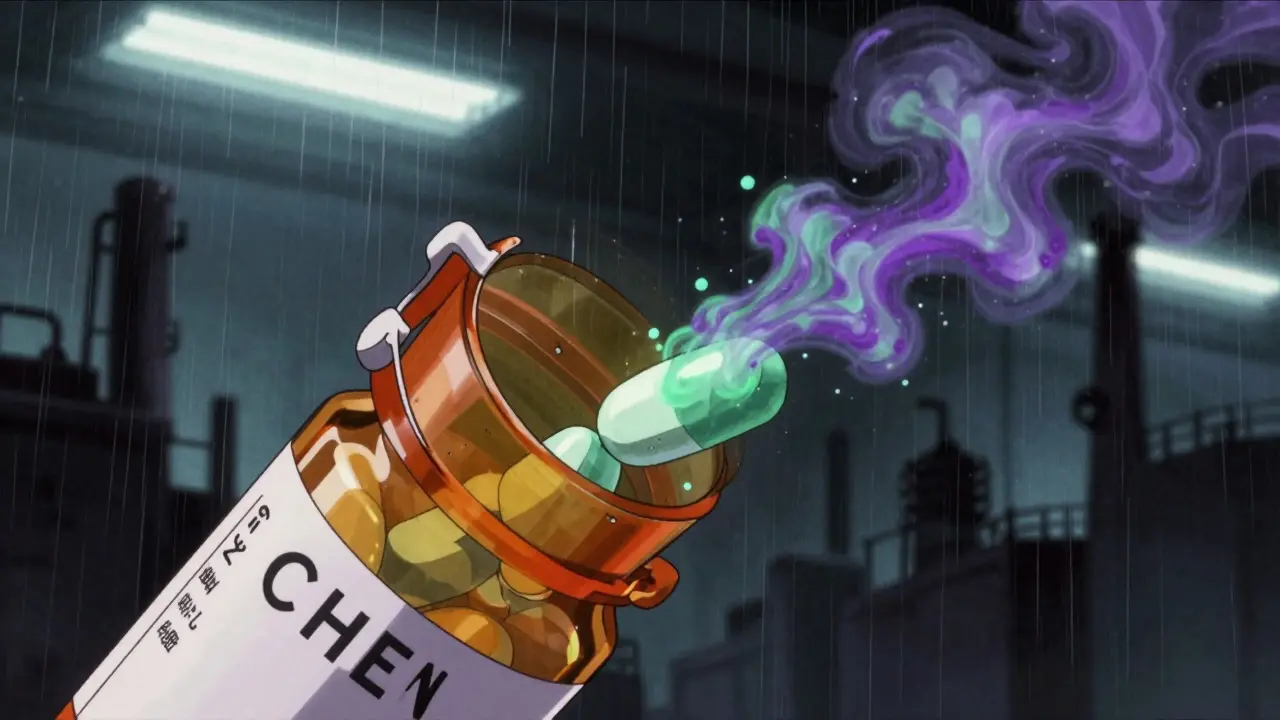
Since 2018, a quiet but dangerous problem has shaken the generic drug industry: nitrosamine contamination. These aren’t just impurities-they’re potent carcinogens found in pills millions of people take daily. What started with a single recall of valsartan, a blood pressure medication, has grown into a global crisis affecting dozens of drugs, from antidepressants to diabetes pills. The FDA has issued over 500 recalls tied to nitrosamines, and the fallout isn’t just about safety-it’s reshaping how generics are made, tested, and trusted.
What Are Nitrosamines and Why Do They Matter?
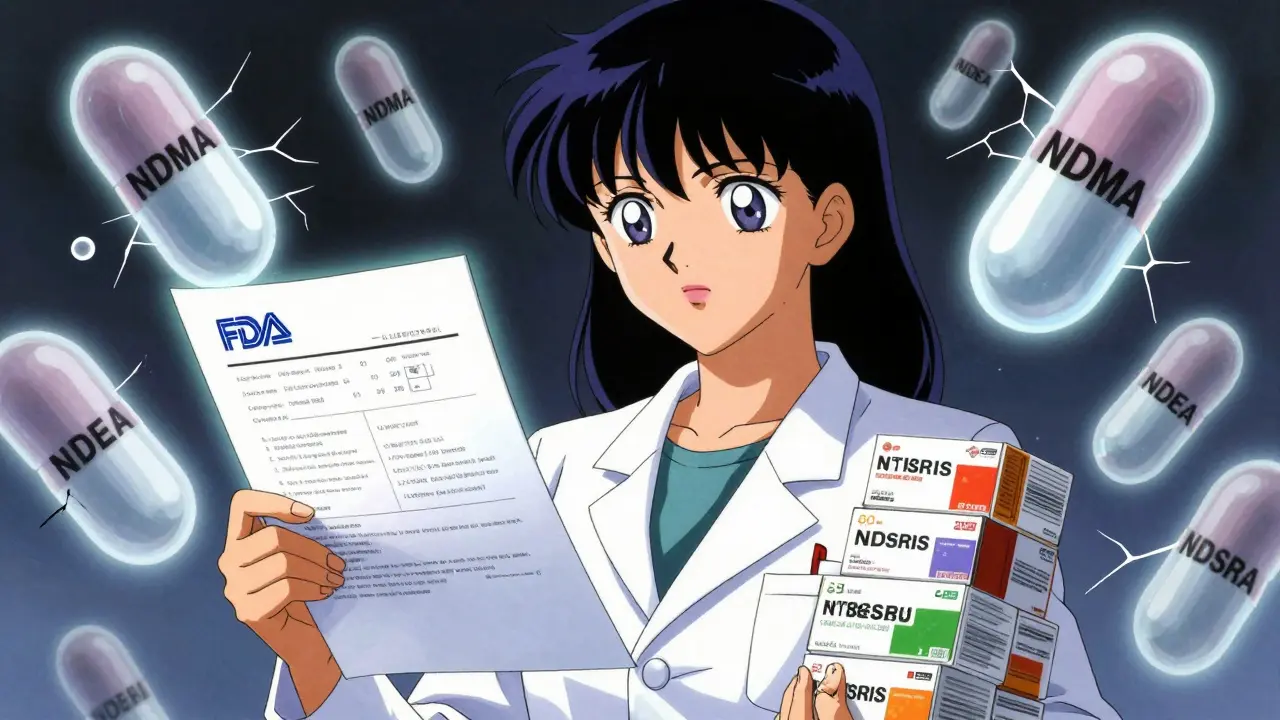
Nitrosamines are a group of chemicals that form when certain amines react with nitrites under heat, pressure, or during storage. They’re not added on purpose. They’re accidental byproducts of manufacturing. The most common ones found in drugs are NDMA (N-Nitrosodimethylamine), NDEA (N-Nitrosodiethylamine), and newer ones like N-nitroso-varenicline and N-nitroso-duloxetine-collectively called NDSRIs.
The problem? Even tiny amounts can raise cancer risk. The FDA says the acceptable daily intake for NDMA is just 96 nanograms-a fraction of a grain of salt. For NDEA, it’s even lower: 26.5 ng/day. These aren’t theoretical limits. They’re based on decades of toxicology studies showing these compounds damage DNA and increase tumor rates in animals. The International Agency for Research on Cancer classifies them as probable human carcinogens. That means if you’ve been taking a contaminated drug for years, your risk isn’t zero.
The First Wave: Valsartan and the Domino Effect
In July 2018, the FDA announced a voluntary recall of valsartan, a common ARB used to treat high blood pressure. The contamination came from a single Chinese API manufacturer that had changed its synthesis process. The new method used dimethylformamide and sodium nitrite-two ingredients that, under certain conditions, created NDMA. Within weeks, similar contamination was found in losartan and irbesartan. Ten products vanished from U.S. shelves in just one month.
But it didn’t stop there. By 2019, ranitidine (Zantac) was pulled after tests showed it could form NDMA over time, even in sealed bottles. Then came metformin, the most widely prescribed diabetes drug. In 2020, the FDA found NDMA in some batches, leading to multiple recalls. By 2022, duloxetine (Cymbalta generics), varenicline (Chantix), and even antibiotics like rifampin were added to the list. Each new discovery forced manufacturers to backtrack, test older stock, and redesign entire production lines.
Where Are Nitrosamines Coming From Now?
Early on, everyone blamed the API manufacturers. But by 2022, the FDA started seeing something unexpected: contamination from packaging.
Blister packs, bottle liners, and adhesives made with secondary amines were reacting with nitrites in the environment or in excipients like magnesium stearate. One case study showed a generic antibiotic tablet had nitrosamine levels over 1,500 ng/day-15 times the limit-because the bottle liner was leaching amines. Another manufacturer traced NDEA formation to a single batch of magnesium stearate from one supplier. That one mistake contaminated three different ARB products.
Even storage conditions matter. Heat and humidity during shipping can accelerate nitrosamine formation. One manufacturer had to redesign its entire supply chain-switching from plastic bottles to glass, changing adhesive types, and adding desiccants to every package.
FDA’s Changing Rules: From Deadline to Flexibility
In August 2023, the FDA dropped its toughest guidance yet: compound-specific acceptable intake limits for every single nitrosamine, even rare ones. Manufacturers had to test for over 30 different NDSRIs, each with its own limit. The deadline to comply? August 1, 2025.
But by June 2025, the FDA quietly backed off. Instead of requiring full compliance, they now accept progress reports. Companies must detail their mitigation efforts in their annual filings, but they don’t have to have every reformulation done by the deadline. Why? Because the science and the logistics turned out to be far harder than anyone expected.
As Lilun Murphy from the FDA’s Office of Generic Drugs said in October 2025: “Nitrosamine mitigation strategies vary widely and can demand extensive time and supply-chain adjustments.” Smaller manufacturers, especially those making low-margin generics, simply can’t afford $2 million in testing and reformulation costs. The FDA’s shift acknowledges that perfection can’t be rushed-especially when patients need steady access to affordable medicines.
How Manufacturers Are Responding
Some companies are fighting back with technology. One mid-sized generic maker spent 18 months and $2.3 million fixing nitrosamine issues in its metformin line. They had to:
- Replace all amine-containing excipients
- Install new LC-MS/MS equipment to detect nitrosamines at 0.3 ng/mL
- Restructure their entire production schedule to avoid heat exposure
- Switch to nitrite-free magnesium stearate
Others took a different route. A European API supplier realized their issue came from a single vendor. They cut ties, audited every raw material, and started testing incoming chemicals for nitrites before use. It took 14 months-but they avoided a recall.
Success stories share one thing: early action. Companies that tested for nitrosamines during drug development, not after launch, avoided massive disruptions. One manufacturer reformulated a generic antidepressant before it even hit shelves. No recalls. No headlines. Just quiet compliance.
The Cost of Compliance
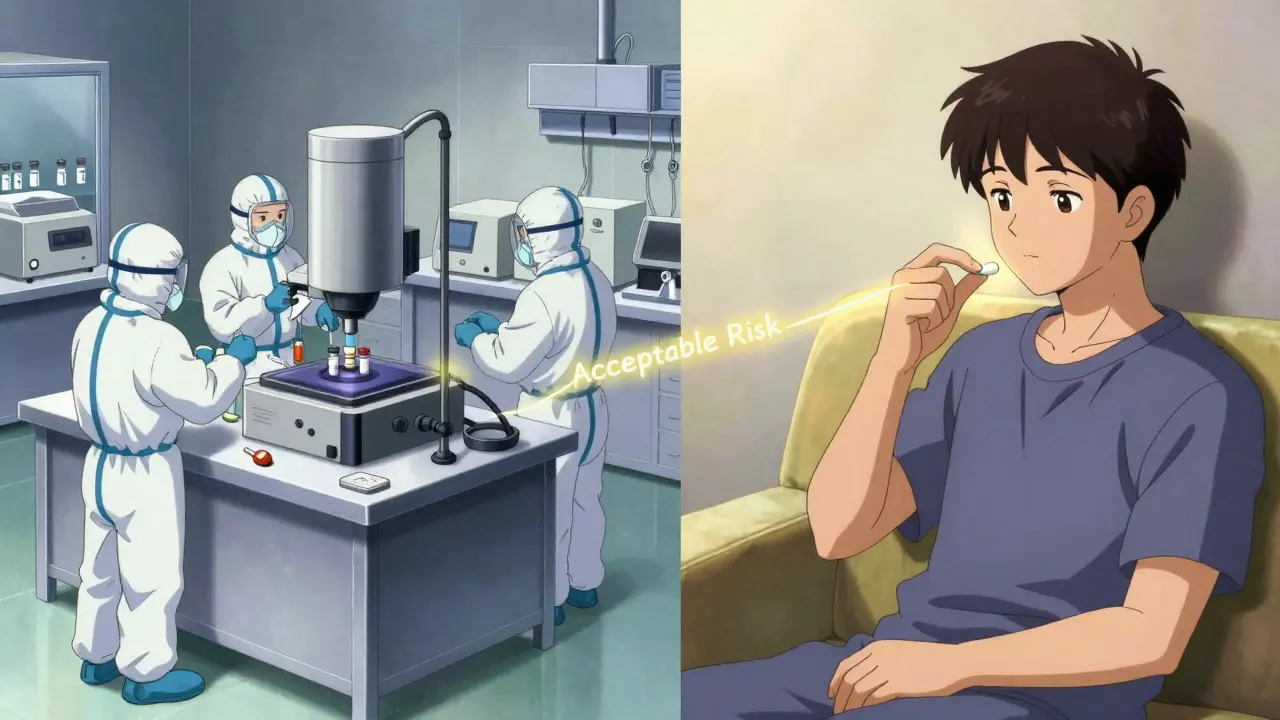
Nitrosamine controls aren’t cheap. A 2025 industry survey by SK Pharmteco found that mid-sized generic manufacturers spend $500,000 to $2 million a year just on testing and process changes. That’s money pulled from R&D, pricing, or staff. For small players, it’s unsustainable.
Result? Consolidation. Big names like Teva, Sun Pharma, and Fresenius Kabi are buying up smaller firms with better quality systems. Evaluate Pharma estimates that nitrosamine compliance has cut generic profit margins by 3-5 percentage points across the board. The market is now split: those who can afford the fix, and those who can’t.
And it’s not just about money. It’s about expertise. You need chemists who understand reaction pathways, analysts who can run ultra-sensitive LC-MS/MS tests, and engineers who can redesign manufacturing without breaking production. Fewer than 15% of small generic labs had this capability in 2020. Now, most have hired specialists or outsourced to contract labs.
What This Means for Patients
Should you stop taking your generic blood pressure or diabetes pill? No. The risk from long-term exposure to trace nitrosamines is real, but the risk of not taking your medication-like a stroke or uncontrolled diabetes-is far higher.
The FDA and manufacturers are working to remove contaminated products. If your drug was recalled, you were notified. If it’s still on the shelf, it’s been tested. You can check the FDA’s recall database for updates. But the bigger issue is trust. For years, generics were seen as safe, cheap alternatives. Now, patients wonder: is my pill clean?
The answer isn’t simple. Some batches are safe. Others aren’t. The system is catching up, but it’s not perfect. The best thing you can do? Keep taking your medicine, but stay informed. Ask your pharmacist if your generic has been tested for nitrosamines. If they don’t know, it’s worth asking your doctor to switch to a brand with a known track record.
What’s Next?
The FDA hasn’t closed the book. They’re already looking at other drug classes-statins, antivirals, even over-the-counter antacids-for potential nitrosamine risks. The same testing methods used for ARBs and metformin are being applied elsewhere.
Manufacturers are also pushing for better global alignment. The EMA and Health Canada have similar rules, but the FDA’s deadlines and compound-specific limits are stricter. Some experts argue for a unified international standard to avoid confusion and prevent supply shortages.
For now, the message is clear: nitrosamine contamination isn’t going away. It’s a new normal in generic drug manufacturing. The industry is adapting, slowly and painfully. The goal isn’t zero risk-it’s acceptable risk. And the FDA is finally acknowledging that achieving that takes time, money, and patience.
What drugs have been recalled for nitrosamine contamination?
More than 40 specific drug products have been recalled since 2018, including ARBs like valsartan, losartan, and irbesartan; the diabetes drug metformin; the anti-smoking aid varenicline; the antidepressant duloxetine; the antibiotic rifampin; and the heartburn drug ranitidine (Zantac). The FDA continues to update its recall list as new cases are identified.
How do nitrosamines get into generic drugs?
Nitrosamines form accidentally during manufacturing when amines react with nitrites under heat, pressure, or during storage. Common sources include contaminated excipients like magnesium stearate, solvents, or reagents used in API synthesis. More recently, packaging materials-such as blister films and bottle liners containing secondary amines-have been identified as sources that leach into drugs over time.
Are nitrosamines dangerous even in tiny amounts?
Yes. Nitrosamines are genotoxic carcinogens, meaning they can damage DNA even at very low levels. The FDA sets acceptable intake limits as low as 26.5 nanograms per day for some compounds. These limits are based on lifetime exposure models that show increased cancer risk-even from trace contamination over years of use.
What should I do if my medication was recalled?
Do not stop taking your medication without talking to your doctor. Stopping blood pressure or diabetes meds can be dangerous. Contact your pharmacist to get a replacement from a different manufacturer or batch. The FDA provides updated recall lists on its website, and your doctor can help you switch to a safer alternative if needed.
Is it safe to keep taking my generic drug now?
If your drug hasn’t been recalled and is currently on the market, it has passed FDA testing for nitrosamines. The agency requires manufacturers to test every batch and submit data before distribution. While no system is perfect, the current oversight is much stricter than it was in 2018. If you’re concerned, ask your pharmacist for the manufacturer’s name and check the FDA’s recall database for updates.
John Chapman
January 1, 2026 AT 10:52Bro this is wild 😱 I had no idea my blood pressure meds could be slowly cooking me from the inside. My pharmacist didn’t even mention it when I picked up my valsartan last week. Guess I’m calling them tomorrow. 🤯
Urvi Patel
January 2, 2026 AT 16:40Let’s be real the FDA is just playing politics. They knew about this since 2019 but waited till generic makers were cornered to act. Now they’re giving extensions like it’s a holiday. The real criminals are the Chinese suppliers who cut corners for pennies and the American execs who outsourced without oversight. No one’s going to jail though
anggit marga
January 4, 2026 AT 12:04Why are we even trusting foreign labs for our medicine? Nigeria makes better antimalarials than half these generic factories. We let the West outsource everything and now we’re paying with cancer risk. This isn’t a drug problem it’s a colonial mentality problem. Build our own labs or die poor
Martin Viau
January 5, 2026 AT 16:55The LC-MS/MS detection thresholds are now at sub-ppt levels which is insane from a regulatory standpoint. The real bottleneck isn’t the chemistry it’s the analytical validation pipeline. Most small labs don’t have the QA/QC infrastructure to handle NDSRI profiling at scale. The FDA’s shift to progress reports was pragmatically inevitable. The 2025 deadline was a fantasy.
Bennett Ryynanen
January 6, 2026 AT 08:36Don’t panic but DO ask your pharmacist. My dad’s on metformin and we called his pharmacy - they switched him to a different batch with a clean certificate. It’s not perfect but you’ve got power here. Also if your drug’s been on the shelf for 18 months? That’s a red flag. Heat + time = nitrosamines. Stay sharp.
Chandreson Chandreas
January 6, 2026 AT 09:48Life’s a balancing act man. We want cheap medicine but we also want it safe. The system’s broken because we treat health like a commodity. Maybe we need to stop treating pills like soda and start treating them like vaccines - with respect. One day we’ll look back and wonder why we didn’t fix this sooner.
Paul Huppert
January 6, 2026 AT 22:50So if my duloxetine was made in 2023 and never recalled, does that mean it’s clean? Or do they only test random batches?
Kayla Kliphardt
January 7, 2026 AT 07:57They test every batch now - but only after the reformulation. Pre-2022 stock? Probably not. Check the lot number on the bottle and cross-reference it with the FDA’s recall site. If it’s not listed, it’s likely safe. But if you’re still nervous? Switch to the brand. Your health isn’t worth the $5 savings.