That familiar throb behind your eye. The nausea that hits before the pain peaks. You reach for your medicine cabinet, hoping to stop the attack in its tracks. But here is the dilemma many migraine sufferers face daily: should you pay a premium for brand-name combination pills, or will the generic versions do the job just as well?
The answer matters more than ever. As of 2026, combination therapies make up about 35% of all acute migraine prescriptions in the United States. These aren't just random mixes of painkillers; they are carefully engineered to hit multiple biological pathways at once. The good news? Generic options have flooded the market since major patents expired around 2020-2021. The bad news? Confusion remains about whether cutting costs means cutting effectiveness.
Let’s clear up the noise. We will look at exactly how these combinations work, which generics hold their own against brands, and when you might actually need to step up to a prescription rather than sticking with over-the-counter fixes.
Why Two Drugs Beat One
Migraines are not simple headaches. They are complex neurological events involving neurogenic inflammation, cortical spreading depression, and activation of the trigeminovascular system. Think of it like a house fire where water alone (one drug) isn’t enough-you need foam and heat suppression too.
This is why migraine combination medications are therapeutic approaches using two or more agents with complementary mechanisms to treat acute attacks. By targeting different parts of the migraine process simultaneously, these combos often provide what researchers call "incremental benefits." In plain English, they work better than either drug taken alone.
A comprehensive review by Dr. Richard B. Lipton in 2024 confirmed this. He noted that NSAIDs target inflammation while triptans address neural processes. When combined, they tackle the headache from both angles. Studies show this approach can improve pain relief rates by 24% to 42% compared to monotherapies. More importantly, recurrence rates drop significantly-from about 40% with single-drug treatments down to 22% with combinations. That means fewer chances of the headache coming back hours later.
The Heavy Hitters: Top Combinations Explained
Not all combinations are created equal. Some are available over the counter, while others require a prescription. Understanding the specific ingredients helps you choose the right tool for your pain level.
| Combination Type | Key Ingredients & Dosage | Best For | Availability |
|---|---|---|---|
| Acetaminophen/Aspirin/Caffeine | 250mg Acetaminophen, 250mg Aspirin, 65mg Caffeine per tablet | Mild to moderate migraines; first-line OTC option | Over-the-counter (Brand: Excedrin Migraine) |
| Sumatriptan/Naproxen | 85mg Sumatriptan, 500mg Naproxen Sodium | Moderate to severe migraines; high efficacy | Prescription only (Brand: Treximet) |
| ED Cocktail (IV) | Ketorolac, Metoclopramide, Magnesium Sulfate, Dexamethasone | Severe, intractable migraines requiring emergency care | Hospital/Emergency Department only |
The most famous over-the-counter option is the acetaminophen/aspirin/caffeine trio, widely known as Excedrin Migraine. It received FDA approval in 1998 and holds Level A evidence for effectiveness according to American Academy of Family Physicians guidelines. The caffeine here isn’t just for buzz-it acts as an adenosine receptor antagonist, enhancing absorption and providing independent analgesic properties.
For stronger attacks, the gold standard has long been sumatriptan/naproxen. This fixed-dose tablet contains 85 mg of sumatriptan and 500 mg of naproxen sodium. The sumatriptan dose is unique to this combination; you won’t find 85 mg tablets in sumatriptan-only products. This combo works because sumatriptan activates 5-HT1B/1D receptors to cause vasoconstriction and inhibit neuropeptide release, while naproxen inhibits cyclooxygenase enzymes to reduce inflammation.
Generic vs. Brand: Does It Matter?
This is the question on everyone’s mind. With branded Treximet costing between $350 and $450 per dose historically, the arrival of generics was a game-changer. Since the patent expiration in 2020, generic sumatriptan/naproxen has captured 92% of the prescription market share in the U.S.
Do generics work as well? Yes. Clinical studies confirm that taking generic sumatriptan (50 mg) plus generic naproxen (500 mg) separately is clinically noninferior to the fixed-dose brand-name pill. In fact, you get identical efficacy at roughly one-tenth of the cost-around $15 to $25 per dose for generics versus hundreds for the brand.
For over-the-counter users, the savings are smaller but still significant. Generic acetaminophen/aspirin/caffeine costs about $0.50 to $1.00 per dose, compared to $5-$7 for branded Excedrin Migraine. Given that the active ingredients are chemically identical, there is no medical reason to prefer the brand name unless you have a specific sensitivity to inactive fillers, which is rare.
Effectiveness Metrics: What the Data Says
Let’s look at the hard numbers. Effectiveness in migraine treatment is usually measured by "pain-free" status at two hours and sustained relief at 24 hours.
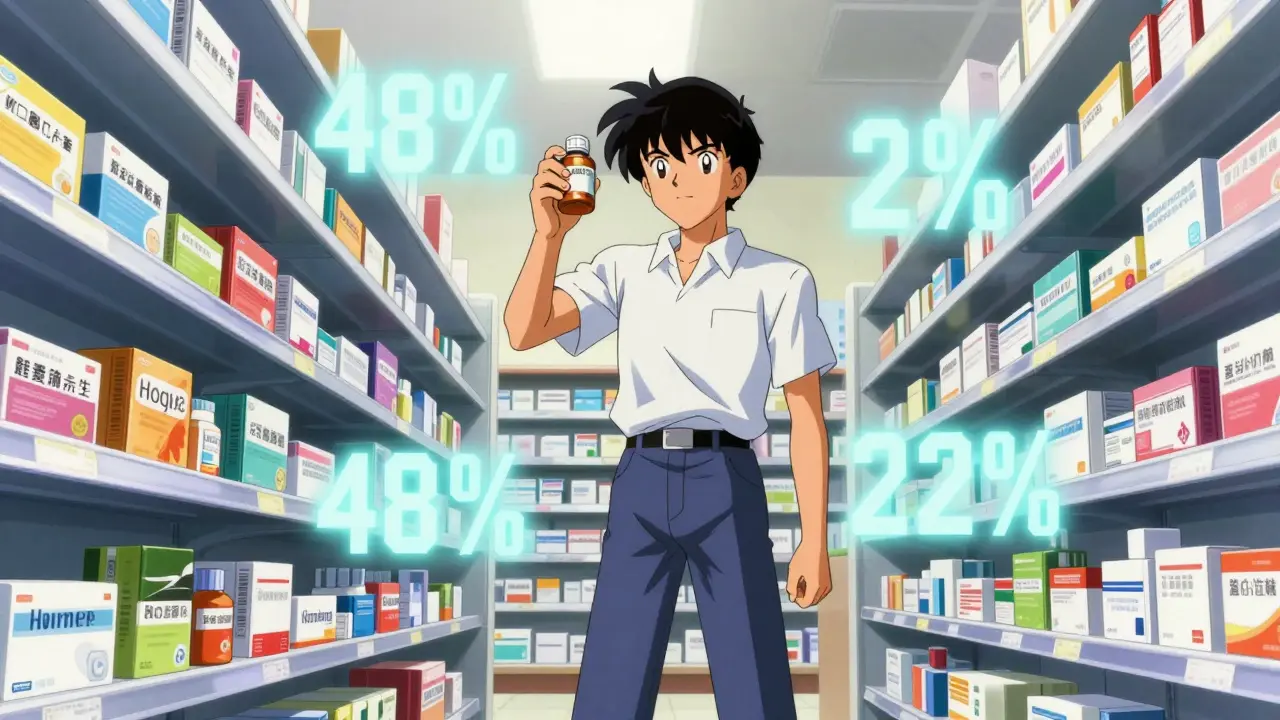
- Sumatriptan/Naproxen: Provides complete pain relief at two hours in 48% of patients. Compare that to 37% for sumatriptan alone and 29% for naproxen alone. At 24 hours, 35% of patients remain pain-free with the combo, versus 26% and 19% for the individual drugs.
- Acetaminophen/Aspirin/Caffeine: Demonstrates a 29% pain-free rate at two hours, outperforming placebo by 17 percentage points.
- Triptan Comparisons: Among triptans, eletriptan shows the highest odds ratio (6.1) for effectiveness, followed by zolmitriptan (5.7) and sumatriptan (5.0). However, combining sumatriptan with naproxen boosts its performance significantly.
It is also worth noting that not every combination works wonders. A 2024 study found that combining topiramate with propranolol for prevention was no more effective than placebo. This highlights a crucial point: combination therapy is highly effective for acute treatment of attacks, but less proven for preventive regimens unless specifically guided by a specialist.
When to Use Which Option
Choosing the right medication depends on your migraine severity. Healthcare providers often use tools like the Migraine Disability Assessment (MIDAS) score to guide this decision.
- Mild Migraines (MIDAS 1-5): Start with acetaminophen/aspirin/caffeine. It is accessible, cheap, and effective for early intervention. Take it at the very first sign of aura or pain.
- Moderate to Severe Migraines (MIDAS 6-10): Move to sumatriptan/naproxen. If you have tried OTC meds and they failed, or if the pain is already intense, this combination offers superior relief. The addition of naproxen helps prevent the rebound effect often seen with triptans alone.
- Intractable/Severe Cases (MIDAS >10): If home treatments fail, you may need emergency department interventions. ED cocktails typically involve IV ketorolac, metoclopramide, magnesium sulfate, and dexamethasone. These are administered sequentially to halt refractory migraines quickly.
A practical tip: If you cannot afford the fixed-dose sumatriptan/naproxen pill, ask your doctor if buying generic sumatriptan 50mg and generic naproxen 500mg separately is appropriate for you. Research shows this split-dose approach is noninferior to the combined pill.
Risks and Pitfalls to Avoid
More powerful doesn’t always mean safer. Combination therapies carry specific risks that you must manage.
The biggest danger is medication-overuse headache (MOH). Using combination medications more than 10 days a month increases your risk of MOH to 70%, compared to 30% with monotherapy. This creates a vicious cycle where the cure causes the problem. Stick to recommended limits and track your usage.
Also, be mindful of contraindications. Naproxen is risky for those with severe renal impairment or stomach ulcers. Triptans are unsafe for people with uncontrolled hypertension or certain heart conditions. Butalbital-containing combinations (like Fiorinal) should be strictly limited due to addiction potential and MOH risk.
Finally, don’t assume combination therapy is needed for every headache. For mild tension-type headaches, simple analgesics suffice. Save the heavy artillery for true migraines to avoid unnecessary side effects and costs.
Is generic sumatriptan/naproxen as effective as Treximet?
Yes. Clinical studies have shown that generic sumatriptan/naproxen provides identical efficacy to the brand-name Treximet. Since the patent expired in 2020, generics have become the standard of care, offering the same pain relief rates at a fraction of the cost ($15-$25 per dose vs. $350+).
Can I take Excedrin Migraine and a triptan together?
You should consult your doctor before mixing these. Excedrin contains aspirin and acetaminophen. While some doctors may advise adding a triptan if Excedrin fails, taking them simultaneously without guidance can increase the risk of side effects like gastrointestinal distress or excessive sedation. Always follow professional medical advice.
Why does caffeine help with migraines?
Caffeine acts as an adenosine receptor antagonist, which has independent analgesic (pain-relieving) properties. Additionally, it enhances the absorption of other pain medications like acetaminophen and aspirin, allowing them to work faster and more effectively.
What is the risk of medication-overuse headache?
Medication-overuse headache occurs when frequent use of acute migraine meds leads to more frequent headaches. The risk jumps to 70% if you use combination medications more than 10 days per month. To avoid this, limit acute med use and discuss preventive strategies with your healthcare provider.
Are combination therapies better for prevention or acute treatment?
Combination therapies are primarily designed and proven for acute treatment of migraine attacks. Recent studies suggest that some preventive combinations (like topiramate plus propranolol) offer no benefit over placebo. Therefore, combination pills are best used to stop an active migraine, not necessarily to prevent future ones.