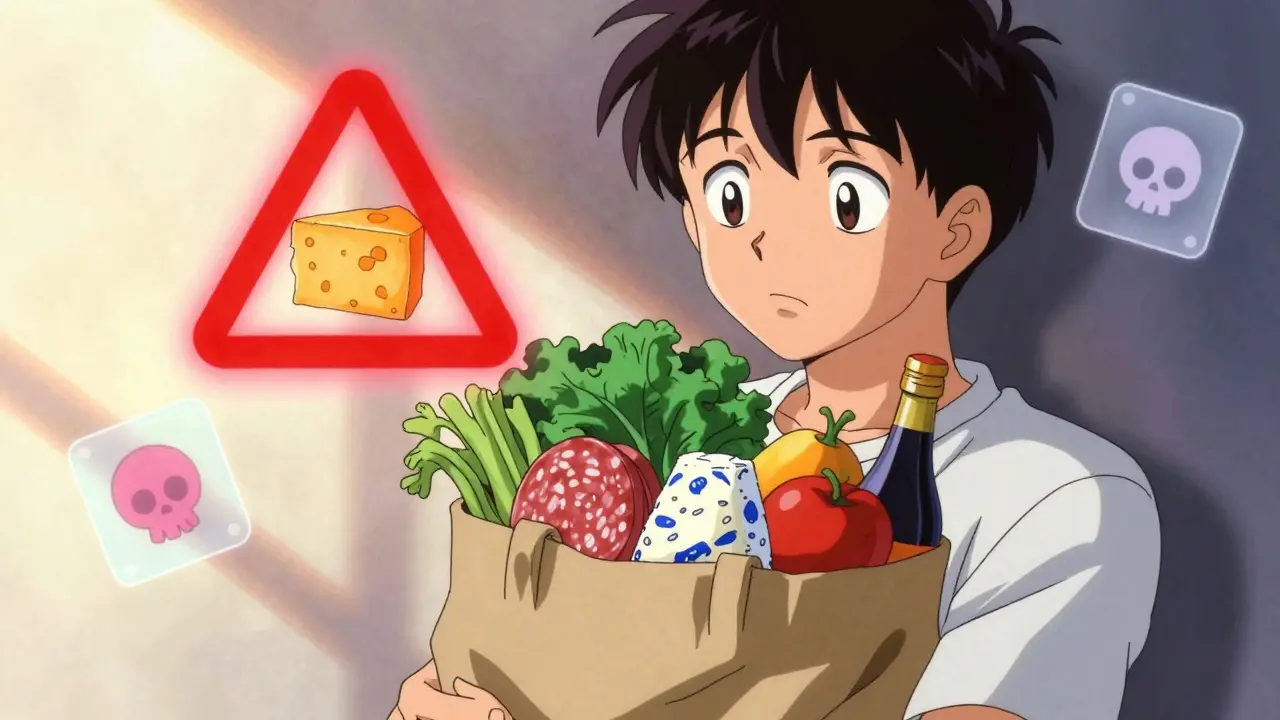
Tyramine Calculator for MAOI Users
Food Selection Calculator
This tool helps you calculate tyramine content in your meals to avoid dangerous blood pressure spikes. The safe threshold is 6 mg per meal. Exceeding this increases your risk of hypertensive crisis.
No foods selected yet
Meal Summary
Important Safety Information:
- Never exceed 6mg tyramine per meal
- Don't combine multiple high-tyramine foods
- Always check labels for "aged," "fermented," or "cured" ingredients
- Store meat and fish in the coldest part of your fridge, not the door
- Carry an MAOI ID card with you at all times
When you’re on an MAOI antidepressant, your food choices aren’t just about taste or health-they can be a matter of life or death. Monoamine oxidase inhibitors like phenelzine (Nardil), tranylcypromine (Parnate), and isocarboxazid (Marplan) work differently than SSRIs or SNRIs. They stop your body from breaking down excess tyramine, a compound found naturally in aged, fermented, or spoiled foods. When tyramine builds up, it can spike your blood pressure dangerously fast-sometimes to levels that cause stroke or heart attack. This isn’t a theoretical risk. It’s happened before, and it still happens today when people don’t know what to avoid.
Why Tyramine Is Dangerous with MAOIs
MAOIs block the enzyme monoamine oxidase-A, which normally clears tyramine from your bloodstream. Without it, tyramine floods your system, forcing your body to release massive amounts of norepinephrine. That’s what causes the sudden, violent rise in blood pressure. The first documented case was in 1964, when a patient on phenelzine ate cheddar cheese and suffered a hypertensive crisis. Since then, over 40 years of clinical data show the same pattern: tyramine overload + MAOI = emergency.
It’s not about eating a little bit of cheese. The threshold for danger is around 6 mg of tyramine per meal. That might sound like a lot, but it’s easy to hit if you’re eating multiple high-risk foods at once. A 150g slice of aged cheddar can contain 4-6 mg. Add a glass of tap beer (5-18 mg per 330ml) and a spoonful of soy sauce (10-12 mg), and you’re past the danger line. One study found that over 90% of reported hypertensive crises occurred when patients consumed more than 25 mg of tyramine in a single sitting-equivalent to eating half a pound of improperly stored salami or 200g of very old cheese.
What Foods to Avoid (And What’s Actually Safe)
Many people think the MAOI diet means giving up all cheese, meat, and soy. That’s outdated. Modern food production has changed everything. Properly refrigerated, commercially made foods today have far less tyramine than they did 50 years ago.
Strictly avoid:
- Aged cheeses (over 6 months old): cheddar, parmesan, blue, gouda, brie (if ripened too long)
- Tap beer and unpasteurized beer: tyramine builds up in fermentation
- Dry fermented sausages: salami, pepperoni, chorizo (even if refrigerated)
- Improperly stored meat or fish: anything left at room temperature or stored over 48 hours
- Soy sauce and miso paste: tyramine levels can hit 100 mg/100g
- Overripe bananas and avocados: only the pulp is safe if fresh; brown spots mean high tyramine
- Yeast extracts: Marmite, Vegemite, concentrated bouillon cubes
Generally safe (with moderation):
- Fresh cheeses: cottage cheese, ricotta, cream cheese, mozzarella
- Properly stored, fresh chicken, beef, or fish: eat within 24 hours of purchase
- Commercially packaged tofu: up to 100g twice a week
- Chocolate: up to 30g (dark or milk)
- Apples, oranges, grapes, strawberries, and fresh bananas (no brown spots)
- White wine and pasteurized beer: one serving per week is usually fine
Here’s the catch: storage matters more than the food itself. A chicken liver stored at 4°C for 48 hours has 15 mg of tyramine. Left at 10°C for 72 hours? It jumps to 128 mg. That’s why experts now say: if it’s been sitting, don’t eat it.
Transdermal Selegiline: A Safer Option?
If you’re on the Emsam patch, your diet rules change. At the lowest dose (6 mg/24 hours), selegiline mainly blocks MAO-B in the brain, not MAO-A in your gut. That means your body can still break down tyramine before it enters your bloodstream. Studies show patients on this dose can eat most foods without risk-no need for a strict diet.
But if your dose is higher than 6 mg/24 hours, you’re back to the old rules. The same applies if you’re switching from oral MAOIs to the patch. Don’t assume safety. Always check with your doctor.
Your Personal Safety Plan
Knowing what to avoid isn’t enough. You need a plan.
- Keep a food diary for the first 7 days. Write down everything you eat and your blood pressure before and 2 hours after meals. This helps spot your personal triggers.
- Buy fresh daily. Avoid leftovers. If you cook, eat it the same day. Store meat and fish in the coldest part of your fridge, not the door.
- Check labels. Avoid anything with “aged,” “fermented,” “cured,” or “yeast extract.”
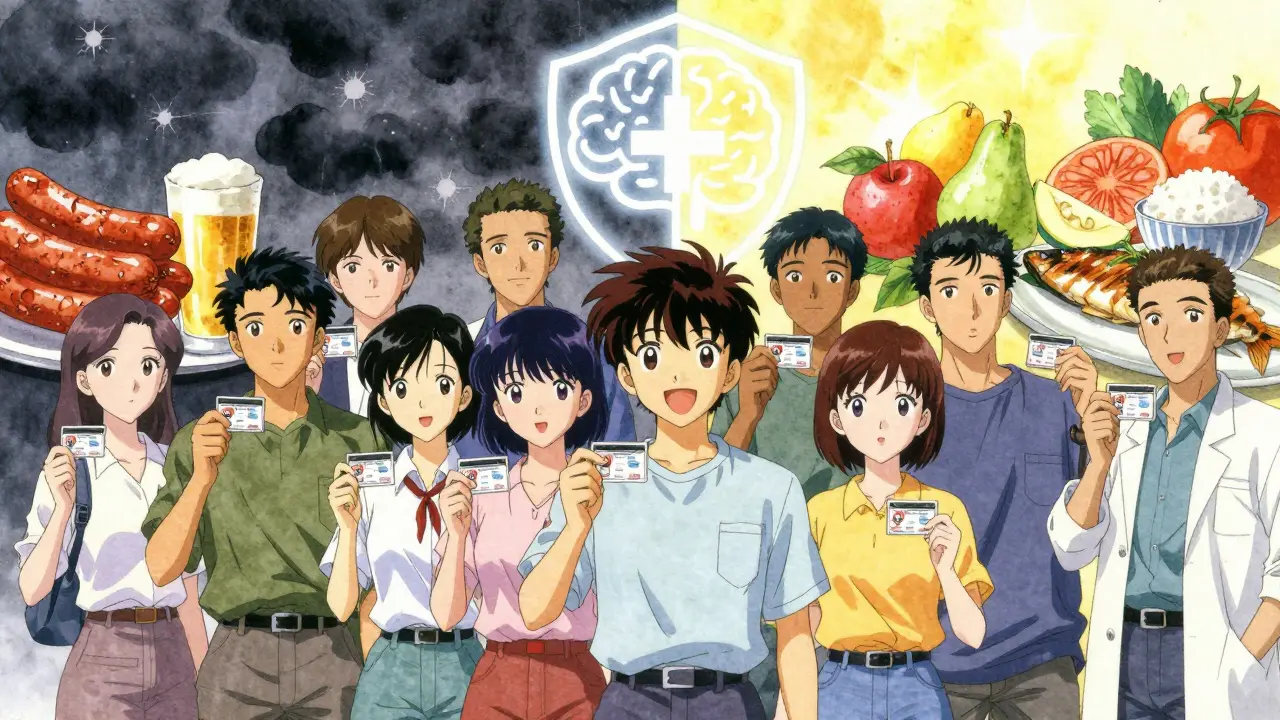
- Carry an MAOI ID card. Emergency rooms don’t always know about MAOI risks. A card saying “I am on an MAOI antidepressant-avoid tyramine-rich foods” can save your life.
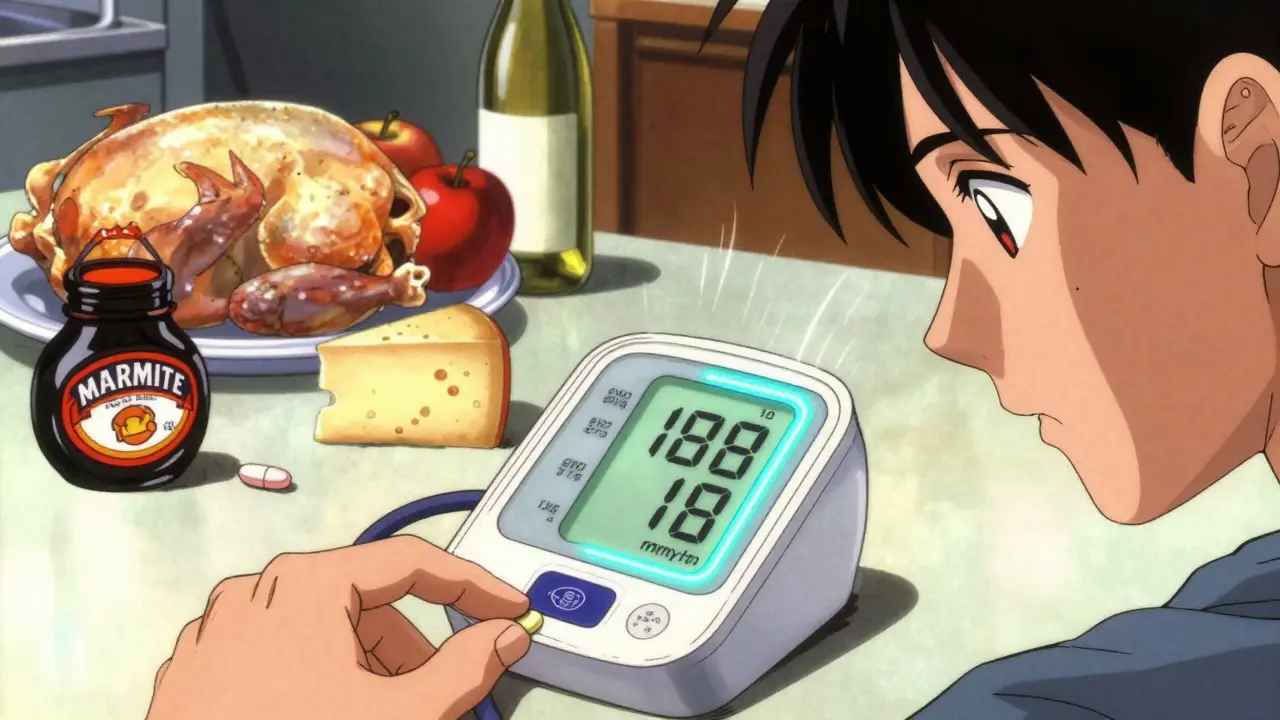
- Buy a home blood pressure monitor. Check it twice a day. If your systolic reading hits 180 mmHg or higher, take 0.2-0.4 mg sublingual nifedipine (if prescribed) and call 999 immediately.
Don’t wait for symptoms. Headache, stiff neck, sweating, nausea, or a pounding heartbeat? These are early warning signs. Don’t ignore them. Act fast.
What About After Stopping MAOIs?
Stopping your MAOI doesn’t mean you can go back to eating aged cheese right away. The enzyme monoamine oxidase takes 2-3 weeks to regenerate. That’s why you must stick to the diet for at least 14 days after your last dose-and 21 days if you were on high doses or had a reaction before.
Some doctors recommend waiting 3 weeks before reintroducing risky foods. Start slow: one small serving of cheese, then wait 24 hours. Check your blood pressure. If nothing happens, try another. If your pressure spikes? Stop. Talk to your doctor.
Why Are MAOIs Still Used?
You might wonder: if the diet is so strict, why do doctors still prescribe them? Because for some people, they work when nothing else does. In treatment-resistant depression, MAOIs have a 50-60% response rate. SSRIs? Only 30-40%. That’s why specialized clinics still use them, even though they make up less than 2% of all antidepressant prescriptions in the U.S.
They’re not first-line anymore. But for someone who’s tried five other meds and still feels hopeless, MAOIs can be the last option that brings relief.
The Future: Better Tools, Fewer Restrictions
Science is catching up. The USDA now has a public database of tyramine levels in over 500 foods. New research shows 68% of foods once considered dangerous contain less than 2 mg per 100g when stored properly. Reversible MAOIs like moclobemide (available in Europe) allow tyramine to be metabolized after the drug leaves the enzyme-so you can eat cheese without risk.
Even better, genetic testing is emerging. A 2023 pilot study found people with the MAOA-L gene variant have much higher blood pressure spikes from tyramine than those with MAOA-H. In the future, your diet might be tailored to your DNA.
But for now, if you’re on phenelzine, tranylcypromine, or isocarboxazid, you still need to be careful. The rules aren’t as strict as they were in the 1980s, but they’re not gone.
Final Thoughts
MAOIs aren’t for everyone. But for those who need them, they can be life-changing. The key isn’t fear-it’s knowledge. You don’t have to give up all pleasure. You just need to know what’s safe, what’s risky, and how to protect yourself.
Stick to fresh food. Avoid anything that’s been sitting. Check your blood pressure. Carry your ID card. And never assume you’re safe just because you’ve been on the medication for months. Tyramine doesn’t care how long you’ve been taking it. It only cares if you eat too much of it at once.
Can I eat chocolate on MAOIs?
Yes, but limit it to 30g per day. Dark or milk chocolate is fine if it’s fresh and not mixed with aged cheese or soy. Avoid chocolate with added nuts or caramel if they’re from unknown sources. High tyramine levels in chocolate are rare, but combining it with other triggers increases risk.
Is soy sauce completely off-limits?
Yes, avoid soy sauce entirely. Even small amounts can contain 10-120 mg of tyramine per 100g. Tamari or coconut aminos are safer alternatives, but check labels. Some brands add fermented ingredients that still carry risk. If you must use soy, limit tofu to 100g twice a week and choose fresh, refrigerated varieties.
Can I drink wine on MAOIs?
One small glass (125ml) of white or red wine per week is usually safe. Avoid red wine if it’s unfiltered or homemade. Never drink more than one serving. Tap beer, homebrew, and unpasteurized beer are dangerous. Stick to pasteurized, store-bought beer in cans or bottles.
What should I do if I accidentally eat a high-tyramine food?
Check your blood pressure immediately. If it’s under 140/90, monitor for 2 hours. If it rises above 180 systolic, take your prescribed sublingual nifedipine (if you have it) and call emergency services. Do not wait for symptoms. High blood pressure from tyramine can strike without warning.
Are there any over-the-counter meds I should avoid?
Yes. Avoid cold and allergy medicines containing pseudoephedrine, phenylephrine, or dextromethorphan. Also skip St. John’s Wort, certain weight-loss pills, and migraine meds like sumatriptan. Always check with your pharmacist before taking anything new-even herbal supplements.
How long do I need to follow the diet?
You must follow the diet for the entire time you’re on the medication-and for at least 14 days after stopping. If you were on a high dose or had a previous reaction, extend it to 21 days. The enzyme takes 2-3 weeks to fully recover. Going back to old habits too soon can still trigger a crisis.
Can I eat at restaurants while on MAOIs?
Yes, but be very careful. Ask how food is prepared. Avoid anything aged, fermented, or leftover. Stick to grilled meats, fresh vegetables, rice, and plain pasta. Skip sauces, especially soy-based ones. Don’t order soups unless you know they’re made fresh that day. When in doubt, choose simple dishes and eat before the restaurant gets busy-fresh food is more likely to be served early.
If you’re on an MAOI, you’re not just taking a pill-you’re managing a lifestyle. It’s not easy. But for many, the freedom from depression is worth the effort. Stay informed. Stay cautious. And don’t let fear stop you from living-just make sure you’re living safely.
kelly tracy
December 30, 2025 AT 07:51Let’s be real-this post is just fearmongering dressed up as medical advice. People have been eating aged cheese and soy sauce for centuries without dropping dead. The 6mg threshold? That’s a made-up number from a 1970s case report. Modern refrigeration and food safety standards have made most of these risks negligible. If you’re scared of your own fridge, maybe you shouldn’t be on antidepressants at all.
srishti Jain
January 1, 2026 AT 01:59tyramine is a scam. i ate blue cheese with my marplan for 3 years. no crisis. doctors love scare tactics to keep you dependent.
Cheyenne Sims
January 2, 2026 AT 07:52The assertion that commercially produced foods today contain negligible tyramine is not supported by peer-reviewed literature. The FDA’s 2019 guidance on fermented foods explicitly states that tyramine accumulation remains a significant risk factor in improperly stored products, regardless of manufacturing standards. This post’s oversimplification is dangerously misleading.
Shae Chapman
January 2, 2026 AT 16:17Thank you for this. 💙 I’ve been on Nardil for 5 years and this is the first time I’ve seen a guide that doesn’t make me feel like a prisoner in my own kitchen. Fresh food = freedom. I now check my BP every morning and carry my card in my wallet. It’s not perfect, but it’s livable. You’re not alone. 🌱
Kunal Karakoti
January 2, 2026 AT 21:20It’s interesting how medical authority shifts with cultural context. In the 1960s, tyramine was a demon. Today, it’s a statistical outlier. But the real question isn’t about tyramine-it’s about how we assign risk. Do we fear the food, or the loss of control? The MAOI diet forces us to confront our relationship with autonomy, time, and the body’s unpredictability. Maybe the real medicine isn’t the drug, but the discipline.
Kelly Gerrard
January 4, 2026 AT 04:24This is exactly why people die on MAOIs. You think you’re safe because you’ve been on it for months. You’re not. Tyramine doesn’t care about your routine. One bad meal. One skipped fridge check. One moment of carelessness. And it’s over. No second chances. Don’t be the next statistic.
Sandeep Mishra
January 4, 2026 AT 07:54Hey, if you’re new to MAOIs, don’t panic. Start with the safe list. Buy one fresh chicken breast, one apple, one carton of cottage cheese. Eat it. Check your BP. Then try a tiny bit of dark chocolate. Slow progress beats fear. You’re not broken. You’re adapting. And you’ve got this. 🙌
Colin L
January 4, 2026 AT 20:18Oh please, let’s not pretend this is about food. This is about control. The medical establishment needs you terrified so you’ll stay compliant, keep your appointments, and never question why they didn’t give you something easier. I’ve been on Parnate for eight years. I’ve eaten salami, soy sauce, and leftover lasagna. I’ve checked my BP every day. I’ve never had a spike. The real danger isn’t tyramine-it’s the shame they make you feel for wanting to live normally. Why are we still treating depression like a moral failing? Why does recovery require so much suffering?
Hayley Ash
January 5, 2026 AT 19:54Wow so the doctor told you to avoid cheese so you did? How brave of you. Meanwhile in Japan people eat fermented soy for breakfast and still live to 100. Maybe the real issue is your doctor doesn’t know what they’re talking about. Or maybe you just like being told what to do. 🙄
Nadia Spira
January 7, 2026 AT 17:31Let’s deconstruct the epistemological framework of MAOI dietary compliance. The tyramine paradigm is a biosemiotic construct rooted in mid-20th century pharmacodynamic reductionism. Contemporary neuropharmacology suggests that individual MAO-A polymorphisms and gut microbiome variability render population-based thresholds obsolete. Your ‘safety plan’ is a performative ritual of medical hegemony-designed to sustain patient dependency, not promote autonomy. You’re not managing risk. You’re internalizing pharmaceutical dogma.