
When you buy a pill, an inhaler, or a vaccine, you expect it to be safe. But how do you know the factory that made it followed the rules? The answer lies in manufacturing transparency-and specifically, in access to FDA inspection records. This isn’t just bureaucracy. It’s the invisible line between a medicine that works and one that could harm you.
What the FDA Can and Can’t See
The U.S. Food and Drug Administration doesn’t just show up at a factory and ask for a tour. They have legal power under Section 704(a)(1) of the Federal Food, Drug, and Cosmetic Act to walk into any facility making drugs or medical devices and demand records. But here’s the twist: not everything is open for inspection. Under Compliance Policy Guide Sec. 130.300, the FDA generally avoids reviewing internal quality assurance audits. These are the reports a company writes to check itself-like an internal health check. The idea is simple: if companies fear those reports will be used against them, they won’t be honest. And if they’re not honest, problems stay hidden. But here’s what the FDA can demand:- Production records from every batch made
- Validation protocols for equipment and processes
- Deviation reports when something went wrong
- Investigations into product complaints or failures
- CAPA (Corrective and Preventive Action) plans
Inspection Types: Routine vs. For-Cause
Not all FDA inspections are the same. In 2024, about 75% of pharmaceutical inspections were routine surveillance checks. These are scheduled, planned, and follow standard protocols. During these, the FDA sticks to the rules: no internal audit reports, just the hard records of what actually happened on the floor. Then there’s the other 18%: for-cause inspections. These happen when something goes wrong-a contamination, a patient injury, a whistleblower tip, or a pattern of failures. In these cases, the FDA can demand everything. That includes the internal audit reports they usually avoid. Why? Because if a company is hiding systemic issues, they’re not just cutting corners-they’re putting lives at risk. The difference matters. One type encourages honesty. The other uncovers deception.What Happens When They Find Something Wrong?
If inspectors spot a problem, they don’t shut the plant down on the spot. They hand over Form FDA 483: a list of observations. This isn’t a fine. It’s a notice: “We saw this. Explain it.” Companies have exactly 15 business days to respond. Not 16. Not 20. Fifteen. And the response better be detailed. The FDA doesn’t want a generic “we’re fixing it.” They want root cause analysis: Why did this happen? How did it slip through? What steps are you taking so it never happens again? Data shows companies that follow the FDA’s recommended root cause method close 89% of their 483s within six months. Those who rush it? Only 62% succeed. The difference isn’t just paperwork-it’s whether the company truly understands the problem. And if they don’t respond? Or if the response is weak? The FDA can issue a warning letter. Or block imports. Or even shut down production. In Q1 2025, warning letters for failing to allow inspection access jumped 17% compared to the same period last year.
Foreign Factories Are Under More Scrutiny
Over half of the world’s active pharmaceutical ingredients come from outside the U.S. That’s why the FDA has been ramping up inspections overseas. In 2023, only 12% of foreign facility inspections were unannounced. By the end of 2025, that number will hit 35%. Domestic facilities? Still mostly scheduled-92% of the time. But foreign plants? They’re getting surprise visits more often. Why? Because past inspections found higher rates of non-compliance. A 2024 GAO report flagged gaps in oversight of overseas manufacturers. The FDA’s response? More surprise checks. More pressure. More transparency. Companies with foreign suppliers now spend an average of $385,000 a year just preparing for inspections. That’s not just training-it’s hiring specialists, upgrading software, and building teams dedicated to staying compliant.Remote Inspections Are Changing the Game
In July 2025, the FDA finalized new rules for Remote Regulatory Assessments (RRAs). This means inspectors can now request digital access to records, review databases remotely, or even conduct live video walkthroughs-without ever stepping foot in the facility. RRAs aren’t replacements for physical inspections. They’re supplements. But they’re growing fast. In the first half of 2025, 8% of all inspections were done remotely. That might sound low, but it’s up from nearly zero two years ago. Companies that adopted RRA-ready systems cut inspection-related downtime by 65%. That’s huge. No more halting production for weeks while waiting for inspectors. No more scrambling to print thousands of pages. Forty percent of Fortune 500 pharmaceutical companies had RRA systems in place by Q1 2025. If you’re not ready, you’re falling behind.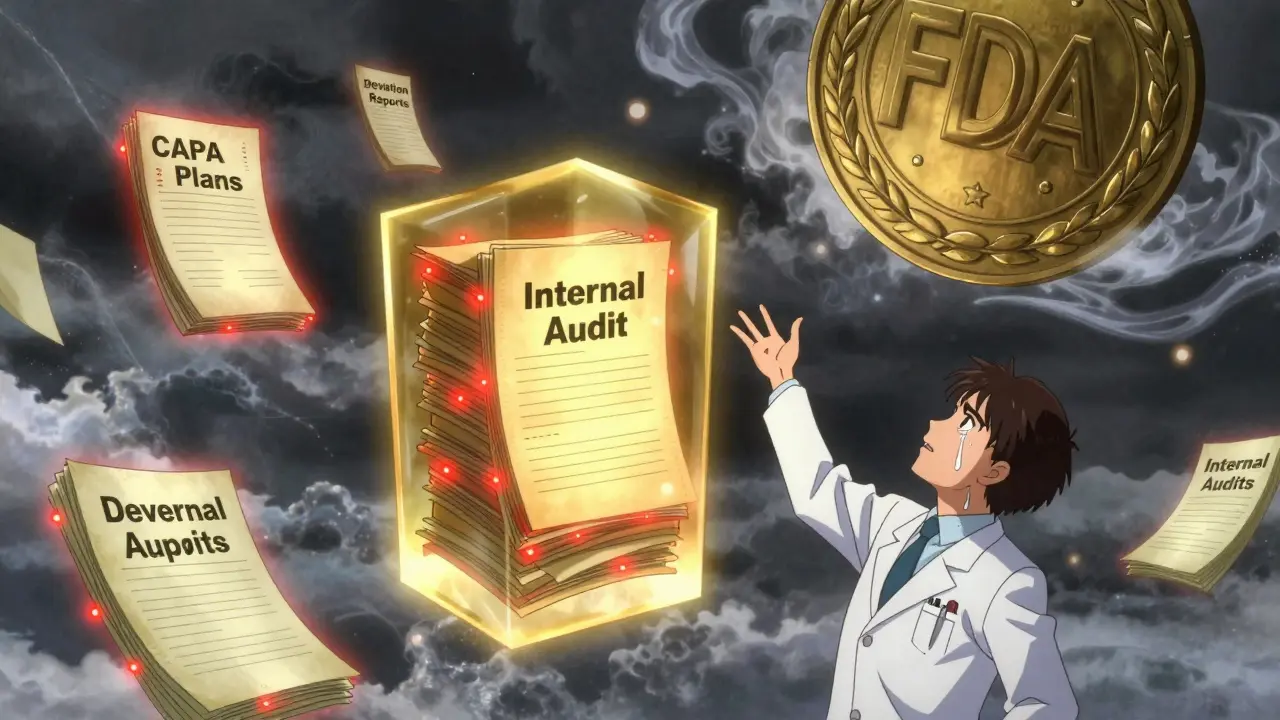
Eileen Reilly
January 11, 2026 AT 21:10so like... the FDA just lets foreign factories get away with crap because they can't be everywhere? lol. we're literally trusting our lives to some dude in a lab coat in india who's probably just copying the docs from last year.
Cecelia Alta
January 13, 2026 AT 06:28oh please. the whole 'internal audits are protected' thing is just corporate gaslighting. if your cleaning protocol is so broken that you need to hide it from the fda, then you shouldn't be making pills. they're not asking for your therapy journal, they're asking for your quality control logs. if you're scared to show them, you're already guilty.
steve ker
January 13, 2026 AT 13:16usa thinks it owns the world. why should we care about your fda rules when your drugs cost 10x more than ours? the real transparency is in the price tag not the paperwork
Audu ikhlas
January 14, 2026 AT 17:59foreign factories are scamming us and the fda is too soft. we need to ban all imports until every plant is inspected like a prison cell. no warning letters no second chances. shut em all down and make em start over. america first even if it means no more cheap insulin
Sonal Guha
January 15, 2026 AT 07:35backfilled records are the biggest problem. if you write something after the fact you're not fixing a system you're covering a crime
TiM Vince
January 16, 2026 AT 12:22the remote inspections thing is actually genius. i've seen factories in indiana that still print everything on paper. digital systems save time money and lives. why are we still using fax machines in 2025?
Bryan Wolfe
January 16, 2026 AT 16:27the fact that 78% of pharma companies now have dedicated inspection teams says everything. this isn't about bureaucracy it's about culture. companies that treat compliance like a checklist are already failing. the ones that build it into their dna? they're the ones we can trust. keep pushing for transparency not because the law says so but because patients deserve better
Rinky Tandon
January 17, 2026 AT 09:38the root cause analysis failure rate is a direct reflection of leadership incompetence. if your qa team is scrambling to respond to a 483 you already lost. real quality is baked in not bolted on after the fact. and the 22% with backfilled records? that's not negligence that's malice
Ben Kono
January 18, 2026 AT 01:06the fda needs to standardize interpretations. one district says give the audit report another says dont. that's not regulation thats chaos. companies are drowning in conflicting guidance
Cassie Widders
January 18, 2026 AT 10:01honestly i just want to know if my medicine is safe. i dont care about audits or forms or who wrote what. if the pill works and i dont die i'm good
Darryl Perry
January 20, 2026 AT 04:38the 15 day response window is unrealistic. no company can do proper root cause analysis in that time. this is performative enforcement
Amanda Eichstaedt
January 21, 2026 AT 04:08transparency isn't about exposing flaws it's about proving you care enough to fix them. the companies that hide are the ones that never learn. the ones that show their work? they're the ones building trust one batch at a time
Jose Mecanico
January 21, 2026 AT 14:12agree with the remote inspections point. i work in a facility that went digital last year. the downtime drop was insane. we actually got more done during inspections because we weren't printing 5000 pages
Abner San Diego
January 22, 2026 AT 00:03why are we even talking about this? just make the fda inspect every factory every month. problem solved