
The U.S. Food and Drug Administration (FDA) doesn’t wait for a single bad shipment to hit the shelves before acting. If a manufacturer has a history of cutting corners-poor sanitation, falsified test results, unapproved ingredients-the FDA can shut down their entire pipeline to the U.S. with a single document: an Import Alert. These aren’t warnings. They’re automatic blocks. And since September 2025, they’ve been targeting the booming market for weight-loss drugs like semaglutide and tirzepatide with unprecedented force.
What Is an Import Alert, Really?
An Import Alert is the FDA’s way of saying, "We’ve seen this before, and we’re not taking chances." Once issued, shipments from that manufacturer, facility, or even country are detained without physical inspection (DWPE). No need to open boxes, no lab tests required. The system relies on data-years of inspection reports, past refusals, supplier audits, and even how a company responds to previous violations. The FDA’s PREDICT algorithm weighs over 150 factors to decide who gets flagged. It’s not a one-size-fits-all blacklist. The FDA uses a color-coded system:- Green List: Manufacturers cleared for fast-track entry. No detention. These are the compliant ones.
- Yellow List: Suspicious activity. Shipments may be held for inspection.
- Red List: Automatic detention. No exceptions. No second chances until remediation is complete.
Why GLP-1 Drugs Are the New Front Line
Semaglutide, tirzepatide, liraglutide-these aren’t just buzzwords. They’re billion-dollar drugs. The global GLP-1 market hit $35.2 billion in 2024. But with high demand comes high risk. Counterfeit and substandard versions flooded the market, often shipped from unregulated labs in India and China. Some contained the wrong dose. Others had toxic impurities. A September 2025 technical review found 68.4% of refused GLP-1 shipments contained impurities above international safety limits. The FDA’s response? The Green List. Only manufacturers who pass a rigorous, FDA-recognized audit can get on it. That means:- Third-party audits by FDA-approved firms
- Stability testing across three temperature zones
- Full traceability from raw materials to finished product
- Verified batch records and production logs
Who’s Getting Hit the Hardest?
The data doesn’t lie. Of the 89 manufacturers caught in the GLP-1 Import Alert, 73 are based in India. That’s 82%. Nine are in China. Seven are in Europe. Why? Because India is the world’s largest supplier of generic APIs-and many of those facilities were built to meet cost, not compliance, targets. One manufacturer on Reddit, posting under "API_Supplier_2023," described losing $1.2 million in 72 hours. Their shipment was refused because the auditor wasn’t on the FDA’s approved list-even though they had ISO 9001 certification. That’s the problem. ISO doesn’t mean FDA-compliant. The standards are different. And the FDA doesn’t care about your internal quality system if it doesn’t match their requirements. The fallout is real. The Indian Pharmaceutical Alliance says 28,500 jobs are at risk. U.S. pharmacies are seeing 14.3% price hikes on compounded GLP-1 versions. Generic drugmakers like Viatris reported a $417 million revenue hit in Q3 2025. Meanwhile, big players like Novo Nordisk and Pfizer are gaining market share as their supply chains meet the new standards.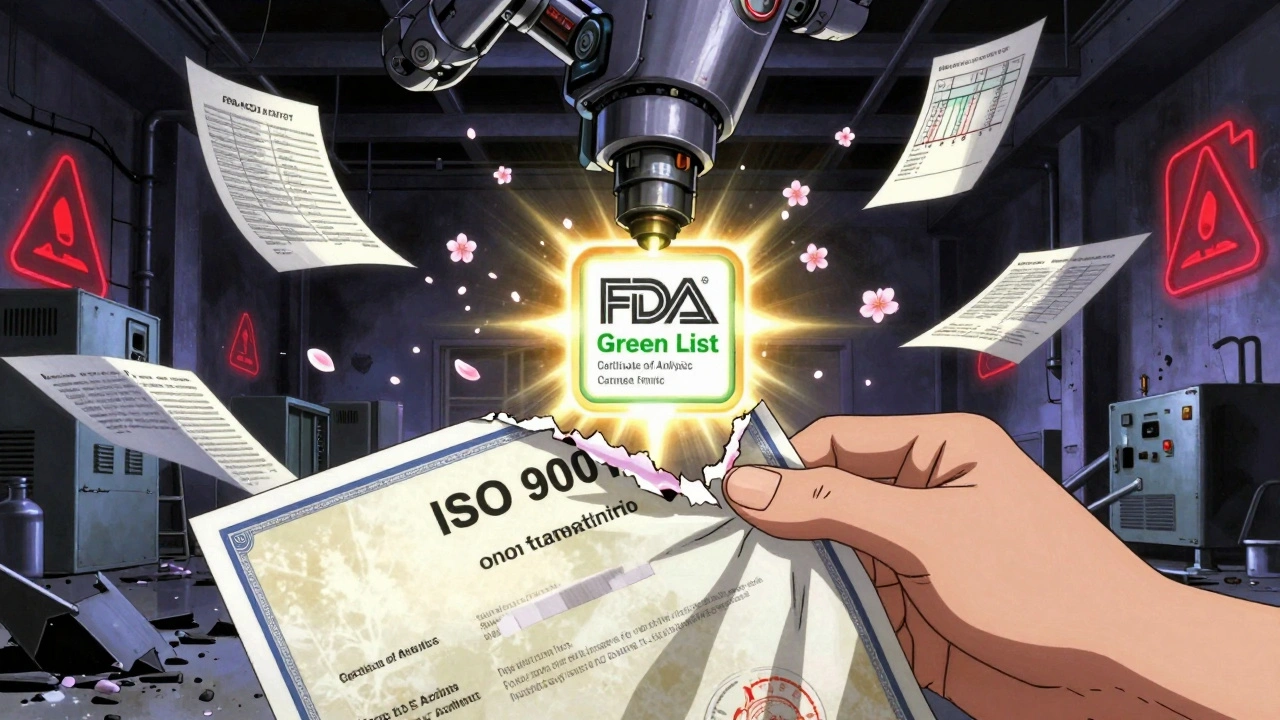
What It Takes to Get Off the List
Getting removed from an Import Alert isn’t easy. It’s not a quick fix. The FDA requires four things:- A full, unannounced inspection of the facility (minimum 5 days)
- A root cause analysis with a detailed corrective action plan (CAPA)
- Three consecutive shipments that pass inspection
- Executive certification signed by the company’s top quality officer
The Dark Side of Enforcement
The system isn’t perfect. Critics say it’s creating artificial shortages. Dr. Rachel Sherman, former FDA deputy commissioner, warned that pushing patients away from regulated sources could drive them toward even riskier underground suppliers. And there’s evidence it’s happening. ProPublica found 157 products have received enforcement discretion exemptions since 2013-including Viatris’ endoscopy equipment, despite repeated violations. Meanwhile, some companies are paying brokers to falsify export documents just to avoid destruction fees. The FDA issued Warning Letter 541598 in October 2025 to a Singapore-based intermediary caught doing exactly that. And then there’s the timeline. It takes, on average, 11.7 months to get off an Import Alert. Health Canada does it in 6.3. The European Union doesn’t even have a system like this-they inspect 10-15% of high-risk shipments instead of blocking them outright. The FDA’s method is faster for compliant companies but brutal for those trying to fix mistakes.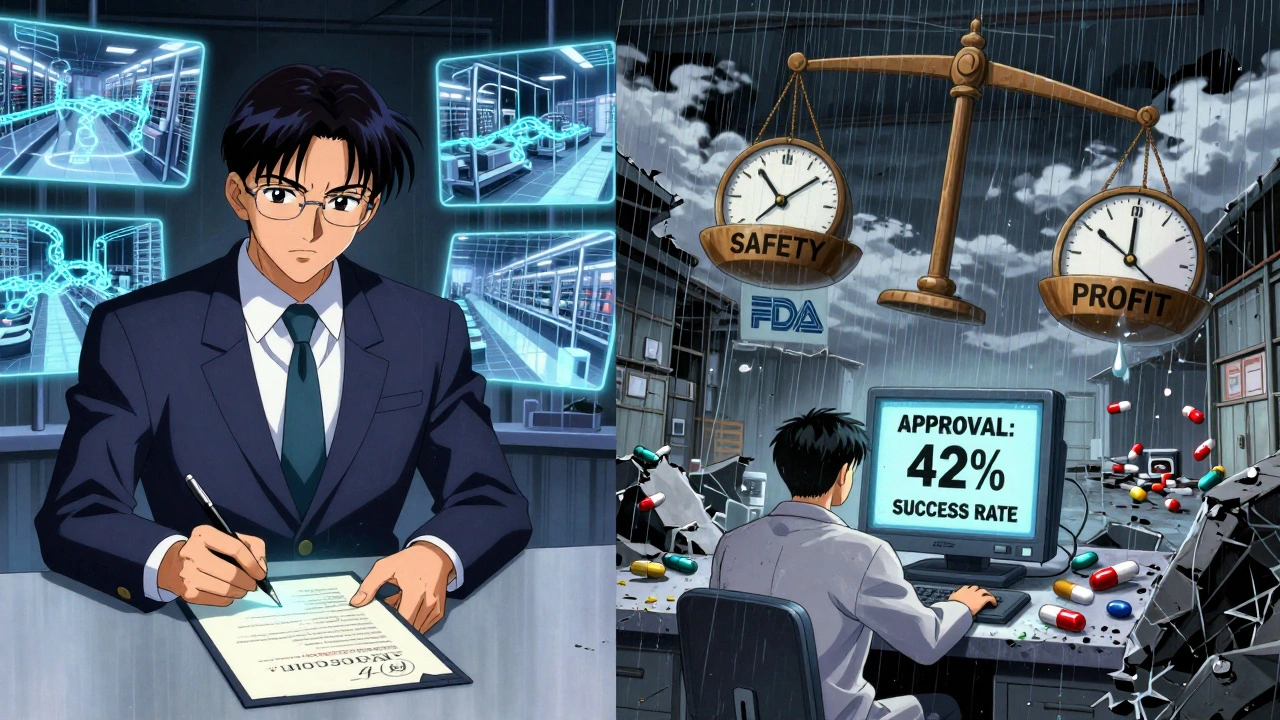
What’s Next?
The GLP-1 Import Alert is just the beginning. In November 2025, FDA Commissioner Dr. Robert Califf announced the same framework will expand to all high-risk biologics-starting with monoclonal antibodies in Q1 2026. That means cancer drugs, autoimmune treatments, and gene therapies could soon face the same scrutiny. China’s NMPA announced in November 2025 that all API exporters must now meet FDA-equivalent standards by January 1, 2026. The European Commission is following suit. Global contract manufacturers are merging. Catalent bought Novasep’s peptide business for $980 million specifically to meet the new compliance demands. By 2027, McKinsey predicts 65-75% of global API manufacturers will need to spend $500,000 to $2 million to stay in the U.S. market. That’s not just a cost-it’s a barrier to entry. Small suppliers won’t survive. Only those with deep pockets and real quality systems will make it.What This Means for You
If you’re a patient: The drugs you get are safer. But they might cost more. And if you rely on a compounded version of a GLP-1 drug, your options are shrinking. If you’re a manufacturer: The rules have changed. ISO 9001 isn’t enough. Your auditor must be FDA-approved. Your documentation must be perfect. Your supply chain must be traceable to the third tier. And if you mess up? You could lose millions overnight. If you’re a pharmacy or distributor: Verify your suppliers are on the Green List. Don’t assume because a product is labeled "pharmaceutical grade" it’s legal. The FDA’s API Transparency Portal, launched in November 2025, lets you check real-time status for over 1,800 manufacturers. The days of cutting corners on drug quality are over. The FDA isn’t just inspecting products anymore. They’re inspecting systems. And they’re not asking for permission-they’re enforcing compliance.What happens if a drug shipment is detained under an FDA Import Alert?
The shipment is held at the port of entry and cannot enter the U.S. The importer must submit a detailed corrective action plan-including third-party audit reports, Certificates of Analysis, and facility compliance documentation-before the FDA will consider release. If the issues aren’t resolved within 90 days, the goods must be destroyed or exported under Customs and Border Protection supervision. Failure to comply can trigger penalties up to three times the value of the shipment.
How can a manufacturer get removed from an FDA Import Alert?
To get off an Import Alert, a manufacturer must complete four steps: (1) undergo a full, unannounced FDA inspection; (2) submit a root cause analysis and corrective action plan (CAPA); (3) prove three consecutive shipments are fully compliant; and (4) obtain executive certification from the company’s top quality officer. Video evidence of corrected processes significantly improves approval chances. On average, it takes 11.7 months to be removed, and most companies need multiple submissions before success.
Is ISO 9001 certification enough to avoid an FDA Import Alert?
No. ISO 9001 is a general quality management standard and does not meet FDA requirements for pharmaceutical manufacturing. The FDA requires compliance with 21 CFR Part 211 (Current Good Manufacturing Practice), FDA-recognized third-party audits, and specific documentation like Certificates of Analysis and batch records. Many companies have lost millions because they assumed ISO certification was sufficient-only to have their shipments detained under an Import Alert.
What is the FDA Green List, and how do you get on it?
The FDA Green List is a registry of manufacturers whose APIs and finished products are exempt from automatic detention under Import Alerts. To qualify, manufacturers must undergo a rigorous audit by an FDA-recognized third-party auditor, demonstrate full supply chain traceability, conduct stability testing across multiple temperature conditions, and submit comprehensive documentation. As of November 2025, the FDA began expediting Green List approvals for facilities using accredited auditors, reducing approval time from 90 to 45 days.
Are Import Alerts only used for GLP-1 drugs?
No. Import Alerts cover all types of pharmaceutical products, including antibiotics, insulin, vaccines, and over-the-counter medications. As of November 2025, there are 238 active Import Alerts across various categories. However, the GLP-1 API alert (66-80) is the most aggressive and high-profile application to date, and the FDA has confirmed it will expand the same enforcement model to monoclonal antibodies and other high-risk biologics starting in Q1 2026.
Jackie Petersen
December 6, 2025 AT 04:46So let me get this straight-FDA’s just playing corporate cop now? They’re not even letting us buy cheap meds anymore? This is just another way for Big Pharma to corner the market while regular people starve for insulin. I’ve seen the prices on semaglutide. It’s a scam wrapped in a lab coat.
Annie Gardiner
December 6, 2025 AT 10:10Isn’t it funny how ‘safety’ always means ‘more profit for the few’? The FDA didn’t suddenly wake up with morals-they woke up to the fact that GLP-1 drugs make more money than TikTok influencers. They’re not protecting us. They’re protecting margins. And you think ISO 9001 is outdated? Nah. The real fraud is calling this ‘regulation’ instead of ‘corporate gatekeeping.’
Rashmi Gupta
December 6, 2025 AT 17:44They call it an alert. We call it genocide. Over 70% of the manufacturers hit are Indian. You think we don’t know what this is? It’s not about safety-it’s about power. We made these drugs affordable for the world. Now you’re locking us out so your $1,500 pens can stay in business. We’re not the problem. Your greed is.
Kumar Shubhranshu
December 8, 2025 AT 00:06Karen Mitchell
December 9, 2025 AT 20:29It is profoundly irresponsible to suggest that cost-efficiency should supersede the integrity of pharmaceutical manufacturing. The FDA’s actions are not merely regulatory-they are a moral imperative. To permit substandard APIs into the American pharmacopeia is to commit malpractice on a national scale. The notion that this constitutes ‘protectionism’ reveals a fundamental misunderstanding of public health ethics.
olive ashley
December 11, 2025 AT 01:31They’re not stopping bad drugs-they’re stopping poor people from getting them. You think I don’t know people who buy their GLP-1 from India because they can’t afford Novo’s $1,200 vial? Now those people are gonna turn to sketchy Telegram sellers with no lab tests at all. The FDA didn’t fix the system. They just made the black market bigger.
Ibrahim Yakubu
December 11, 2025 AT 06:23Let me tell you something about American hypocrisy. You want clean drugs? Fine. But you won’t pay for it. So you outsource the dirty work to India and China, then slap an alert on them when they’re too good at cutting corners. You want safety? Pay for it. Don’t punish the factories that feed the world while you sip your $900 Ozempic.
Chris Park
December 12, 2025 AT 19:33The FDA’s enforcement is statistically sound, methodologically rigorous, and legally defensible. The 98.7% refusal rate for non-Green List GLP-1 APIs is not arbitrary-it is a direct consequence of documented non-compliance with 21 CFR Part 211. The notion that this constitutes economic warfare ignores the empirical evidence of contamination rates exceeding 68% in intercepted shipments. The real tragedy is not the detention-it is the prior negligence.
Clare Fox
December 13, 2025 AT 04:43what if the real problem isnt the factories… but the fact that we turned medicine into a lottery? we treat pills like luxury goods when they’re basic human needs. the FDA’s rules are clean. but the system? it’s broken. we reward billionaires for making drugs people can’t afford… then blame the poor countries for filling the gap. maybe we should fix the price… not the port.