Teens are growing up fast. By the time they hit 16 or 17, they’re driving, working part-time jobs, and making decisions that used to be yours. But one critical skill often gets ignored until it’s too late: managing their own prescription medications. Whether it’s ADHD pills, asthma inhalers, antibiotics, or painkillers, teens need to know how to take them safely, on time, and without relying on a parent to remind them every day. The good news? You don’t have to hand over full control overnight. You can teach them step by step-with real tools, clear rules, and plenty of practice-before they leave for college or move out on their own.
Start Early, But Don’t Rush
Many parents wait until their teen is about to head off to college before talking about medication responsibility. That’s too late. According to the American Academy of Pediatrics, the best time to begin is in 10th grade. By then, most teens are already handling more independence-homework schedules, part-time jobs, social plans. Adding medication management to that list makes sense. Start with simple questions: "Do you know what this pill is for?" "Can you explain why you take it twice a day?" If they can’t answer, it’s not because they’re being lazy. It’s because no one ever sat down and explained it clearly.
Don’t assume they understand because they’ve been taking the medication for years. A 2020 DEA report found that 70% of teens believe prescription drugs are safer than street drugs. That’s dangerous. A teen taking Adderall for ADHD might think sharing it with a friend before a test is harmless. Or someone on opioids after surgery might not realize how quickly dependence can happen. Teaching them the "why" behind the medicine isn’t just about safety-it’s about respect for their own body.
Build a Routine That Sticks
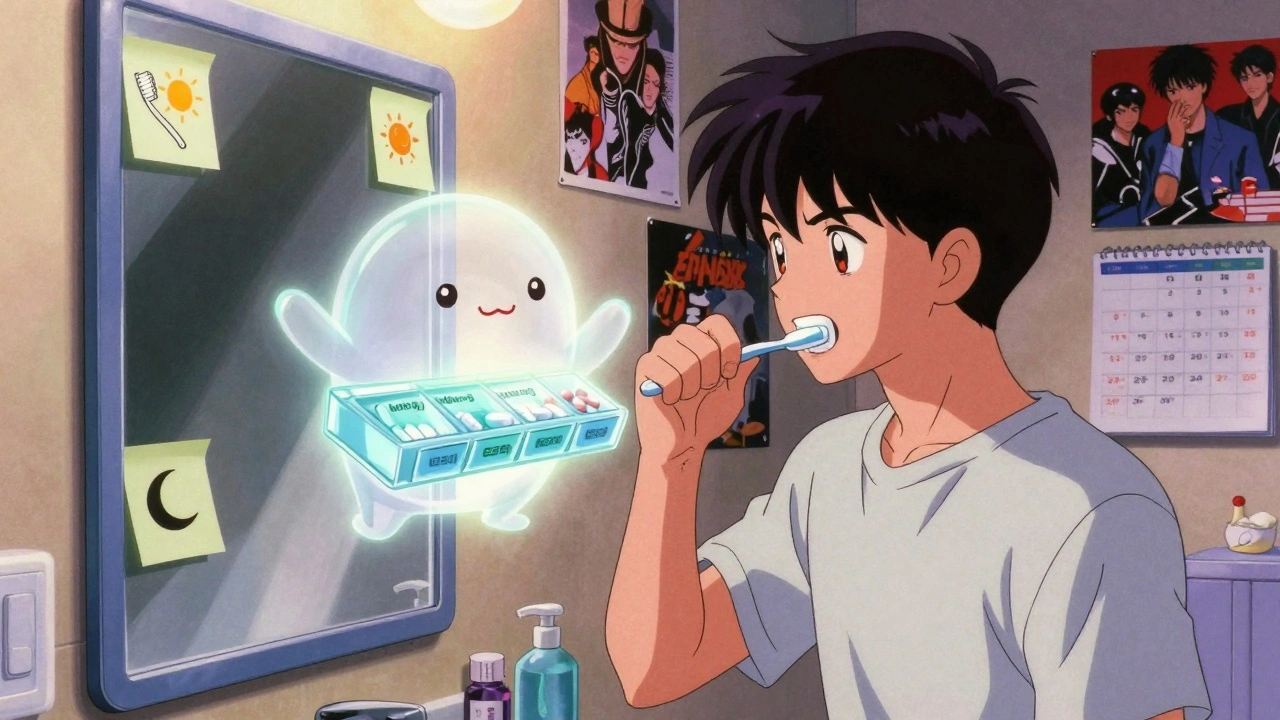
Consistency beats willpower every time. Teens aren’t bad at remembering-they’re busy. Their brains are still developing the part that plans ahead. So don’t rely on them to remember. Help them link medication time to something they already do every day. Brushing teeth? Take pills right after. Eating breakfast? That’s your reminder. Getting ready for bed? Pill time.
Research from the University of Rochester Medical Center shows that teens who pair medication with existing habits are 37% more likely to take it on time than those who don’t. That’s huge. And it’s simple. Make a chart: After brushing teeth → take morning pill. Put it on the bathroom mirror. Use sticky notes if you need to. Over time, the habit becomes automatic.
Use Tools That Actually Work
Pill organizers? Yes. But not just any kind. Get one with separate compartments for morning, afternoon, evening, and night. Buy two-one for home, one for school or sports. Label them clearly. A simple plastic box with four slots costs less than £5 and can make all the difference.
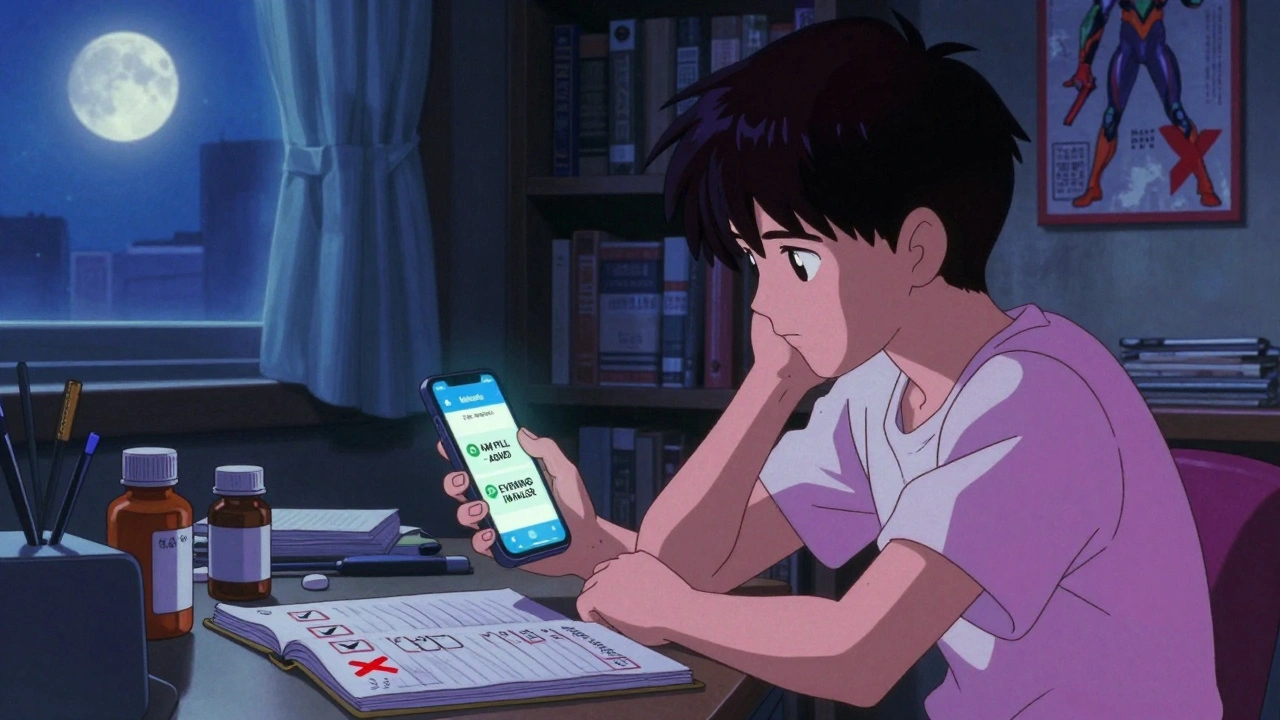
Phones are already glued to their hands. Use that. Set alarms. Not just one. Set two or three, 15 minutes apart. Name them something obvious: "AM Pill - ADHD" or "Evening Inhaler." Apps like Medisafe or MyMeds send reminders, track doses, and even alert you if they miss a pill. A 2020 University of Michigan study found that teens using phone reminders improved adherence by 41%. That’s not magic. That’s smart design.
And don’t forget the log. A simple notebook or digital spreadsheet where they check off each dose works wonders. Seeing a streak of successful days builds confidence. Missing one? That’s not failure-it’s data. Use it to figure out why. Was it a late night? A forgotten backpack? A confusing label? Fix the system, not the teen.
Teach Them to Talk to Doctors
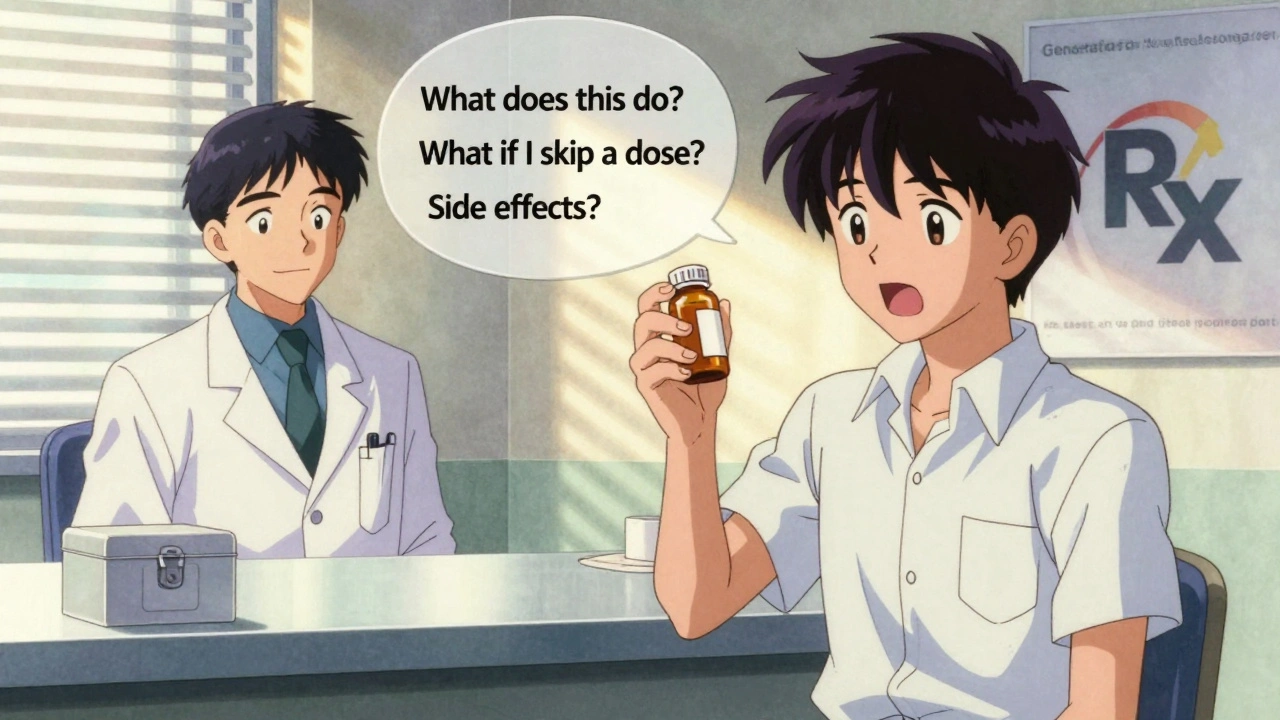
Too many teens never speak up about side effects. They think it’s their job to just take the medicine and suffer through it. That’s not okay. Teach them to ask questions before every refill:
- "What does this do?"
- "What happens if I skip a dose?"
- "Are there any foods or other meds I shouldn’t take with this?"
- "What side effects should I watch for?"
Role-play it. Pretend you’re the doctor. Let them practice asking. Bring them to appointments when you can. Let them answer questions themselves. Even if they’re quiet at first, hearing themselves say it out loud builds confidence. By senior year, they should be able to call the pharmacy for refills, ask about generic options, and report problems directly.
Watch Out for Misuse-It’s More Common Than You Think
The DEA says prescription drug misuse is the second most common form of illegal drug use among teens-after marijuana. Opioids, ADHD meds, and anxiety pills are the top targets. Why? Because they’re easy to get. A teen might find leftover painkillers in a sibling’s medicine cabinet. Or they might think, "If a doctor prescribed it, it must be safe."
Here’s the hard truth: even responsible teens can slip into misuse. That’s why controlled substances-like opioids, benzodiazepines, or stimulants-must be locked up. A locked medicine box isn’t about distrust. It’s about safety. Aetna’s 2021 guidelines say it plainly: "Even responsible teens should not be allowed to control their painkillers." Keep them in a lockbox, not the bathroom cabinet. Count the pills monthly. If numbers don’t add up, don’t panic. Ask. "I noticed the count is off. Can we talk about what’s happening?"
Dispose of unused meds properly. Don’t flush them. Don’t throw them in the trash. Take them to a pharmacy drop-off. There are over 14,000 locations in the U.S. for this. Many UK pharmacies offer similar services. It’s free. It’s safe. And it removes temptation.
Let Them Have Support-But Not Too Much
Teens don’t want to feel like they’re being watched. But they also don’t want to be alone. The key is balance. Start with daily check-ins. "Did you take your pill today?" Text them. Leave a sticky note. Then, slowly reduce it. By mid-11th grade, move to every other day. By senior year, switch to weekly spot-checks.
Encourage peer support too. If they have a friend also managing medication, pair them up. A 2021 study in the Journal of Adolescent Health found teens with a medication buddy had 22% higher adherence. They remind each other. They share tips. They feel less alone.
And if your teen has a chronic condition like asthma, diabetes, or epilepsy, connect them with programs like Generation Rx. Schools using their curriculum saw a 33% drop in prescription misuse over two years. It’s not just about pills-it’s about teaching teens how to say no, how to cope with stress, and how to value their health.
Prepare for the Real World
College is the biggest test. Dorm rooms. Late nights. Stress. Peer pressure. No one around to remind them. By senior year, your teen should be able to:
- Call the pharmacy for refills without help
- Know what to do if they miss a dose
- Carry their meds safely (in original bottles, not loose)
- Recognize signs of misuse in themselves or friends
- Know where to go for help if something feels wrong
Practice now. Let them make the phone call. Let them pack their own med kit for a weekend trip. Let them handle a missed dose and figure out what to do next. You’re not handing over control-you’re handing over competence.
It’s Not Perfect-And That’s Okay
There will be missed doses. Forgotten pills. Confusing labels. Times when they lie because they’re scared. That’s normal. This isn’t about perfection. It’s about progress. Every time they take their medicine correctly, they’re building a habit that will last a lifetime. Every time you ask, "How did it go?" instead of "Why didn’t you take it?" you’re building trust.
The goal isn’t to have a teen who never makes a mistake. It’s to have a young adult who knows how to fix it when they do.
Shubham Pandey
December 2, 2025 AT 23:03Too much text. Just let them take it or don’t.
John Webber
December 4, 2025 AT 02:01my kid forgets his inhaler all the time and i just yell at him. works fine. why make it so complicated?
ruiqing Jane
December 5, 2025 AT 22:02This is actually one of the most thoughtful guides I’ve read on teen medication management. I’m a nurse and I’ve seen too many kids panic when they get to college because no one ever taught them how to advocate for themselves with prescriptions. The part about role-playing doctor visits? Genius. Teens need to feel empowered, not policed. And the lockbox tip? Non-negotiable. I had a patient last year who lost her entire ADHD supply because her brother ‘borrowed’ it-she didn’t even realize it was gone until she crashed mid-semester. Small steps, consistent routines, and open conversations make all the difference. No one’s perfect, but this framework? It’s solid.
Elizabeth Farrell
December 7, 2025 AT 03:01I love how this breaks it down without shaming anyone. I’ve been helping my 16-year-old manage her asthma meds for two years now, and we started with just one habit: after brushing her teeth, she takes her inhaler. No reminders, no nagging. Just consistency. Now she does it without thinking. I also got her a Medisafe account and we check it together every Sunday-just for five minutes. She hates it at first, but now she says it feels good to see her streak. And yes, the pill organizer with separate compartments? Lifesaver. We have one for home, one for her backpack. I didn’t realize how much stress this was causing her until she started saying she felt ‘in control’ for the first time. That’s the real win.
Sheryl Lynn
December 7, 2025 AT 20:46How quaint. A 2020 DEA report? Please. The real issue is the neoliberal commodification of adolescent autonomy under the guise of ‘responsibility.’ We’re not teaching kids to manage meds-we’re outsourcing parental labor to bio-surveillance apps while pretending it’s ‘empowerment.’ Medisafe? Please. That’s corporate wellness capitalism disguised as parenting advice. And don’t get me started on ‘lockboxes’-a symbolic gesture masking systemic failure in mental health infrastructure. The real solution? Universal healthcare with integrated pharmacological literacy, not sticky notes and alarm clocks.
Paul Santos
December 9, 2025 AT 11:03Interesting framework… but isn’t this just behavioral conditioning dressed up as autonomy? 🤔 We’re training teens to associate meds with brushing teeth-like Pavlov’s dogs with inhalers. The real question: why are we medicating teens at all? 🤷♂️ The system’s broken, and we’re just teaching them to play the game better. Also, lockboxes? Cute. But what about the root causes of misuse? Trauma. Anxiety. Academic pressure. We’re treating symptoms while the house burns down. 🧠🔥
Eddy Kimani
December 11, 2025 AT 05:24Great breakdown. I’m a pharmacologist and I’d add one thing: teens often don’t know the difference between pharmacokinetics and pharmacodynamics. They know ‘it helps me focus’ but not why. Explain half-lives, bioavailability, tolerance mechanisms-simple terms, no jargon. That’s how you build real understanding, not just compliance. Also, remind them: generic = same active ingredient. No need to pay extra. And if they’re on stimulants, teach them about rebound effects. That’s the hidden trap most parents miss.
Chelsea Moore
December 12, 2025 AT 21:01THIS IS WHY OUR KIDS ARE LOSING THEIR MINDS!! You’re giving them pills and then telling them to ‘figure it out’?! What about the anxiety? The depression? The trauma? No one talks about how the meds are just Band-Aids on bullet wounds!! And now you want them to call the pharmacy?! What if they’re scared?! What if they’re ashamed?! You’re not teaching responsibility-you’re abandoning them and calling it ‘independence’!!
Genesis Rubi
December 14, 2025 AT 01:15USA has the best healthcare system in the world so why are we even talking about this? In my country we just give the kid the bottle and say 'don't die' and that's it. Other countries are weak. We don't need apps or charts. Just be strong like us. 💪🇺🇸
Doug Hawk
December 14, 2025 AT 23:01Been there. My son’s on Adderall. We did the alarms, the organizer, the log. But the real turning point? Letting him miss a dose once. No yelling. Just ‘what happened?’ He said he forgot because he was up all night gaming. So we moved his meds to his nightstand. Now he takes it before bed. No more morning chaos. Also, he started asking his doctor about side effects on his own. That’s when I knew he got it. Not because we forced it. Because we let him own it.
John Morrow
December 16, 2025 AT 01:36Let’s be honest: this entire approach is a performative illusion of control. The data cited is cherry-picked from industry-funded studies. The ‘41% improvement’ from phone reminders? That’s a statistical artifact. What’s the long-term adherence? What’s the dropout rate after six months? Who tracked the psychological burden of constant self-monitoring? And why is the burden of compliance placed entirely on the adolescent, not the prescriber? The real failure is in the medical system’s inability to design for human behavior-not the teen’s ‘laziness.’ This is surveillance disguised as education.
Kristen Yates
December 16, 2025 AT 06:18My daughter takes medicine for epilepsy. We never had alarms or charts. We just talked. Every day. About how she felt. About what scared her. About what she didn’t understand. She’s 17 now. She calls her own pharmacy. She knows what to do if she misses a dose. She told me last week: ‘Mom, I don’t need you to remind me. I need you to believe I can do this.’ That’s all it was. Just belief. No apps. No boxes. Just trust.
Saurabh Tiwari
December 16, 2025 AT 17:37bro this is so chill 😌 i used to forget my meds all the time but then i just set 3 alarms and put my pillbox next to my charger now i never miss. also my friend and i check in like ‘u take ur stuff today?’ and it just works 🤝 no drama