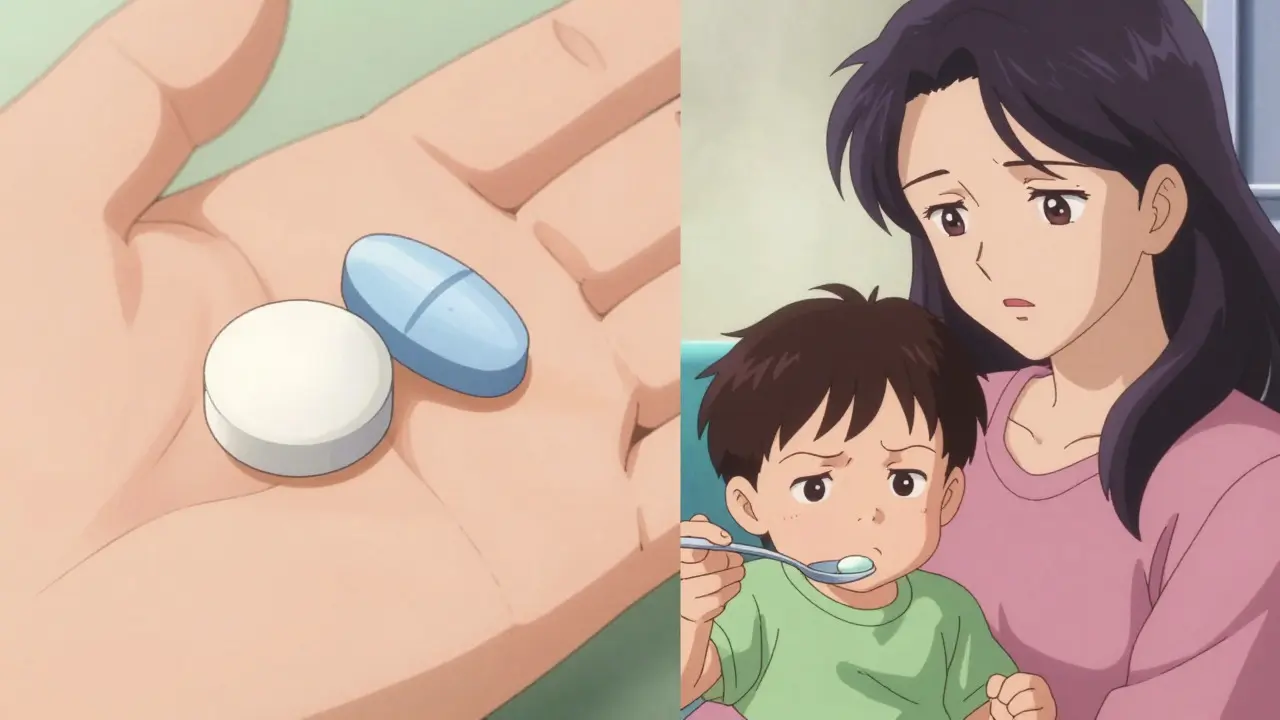
Imagine this: You’ve been taking the same blood pressure pill for five years. It’s white, round, and you know exactly how it makes you feel. One day, the pharmacy hands you a blue, oval pill instead. Or perhaps your toddler, who usually swallows their liquid antibiotic without complaint, suddenly gags at the new taste of the generic version. This is the reality of generic substitution, a process where a prescribed brand-name medication is replaced by a therapeutically equivalent alternative. While these switches save billions in healthcare costs, they often create confusion, anxiety, and even health risks for vulnerable groups like children and older adults.
The problem isn’t just about chemistry; it’s about communication. When we fail to explain why the pill looks different or tastes worse, we risk triggering the "nocebo effect"-where patients expect negative outcomes and actually experience them. For parents worried about their child’s adherence and seniors managing complex medication routines, a simple switch can feel like a major disruption. Understanding how to talk about these changes clearly and empathetically is not just good customer service; it is a critical clinical intervention.
Understanding the Basics of Generic Drugs
To communicate effectively, you first need to understand what you are talking about. Generic drugs are not "lesser" versions of brand-name medications. They are required by law to contain the same active ingredient, dosage form, strength, and route of administration as the original brand. The FDA requires that generics demonstrate bioequivalence, meaning they must deliver the same amount of active ingredient into a patient's bloodstream within a similar timeframe as the brand-name drug.
However, there is a nuance here. Bioequivalence allows for a variation in absorption rates between 80% and 125%. For most drugs, this range is clinically insignificant. But for certain medications, particularly those with a narrow therapeutic index like some antiepileptics or thyroid hormones, even small differences can matter. Furthermore, while the active ingredient is identical, the inactive ingredients-which determine color, shape, and taste-can differ significantly. These inactive components are often the source of patient complaints and adherence issues.
| Feature | Brand-Name Drug | Generic Drug |
|---|---|---|
| Active Ingredient | Original formulation | Identical chemical structure |
| Inactive Ingredients | Specific fillers, dyes, binders | May vary (affects taste/color) |
| Bioequivalence Standard | N/A (Reference standard) | 80-125% absorption rate match |
| Pediatric Formulations | Often available (liquids/chewables) | Limited availability (32% vs 68%) |
| Cost | Higher (patent protected) | Lower (competitive market) |
Communicating with Pediatric Patients and Parents
Talking about medication changes with children involves two audiences: the child and the parent. For parents, the primary concern is often safety and efficacy. A 2020 study in *Pediatrics* found that 62% of parents hesitate when offered a generic substitution, fearing it might not work as well for their child. Your job is to address this fear with facts, not jargon.
Start by validating their concern. Say something like, "It’s completely normal to worry when the medicine looks or tastes different." Then, explain the concept of bioequivalence simply. You might say, "This generic medicine has the exact same healing power as the brand name. It works in the same way inside the body." Avoid technical terms like "pharmacokinetics" unless you are prepared to explain them in plain language.
For the child, especially toddlers and young kids, taste and texture are everything. The FDA notes that only 32% of generic drugs come in pediatric-friendly forms like liquids or chewables, compared to 68% of brand names. If the generic is a bitter suspension, prepare the parent. Suggest mixing it with a small amount of juice or using a syringe aimed at the back of the cheek to bypass taste buds. If the child refuses it, have a plan B ready, such as switching back to the brand if insurance allows, or trying a different generic manufacturer.
- Use visual aids: Show pictures of both pills so the parent knows what to expect.
- Address taste aversion: Acknowledge that the taste might be different and offer practical tips to manage it.
- Verify understanding: Ask the parent to repeat back the dosing instructions to ensure clarity.
Strategies for Senior Patients
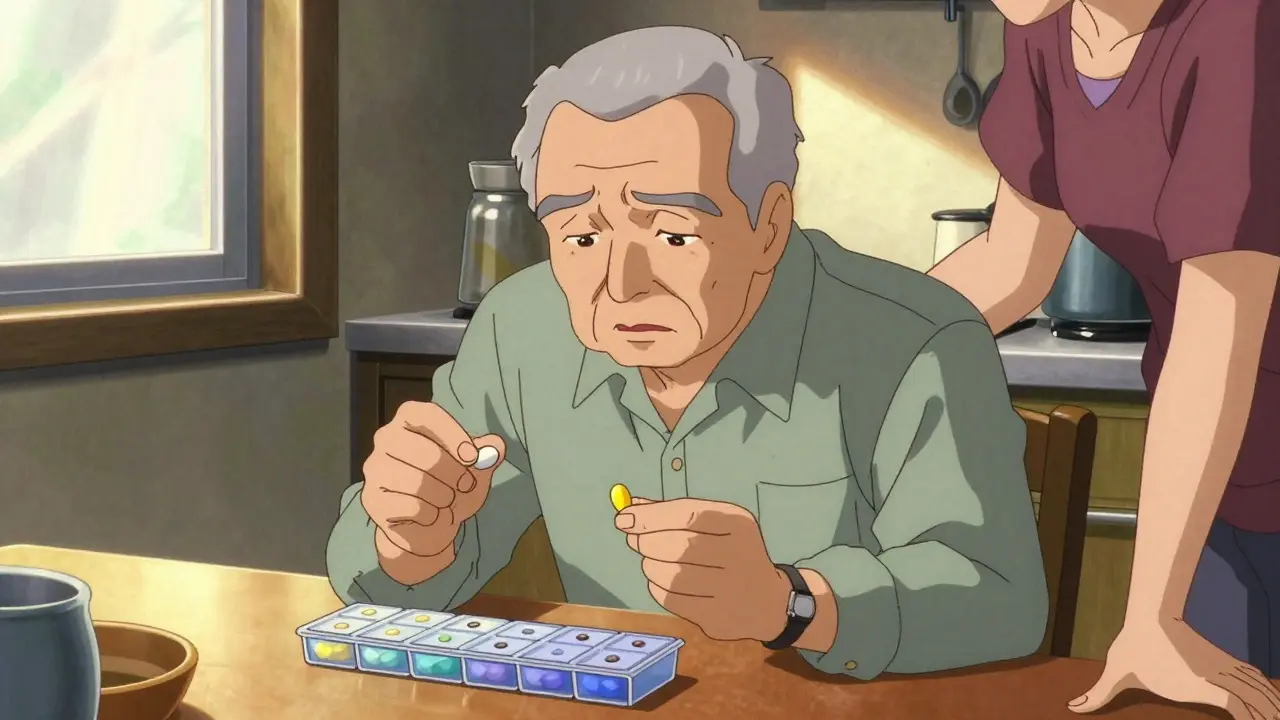
Senior patients face a different set of challenges. Many older adults take multiple medications-a condition known as polypharmacy. The American Geriatrics Society reports that seniors average 4.8 prescription medications. When several of these are switched to generics with different colors and shapes, it creates cognitive overload. A 78-year-old patient might stop taking their heart medication because the pill changed from white to yellow, assuming it was a new, unapproved drug.
Proactive communication is key here. Don’t wait for the senior to notice the change. Initiate the conversation before they leave the pharmacy or clinic. Explain that the change is due to cost-saving measures and that the medical effect remains the same. Use large-print materials if possible, and simplify instructions. Instead of saying "take one tablet orally every 12 hours," say "take one pill in the morning and one at night with water."
Involve family caregivers in the discussion. Often, an adult child manages the medications for an aging parent. Make sure they understand the substitution and can help monitor for any adverse effects. Encourage the use of pill organizers labeled with days of the week, which can help mitigate confusion caused by changing pill appearances.
Another critical factor is the nocebo effect. Studies show that 58% of seniors report perceived side effects after a generic substitution, often because they believe the cheaper pill is inferior. Counteract this by framing the generic positively. Emphasize that it is rigorously tested and approved by the FDA. Build trust by acknowledging their long-term relationship with the previous brand but reassuring them that the science supports the switch.
The Teach-Back Method: Ensuring Understanding
One of the most effective tools for communicating with both pediatric parents and senior patients is the teach-back method. This technique involves asking the patient or caregiver to explain the information back to you in their own words. It is not about testing them; it is about checking your own communication.
For example, after explaining the generic substitution, ask, "Just to make sure I explained it clearly, can you tell me how you’ll handle the new medicine?" If a parent says, "I’ll give him the liquid, but if he spits it out, I’ll try again," you know they understand the potential taste issue. If a senior says, "I’ll take the blue pill," but the new generic is green, you’ve caught a misunderstanding before it becomes a missed dose.
This method reduces medication errors by nearly 30%, according to NIH studies. It also empowers patients, making them feel more confident and less anxious about the change. It transforms the interaction from a lecture into a dialogue, fostering a partnership in care.
Handling Common Objections and Concerns
Patients will have questions. Some may insist on the brand name, citing past experiences where generics didn’t seem to work. Others may worry about hidden ingredients. Here’s how to handle common scenarios:
- "The generic doesn’t work as well." Listen empathetically. Ask specific questions about what symptoms returned. Sometimes, the issue is timing or adherence rather than efficacy. If concerns persist, consult with the prescriber about maintaining the brand name if medically necessary.
- "I’m allergic to the dye in the generic." Check the inactive ingredient list. If a true allergy exists, document it and request a different generic manufacturer or the brand name. Most reactions are intolerances to fillers, not allergies, but always take patient reports seriously.
- "Why did the price go up?" Explain that generic prices fluctuate based on supply and demand. Reassure them that it is still significantly cheaper than the brand name and that you are monitoring for better pricing options.
Future Trends and Digital Tools
The landscape of generic substitution is evolving. New regulations are emerging to address the evidence gaps in pediatric and geriatric labeling. The FDA’s recent initiatives aim to require manufacturers to provide clearer patient information regarding formulation differences. Additionally, digital health tools are becoming valuable allies. Medication image recognition apps allow seniors to scan their pills and verify what they are taking, reducing anxiety about appearance changes. Early data suggests that 67% of seniors feel more confident using these tools during substitutions.
As a healthcare provider or pharmacist, staying informed about these trends helps you guide patients through transitions smoothly. By combining clear communication, empathy, and practical strategies, you can turn a potentially stressful change into an opportunity to strengthen trust and improve adherence.
Is generic substitution safe for children?
Yes, generic drugs are generally safe for children as they must meet strict bioequivalence standards set by the FDA. However, formulation differences like taste or texture can affect adherence. Parents should be informed about these potential differences and provided with strategies to manage them, such as mixing with food or using specific administration techniques.
Why do seniors struggle with generic substitutions?
Seniors often struggle due to polypharmacy (taking multiple meds), cognitive decline, and sensory changes. Different pill colors and shapes can cause confusion, leading to missed doses or double-dosing. The nocebo effect, where expectation of inferiority leads to perceived side effects, is also more pronounced in this group.
What is the teach-back method in medication counseling?
The teach-back method is a communication strategy where the provider asks the patient to repeat the instructions in their own words. This ensures the patient understands the dosage, timing, and purpose of the medication, reducing errors and improving adherence, especially during transitions like generic substitutions.
Can I refuse a generic substitution?
In many cases, yes. Patients can request the brand-name medication, though it may result in higher out-of-pocket costs. Pharmacists and doctors can also write "Dispense As Written" (DAW) on prescriptions to prevent automatic substitution if clinically justified, such as for narrow therapeutic index drugs or documented intolerance to generic fillers.
Are all generic drugs exactly the same as brand names?
They contain the same active ingredient and must be bioequivalent, meaning they perform similarly in the body. However, inactive ingredients like dyes, flavors, and fillers can differ, which may affect appearance, taste, or cause rare allergic reactions. For most patients, these differences are negligible, but for some, they can impact adherence.