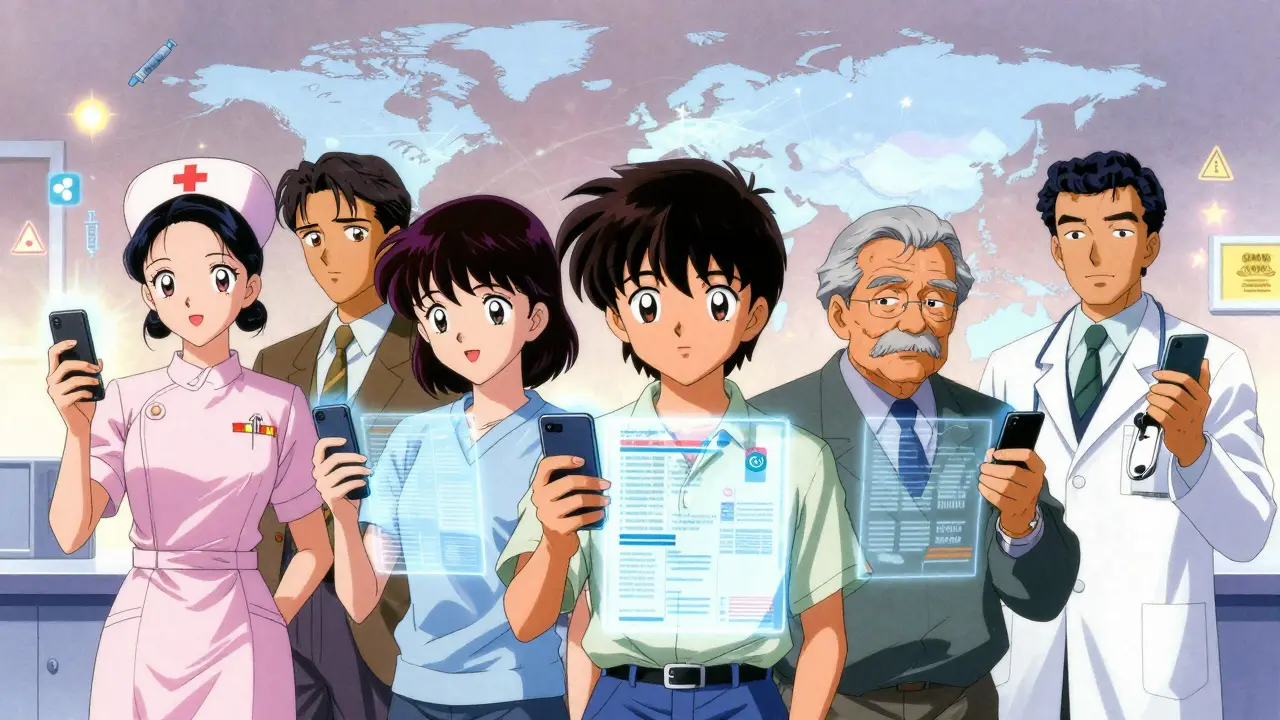
Every year, millions of people take medications that help them live better, longer lives. But not all side effects are caught before they become serious. In fact, less than 10% of adverse reactions are ever reported. That means most drug safety problems go unnoticed until someone gets hurt. If you work in healthcare, or even if you just care about your own health or your family’s, staying informed about global medication safety news isn’t optional-it’s essential.
Where Global Medication Safety News Comes From
The world doesn’t have one single system for tracking drug safety. Instead, it’s built on a network of organizations working together. At the center is the World Health Organization (WHO) a global authority that coordinates drug safety efforts across 194 countries. WHO doesn’t just issue warnings-it sets standards, funds training, and pushes countries to improve their reporting systems. In May 2025, WHO released a major new guideline on controlled medicines like opioids and benzodiazepines, stressing that access to these drugs must be balanced with safety. This isn’t just policy-it’s about preventing suffering.
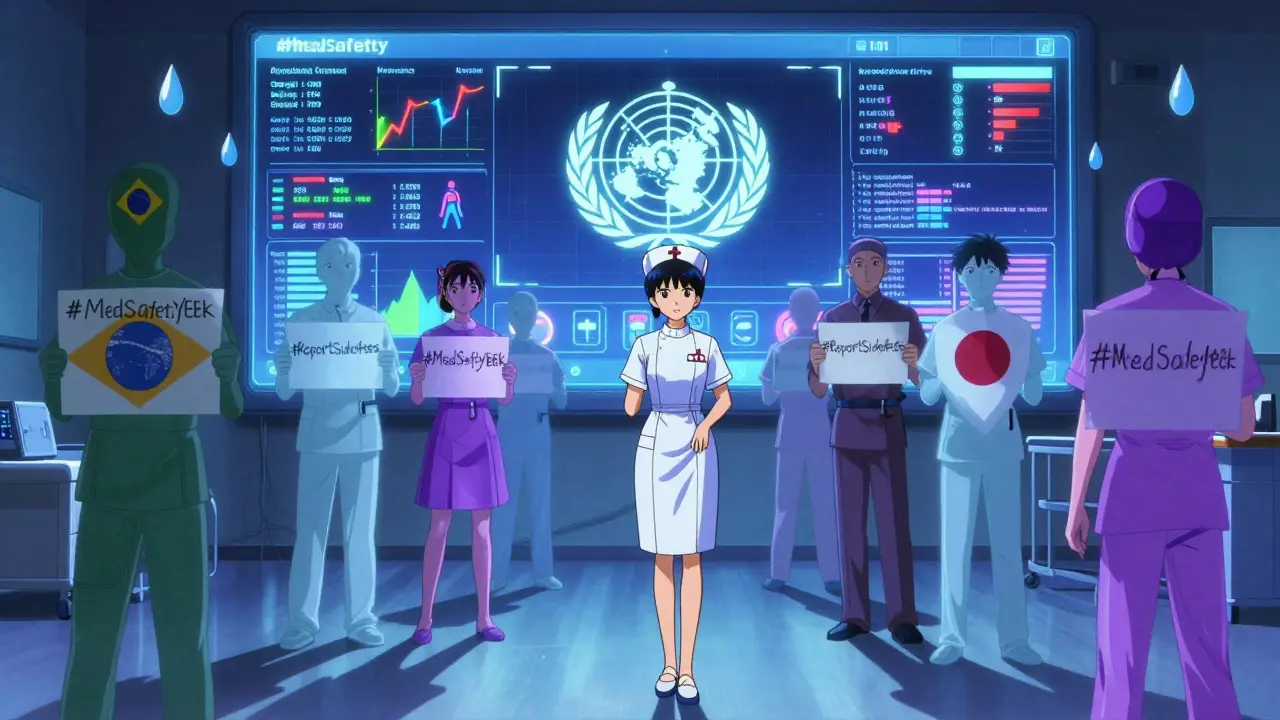
Behind WHO is the Uppsala Monitoring Centre (UMC) a Sweden-based hub that collects and analyzes drug safety data from 150 countries. UMC runs the #MedSafetyWeek an annual global campaign since 2016 that encourages patients and providers to report side effects. The 2025 campaign, running from November 3-9, marks its 10th anniversary and will focus on how everyone-patients, nurses, pharmacists, even caregivers-can help make medicines safer. You’ll see posters, social media posts, and training materials during this time. Don’t wait until November to get involved. Start preparing in August, when UMC releases campaign toolkits.
In the U.S., the Institute for Safe Medication Practices (ISMP) a nonprofit that publishes actionable safety guidelines for pharmacies and hospitals releases its biennial Targeted Medication Safety Best Practices a practical guide with step-by-step protocols to reduce errors. The 2025-2026 edition, published in March 2025, includes new protocols for weight-based dosing in children, vaccine administration checks, and how to handle returned medications safely. These aren’t theory-they’re used daily in hospitals and pharmacies.
The Tools You Need to Stay Updated
There’s no single app or website that tells you everything. You need to use multiple tools, and they’re all free.
- Yellow Card app (UK): Run by the Medicines and Healthcare products Regulatory Agency (MHRA) the UK’s official drug safety watchdog, this app lets you report side effects from any medicine, vaccine, or even e-cigarettes. It’s simple: pick the drug, describe the reaction, and submit. You can do it in under two minutes. Over 1.2 million reports have been submitted since its launch. It’s the most reliable way to contribute to global safety data.
- ISMP Implementation Worksheets: Download these free PDFs from ISMP’s website. They walk you through how to fix safety gaps in your workplace. One pharmacist in Nottingham used the weight-based dosing checklist and prevented a fatal error in a 4-year-old patient last year. That’s the kind of impact these tools have.
- WHO Medicines Safety Email Alerts: Subscribe directly on WHO’s website. You’ll get updates on new safety warnings, policy changes, and global reports. No fluff. Just facts. You’ll get about 3-5 emails a month.
- #MedSafetyWeek and #ReportSideEffects: Follow these hashtags on Twitter, LinkedIn, and Facebook. During November, you’ll see real-time updates from pharmacists in Brazil, nurses in Kenya, and doctors in Japan. It’s raw, real, and urgent.
- World Patient Safety Day (September 17): Every year, WHO releases a new theme. In 2025, it’s “ensuring safe care for every newborn.” Hospitals and clinics worldwide host events. Even if you’re not a doctor, attending one gives you insight into what’s being done-and what’s still broken.
What’s New in 2025-2026
The landscape is changing fast. In 2024, AI-powered symptom checkers were beta-tested in 15 countries. These tools ask patients simple questions about how they feel after taking a drug, then auto-submit reports to national databases. Early results show reporting rates jumped by 30% in places where they were used. By late 2025, this will roll out more widely.
Meanwhile, Medi-Span a clinical decision support system used in over 1,200 hospitals worldwide is adding machine learning to predict dangerous drug interactions before they happen. In Saudi Arabia, using Medi-Span cut medication errors by 40%. By 2027, it’s expected to reduce errors by another 15-20%.
But not everything is improving. ECRI a U.S.-based nonprofit that researches patient safety risks released its 2025 Top 10 Patient Safety Issues list. Number three? Medical misinformation on social media. False claims about vaccines and drug side effects are now driving real harm. In regions with high social media use, false reports of adverse reactions increased by 18% last year. That means more people avoid life-saving drugs-not because of science, but because of lies.
What’s Not Working
Here’s the hard truth: many healthcare workers are overwhelmed. A nurse in the UK wrote on a patient safety forum: “We have Yellow Card, hospital reporting, national systems-but no integration. We report the same thing three times.” That’s not just frustrating. It’s dangerous. When systems don’t talk to each other, data gets lost.
And the gap between rich and poor countries is widening. High-income nations report 350-400 adverse events per million people. Low-income countries? Just 5-10 per million. That’s not because people there are healthier. It’s because they lack the systems to report. WHO is trying to fix this-by 2030, it wants to build stronger safety networks in 50 more low- and middle-income countries. But funding is still short.
What You Can Do Right Now
You don’t need to be a doctor or a regulator to make a difference. Here’s what to do in the next 30 days:
- Download the Yellow Card app-even if you’re not in the UK. The data you report helps global databases.
- Subscribe to WHO’s Medicines Safety updates. It takes 20 seconds.
- Find your country’s national reporting system. Search “[Your Country] pharmacovigilance center.” Most have free online forms.
- Print and hang the #MedSafetyWeek poster in your waiting room or clinic. UMC releases them in August 2025. Start checking their website now.
- Share one safety tip with a colleague this week. Something simple: “Did you know you can report side effects on your phone?”
One pharmacist in Australia said her team’s reporting rate jumped 25% after they used #MedSafetyWeek materials. That’s not luck. It’s action.
Why This Matters More Than You Think
Medication errors cost the global healthcare system $42 billion a year. That’s more than the GDP of many small countries. But behind every number is a person: a child given the wrong dose, an elderly patient who had a stroke because a drug interaction wasn’t flagged, a new mother who stopped breastfeeding because of a false social media post.
WHO’s Dr. Yukiko Nakatani said it best: “The suffering caused by lack of safe, affordable access to controlled medicines is both preventable and unacceptable.” It’s not just about rules or databases. It’s about dignity. About trust. About making sure the medicine meant to heal doesn’t end up hurting.
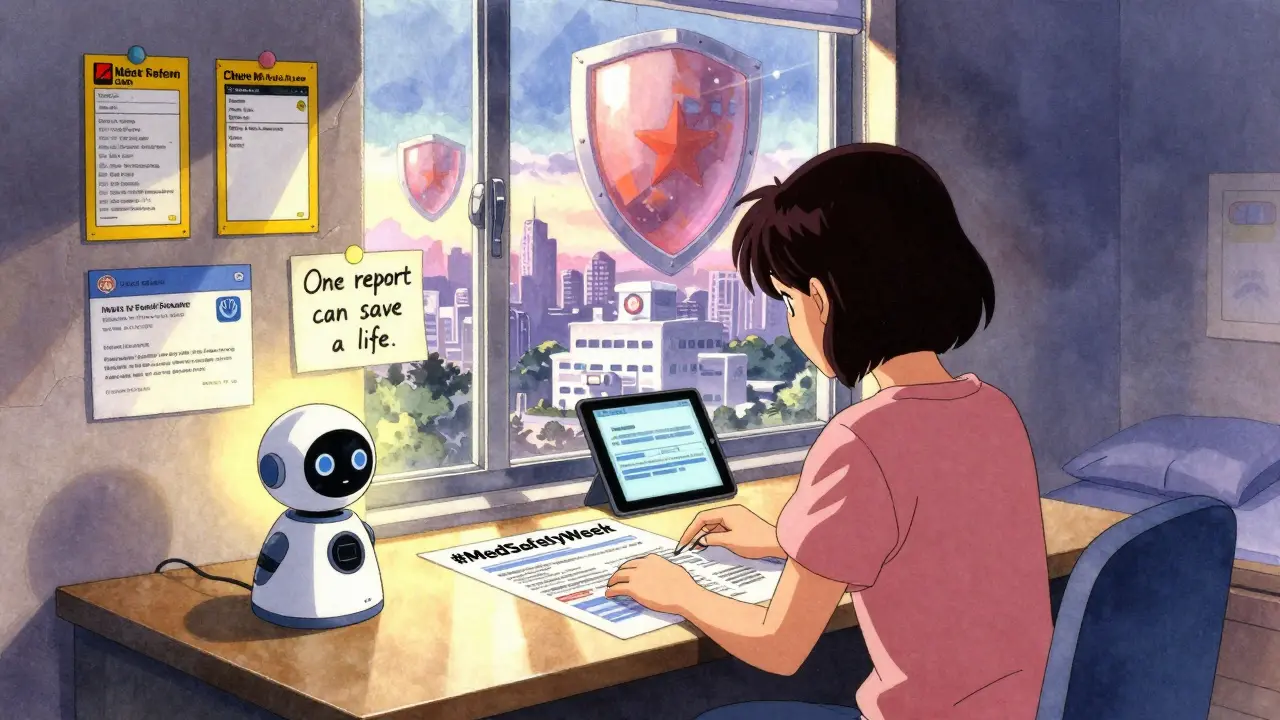
You don’t have to solve it all. But you can be part of the solution. One report. One conversation. One shared resource. That’s how change starts.
How do I report a side effect if I’m not a healthcare professional?
You don’t need to be a doctor to report. Anyone can use the Yellow Card app (UK), or visit your country’s national pharmacovigilance website. Just list the medicine, the side effect, and when it happened. Even if you’re unsure, report it. The system is designed to catch patterns-not perfect details. Your report could help prevent harm to someone else.
Is the WHO’s 2025 guideline on controlled medicines relevant to me?
Yes-if you or someone you know takes opioids, benzodiazepines, or ketamine. The guideline doesn’t ban these drugs. It ensures they’re available safely, especially in places where access has been restricted due to fear of misuse. If you’re on one of these medications, this means clearer prescribing rules and better monitoring. If you’re a provider, it means updated training and safer prescribing practices.
Why is #MedSafetyWeek in November?
It’s timed to coincide with the end of the year, when many clinics review their safety performance. It also gives time for campaigns to be planned and distributed. UMC releases materials in August so organizations can prepare. The November timing ensures maximum visibility before year-end audits and planning cycles.
Can AI really help reduce medication errors?
Yes, but not perfectly. AI tools like Medi-Span and AI symptom checkers have cut errors by 30-40% in places where they’re used. They flag dangerous interactions, check dosing, and auto-report side effects. But they’re tools-not replacements. Human judgment still matters. The best systems combine AI alerts with staff training and clear protocols.
What should I do if I see false information about a drug online?
Don’t engage. Don’t argue. Instead, report the post to the platform. Then, share a verified source-like WHO’s website, the MHRA, or ISMP. One post from a trusted source can reach more people than a hundred comments. Truth spreads faster when it comes from credible channels.
Staying informed about global medication safety isn’t about memorizing regulations. It’s about knowing where to look, who to trust, and how to act. The tools are there. The systems are growing. All you need to do is start.
Milad Jawabra
March 5, 2026 AT 16:08Yo, this post is FIRE. 🚀 If you're not reporting side effects, you're part of the problem. I've used Yellow Card 3 times now-once for a weird rash after a flu shot. Took 90 seconds. WHO needs more people like you, not less. Stop scrolling. Start submitting.
And yeah, AI tools? They're not perfect, but they're saving lives. I work in ER in Toronto-we saw a 22% drop in dosing errors after we integrated Medi-Span. Stop doubting. Start using.
Jane Ryan Ryder
March 6, 2026 AT 16:48Wow. Another feel-good story from the global health elite. 🤡
Let me guess-you also recycle your coffee cups and cry during TED Talks. Meanwhile, in real America, people are getting sick because their meds cost more than rent. WHO’s ‘guidelines’ don’t feed kids. ISMP’s PDFs don’t pay bills. And your precious Yellow Card app? It’s a distraction while Big Pharma laughs all the way to the bank.
Save the activism. Fix the system first.
Callum Duffy
March 7, 2026 AT 02:55Thank you for this meticulously researched and urgently necessary overview. The structural fragmentation of pharmacovigilance systems remains one of the most under-addressed failures in public health infrastructure.
It is deeply concerning that low-income nations report adverse events at less than 3% of the rate of high-income countries-not due to absence of harm, but due to absence of capacity. The WHO’s 2030 target, while commendable, remains underfunded by over $1.2 billion annually.
One must question whether the current model of voluntary, decentralized reporting is sufficient. A standardized, interoperable global registry-secure, anonymized, and universally accessible-is not merely ideal. It is imperative.
Chris Beckman
March 8, 2026 AT 22:17so i read this whole thing and like... why is everyone so into the yellow card app? its only for the uk right? like i live in texas and i cant even use it.
also i tried to go to umc's website and it crashed 3 times. i think theyre just trying to look good for the europeans.
and who even is this dr. nakatani? shes not even on twitter. how do we know shes real?
also i heard from my cousin who works at a pharmacy that most of these reports are just people mad because their headache didnt go away. its not like we need more noise.
Levi Viloria
March 9, 2026 AT 10:30As someone who’s worked in rural clinics across Southeast Asia and Latin America, I can tell you this: the tools exist. The will doesn’t.
When I was in rural Cambodia, we had no digital reporting system. So we used paper forms. Collected them weekly. Handed them to the WHO liaison every Thursday. No one thanked us. No one tracked us. But we kept doing it.
One report from a village midwife led to the withdrawal of a contaminated antimalarial batch. Saved 17 children.
You don’t need a fancy app. You need to show up. Even if no one’s watching.
Shivam Pawa
March 10, 2026 AT 07:40The pharmacovigilance ecosystem is a classic case of distributed system failure. The data silos are not merely technical-they’re institutional. WHO, UMC, ISMP, MHRA-they all speak different protocols.
Imagine if the internet had 15 different TCP/IP stacks. That’s what we’re dealing with.
And the AI integration? It’s a band-aid. You can’t solve systemic underreporting with algorithmic auto-submission. You need cultural change. You need trust. You need community-based surveillance.
That’s why #MedSafetyWeek matters. Not because of posters. But because it creates shared language. Shared accountability.
Diane Croft
March 10, 2026 AT 08:10I just downloaded the Yellow Card app. Took 45 seconds. Reported a weird dizziness after my blood pressure med. Felt powerful.
Also printed the #MedSafetyWeek poster and taped it to the fridge. My 7-year-old asked what it meant. I told him: ‘This is how we keep people safe.’
Small actions. Big ripples. Let’s do this.
Ethan Zeeb
March 11, 2026 AT 23:44Let’s be clear: this isn’t about awareness. It’s about accountability.
Pharmaceutical companies are legally required to report adverse events. But they bury them. The FDA’s FAERS database? Half the entries are incomplete. The WHO? They don’t audit. They just collect.
So now we’re asking patients to do the work of regulators? That’s not empowerment. It’s abdication.
If you want real change, stop pushing apps. Start pushing legislation. Mandate transparency. Fine companies that hide data. Make them pay.
Until then, this is performative safety.
Lebogang kekana
March 13, 2026 AT 00:56Bro, I’m from Johannesburg. We don’t have Yellow Card. We don’t even have a national pharmacovigilance center. Last year, my aunt died from a drug interaction. No one knew. No one recorded. No one cared.
So I made a WhatsApp group. 12 people. We started sharing side effects. Now it’s 300. We send reports to the SA Health Products Regulatory Authority. They reply once a month.
But we’re still here. Still reporting. Still fighting.
This isn’t about apps. It’s about refusing to be invisible.
Mariah Carle
March 14, 2026 AT 14:50Is it possible that the real crisis isn’t medication errors… but our collective refusal to accept that medicine is inherently uncertain?
We want drugs to be perfect. But biology isn’t a spreadsheet.
Every side effect is a whisper from the edge of human understanding. Maybe instead of reporting them, we should be listening.
What if the pain, the dizziness, the rash… aren’t bugs?
What if they’re features of a living system trying to tell us something?
Just a thought. 🤔
Justin Rodriguez
March 15, 2026 AT 17:53Just want to add: if you’re in the U.S., check out the FDA’s MedWatch portal. It’s clunky, but it’s real. I’ve submitted 8 reports over the last 3 years. Two led to FDA safety alerts.
One was for a generic blood thinner that caused internal bleeding in elderly patients. Took 6 months. But it happened.
Don’t underestimate your voice. It’s not just noise. It’s data. And data changes policy.
Raman Kapri
March 17, 2026 AT 11:28This entire post reads like a WHO marketing brochure.
Let’s not pretend that reporting side effects solves systemic failures. In India, we have over 200,000 annual adverse drug reaction reports. But 90% are from private hospitals. Public hospitals? Zero.
Why? Because doctors fear liability. Because regulators are corrupt. Because the system is broken.
App downloads won’t fix that.
Stop romanticizing individual action. It’s a distraction from the real problem: institutional decay.
Megan Nayak
March 18, 2026 AT 04:47Let’s talk about the elephant in the room: social media isn’t just spreading misinformation. It’s creating a new class of pharmacovigilance fraud.
I’ve seen the same ‘side effect’ posted 47 times on Instagram by the same bot network. ‘My son died after the flu shot!’ No name. No date. No pharmacy. No doctor. Just tears and a viral hashtag.
WHO’s AI tools? They’re trying to filter this. But they’re blind to narrative manipulation.
And now we’re asking patients to report ‘side effects’… while trolls weaponize grief?
This isn’t safety. It’s chaos theater.