
After surgery, your body needs time to heal - and the right medications can help. But using them safely isn’t just about following a prescription. It’s about avoiding mistakes that can turn a routine recovery into a dangerous situation. Every year, thousands of patients experience harm from medication errors in the first few days after surgery. Many of these errors are preventable. You don’t need to be a doctor to understand how to protect yourself. Here’s what actually matters.
Why Medication Safety After Surgery Is Different
Medications after surgery aren’t like your daily pills. They’re often stronger, given in unfamiliar ways, and administered under pressure. A study by the Institute for Safe Medication Practices (ISMP) found that 30% of all medication errors happen in surgical settings. That’s not because nurses or doctors are careless. It’s because the environment is chaotic. Emergency procedures, loud machines, shifting staff, and time pressure all increase the chance of a mistake.
Think about this: a nurse hands you a syringe labeled only as “morphine.” But there are different strengths - 1 mg/mL, 5 mg/mL, 10 mg/mL. Give the wrong one, and you could overdose. Or worse, someone might accidentally use a syringe that was previously used for someone else. The CDC reports 44 outbreaks of hepatitis B and C from 2001 to 2011 because of reused syringes. That’s not a myth. It’s documented fact.
What You Need to Know About Injection Safety
One rule covers everything: One needle. One syringe. One patient. That’s not optional. It’s mandatory. Even if the syringe looks clean, even if the nurse says “I just used it for the last person,” don’t accept it. The CDC’s 2023 update made this crystal clear. Reusing syringes - even for the same patient during one procedure - is only allowed if the syringe is never left unattended and is thrown away immediately after use. No exceptions.
Also, never let anyone draw medication from a shared vial into a syringe that will be used for multiple people. That’s how infections spread. If you see someone doing this, speak up. You have every right to ask: “Is this a new syringe? Was it opened just for me?”
Labeling Isn’t Just a Formality - It’s a Lifesaver
Unlabeled syringes are the #1 cause of wrong-drug errors in operating rooms. The ISMP guidelines from 2022 say this plainly: Every syringe, cup, or bowl with medication must be labeled immediately after it’s filled. No pre-labeling empty containers. No writing on tape that falls off. No “I’ll label it later.”
What should the label include? Three things: the drug name, the concentration (e.g., 10 mg/mL), and the expiration time. If it’s not labeled, it must be thrown out. Period. A 2022 study in the AORN Journal showed hospitals that enforced this rule cut medication errors by 63%. That’s not luck. That’s discipline.
As a patient, watch for this. If you see an unlabeled syringe on the table, ask: “Can you confirm what’s in that syringe?” Don’t feel awkward. You’re not being difficult - you’re being smart.
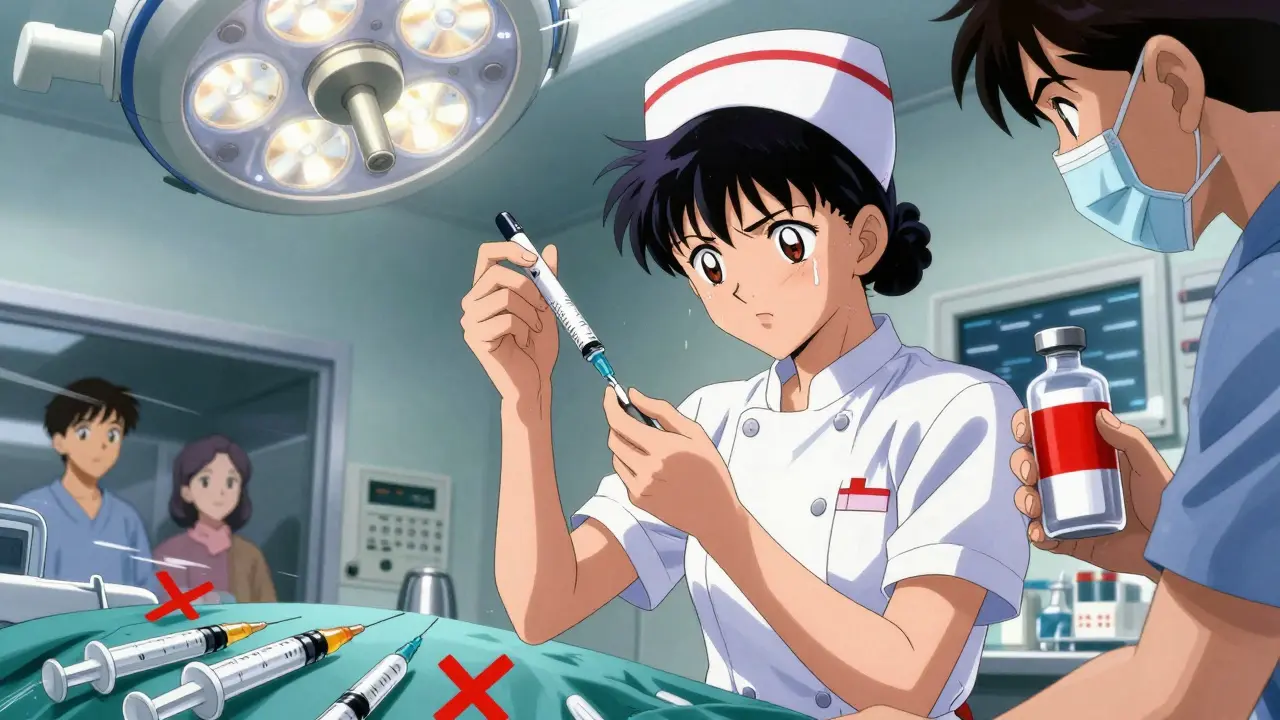
High-Risk Medications: Opioids, Heparin, Insulin
Some drugs after surgery are called “high-alert.” That means if you get the wrong dose, it could kill you. These include opioids like morphine or fentanyl, blood thinners like heparin, insulin, and muscle relaxants. The American Society of Anesthesiologists (ASA) says these must be clearly labeled with concentration - not just the drug name.
For example, a syringe labeled “fentanyl” could mean 25 mcg/mL, 50 mcg/mL, or 100 mcg/mL. That’s a 4x difference. One mistake, and you stop breathing. That’s why many hospitals now use color-coded labels or separate storage for these drugs. Ask if your hospital uses this system. If they don’t, ask why.
Also, never assume the dose is right. If you’re getting an opioid, ask: “What’s the dose? How often can I get it?” Most patients are told, “You’ll get it as needed,” but no one explains the limits. Know your dose. Know your timing. Write it down.
Communication Is Your Best Defense
Most medication errors happen because of bad communication. A doctor says “give 5 mg of morphine” over the intercom. The nurse hears “50 mg.” That’s not rare. ACOG found that in obstetric surgery - where things move fast - medication errors are 25% more common than in general surgery.
The fix? The “read-back” system. The nurse repeats the order back: “You want 5 mg of morphine IV, correct?” The doctor says yes. That simple step cuts verbal errors by 55%, according to ACOG. You can use this too. If someone says, “I’m giving you pain medicine,” say: “What is it, and how much?”
Also, make sure your discharge instructions match what you were given in the hospital. The WHO says medication reconciliation at discharge can reduce adverse events by up to 67%. If your home instructions say “take 1 tablet twice a day” but you were getting IV doses in the hospital, something’s wrong. Ask for clarification.
What to Do If You’re Discharged With Medications
Getting home is a turning point. That’s when mistakes happen. You’re tired. You’re in pain. You’re not in a controlled environment anymore.
Here’s what to do:
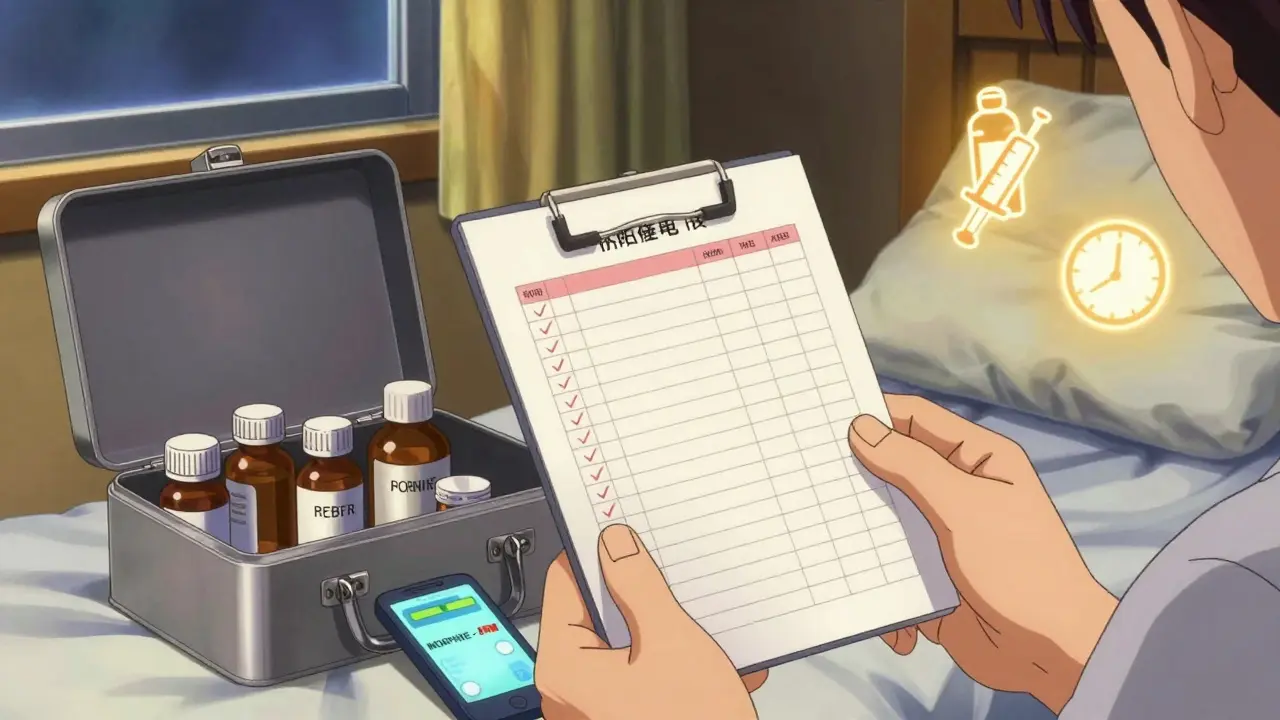
- Check the label on every pill bottle. Does it have your name, the drug name, the dose, and instructions?
- Compare it to what the nurse told you. Did they say “take one every 6 hours” but the bottle says “every 4 hours”? Ask again.
- Keep a log. Write down when you take each dose. Use your phone if you need to.
- Never mix painkillers without asking. Many OTC meds like Tylenol or Advil contain hidden painkillers. Taking them with your prescription can lead to overdose.
- Store opioids securely. Lock them in a box. Keep them away from kids, pets, or visitors.
ECRI Institute found that 32% of perioperative medication errors involved the wrong drug. Another 28% were wrong doses. These aren’t accidents - they’re system failures. You can’t fix the system. But you can protect yourself.
Red Flags to Watch For
Not everything that looks wrong is dangerous. But some signs are clear warnings:
- Syringes or vials without labels
- Medications passed from one person to another without verification
- Staff using the same syringe for multiple doses during one procedure without discarding it immediately
- Not being told the name or dose of a medication before it’s given
- Discharge instructions that don’t match what you were told in the hospital
If you see any of these, speak up. Say: “I’m concerned. Can we double-check this?” Most staff will appreciate it. They’ve seen what happens when no one asks questions.
What Hospitals Should Be Doing (And What They Often Don’t)
Facilities that follow full safety protocols - labeling every syringe, using read-backs, storing high-alert drugs separately, training staff on medication safety - see a 47% reduction in errors. That’s not theory. That’s data from the AORN Journal.
But not everyone does it. Ambulatory surgery centers - where many outpatient surgeries happen - only have 63% adoption of full protocols. Academic hospitals? 87%. That gap matters. If you’re having surgery, ask: “What safety protocols do you follow for medications?” If they can’t answer, consider another facility.
The cost of safety? About 27 seconds per medication, according to ISMP. That’s less than half a minute. The cost of a mistake? A lifelong disability. Or death.
What You Can Do Today
You don’t need to be a medical expert. You just need to be alert. Here’s your simple checklist:
- Ask: “What is this medication?” and “What’s the dose?” before it’s given.
- Check the label on every syringe or bottle. If it’s blank, refuse it.
- Use the read-back method: repeat back what you’re told.
- Keep a written log of all medications taken, including time and dose.
- Store opioids locked up - never on a nightstand.
- At discharge, compare your home instructions to what you were given in the hospital. If they don’t match, ask why.
These steps take minutes. They can save your life.
Can I reuse a syringe if it’s for the same person during one surgery?
No. Even if it’s for the same patient, a syringe used during surgery must be discarded immediately after the procedure ends. The CDC says syringes can only be reused for incremental dosing during a single procedure if they are never left unattended and are thrown away right after use. Reusing syringes - even once - increases infection risk. Always ask for a new, sterile syringe.
Why are unlabeled syringes so dangerous after surgery?
Unlabeled syringes are the top cause of wrong-drug errors. In high-pressure environments like operating rooms, staff may grab the wrong syringe by mistake. One syringe might contain morphine, another fentanyl - and they look identical. The ISMP reports that 35% of medication errors in surgical settings lead to patient harm. Labeling every syringe with the drug name, concentration, and time cuts this risk dramatically.
Are opioid painkillers safe after surgery?
Yes - if used correctly. Opioids are effective for short-term pain control after surgery. But they’re high-risk. Always know the dose, how often you can take it, and how long it lasts. Never combine them with alcohol or sleep aids. Store them locked up. Talk to your doctor about non-opioid alternatives like acetaminophen or ibuprofen to reduce your opioid use.
What should I do if I think I received the wrong medication?
Stop and ask. Say: “Can you confirm the name and dose of this medication?” If you’re still unsure, ask for the pharmacist or charge nurse. Never take a medication if you’re uncertain. It’s not rude - it’s necessary. Most medical teams welcome the question. They’ve seen what happens when no one speaks up.
How can I prevent mistakes when I get home?
Keep a written log of every dose - time and amount. Compare your home prescriptions to what you were told in the hospital. If they don’t match, call your doctor. Store all medications - especially opioids - locked away. Never take someone else’s pills. And don’t mix OTC painkillers like Tylenol or Advil with your prescription without checking first - many contain hidden painkillers that can cause overdose.
Kal Lambert
March 17, 2026 AT 14:32Melissa Stansbury
March 19, 2026 AT 00:46cara s
March 20, 2026 AT 07:41Amadi Kenneth
March 21, 2026 AT 23:32Shameer Ahammad
March 22, 2026 AT 14:55Alexander Pitt
March 22, 2026 AT 22:58Manish Singh
March 23, 2026 AT 21:42Nilesh Khedekar
March 24, 2026 AT 12:19Robin Hall
March 24, 2026 AT 13:29jared baker
March 25, 2026 AT 05:44Michelle Jackson
March 26, 2026 AT 23:22