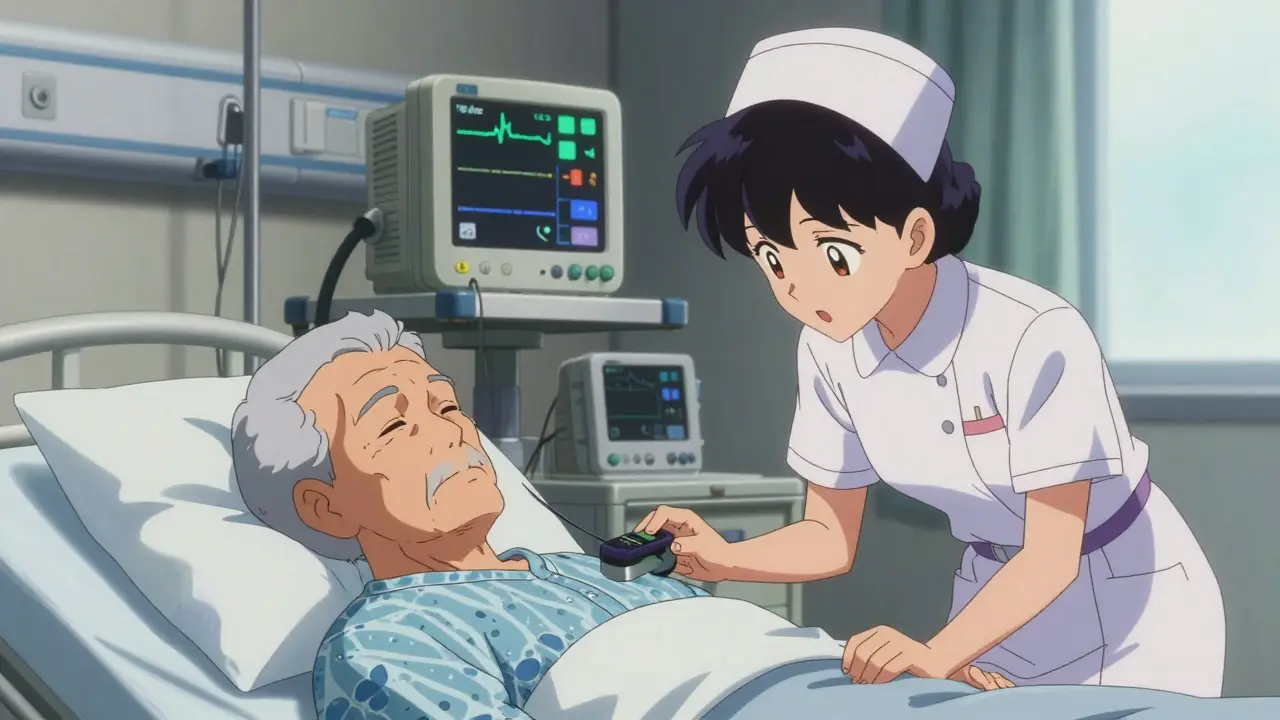
Did you know that seniors are 3.5 times more likely to suffer from adverse sedation events compared to younger adults? It is a stark reality in healthcare today. As we age, our bodies change in ways that make standard medication doses dangerous. The liver slows down, the kidneys filter less efficiently, and the brain becomes more sensitive to drugs. This means a dose that puts a 40-year-old to sleep gently might cause a 75-year-old to stop breathing entirely.
Monitoring seniors for over-sedation is not just about watching them sleep. It is an active, technical process designed to catch trouble before it becomes a crisis. With nearly 200,000 opioid-related adverse events occurring annually in US healthcare settings, understanding how to spot the early signs of overdose and respiratory failure is critical for caregivers, nurses, and family members involved in care decisions.
Why Seniors Are at Higher Risk for Over-Sedation
To monitor effectively, you first need to understand why the risk exists. Aging changes how the body processes medications. Between ages 20 and 80, hepatic metabolism (how the liver breaks down drugs) can decrease by 30% to 50%. Renal clearance (how the kidneys remove waste and drugs) drops by about 0.8 mL/min per year after age 40.
These physiological shifts mean that sedatives and painkillers stay in the body longer and hit harder. Additionally, the blood-brain barrier becomes more permeable with age, allowing drugs to enter the brain more easily. This combination creates a perfect storm for opioid-induced ventilatory impairment (OIVI), where the drive to breathe simply shuts down.
- Reduced Metabolism: Drugs linger longer, increasing the risk of accumulation.
- Increased Sensitivity: The brain reacts more strongly to lower doses.
- Comorbidities: Conditions like COPD or heart disease complicate breathing patterns.
According to the 2011 Anesthesia Patient Safety Foundation (APSF) consensus conference, these factors require a shift from standard adult dosing to age-adjusted protocols. Yet, studies show that 42% of facilities still use standard adult dosing, leading to preventable errors.
The Gold Standard: Continuous Multimodal Monitoring
Gone are the days when checking a patient every five minutes was enough. Intermittent monitoring misses up to 78% of respiratory events. The current gold standard, mandated by guidelines from the American Society of Anesthesiologists (ASA), is continuous multimodal monitoring. This means using multiple devices simultaneously to track different aspects of health.
| Parameter | Device/Method | Safe Threshold | Alert Trigger |
|---|---|---|---|
| Oxygen Saturation | Pulse Oximetry (SpO2) | Above 92% | Below 90% |
| Carbon Dioxide Levels | Capnography (EtCO2) | 35-45 mmHg | Trend deviation or Apnea |
| Respiratory Rate | Continuous Count | 12-20 breaths/min | Below 8 breaths/min |
| Blood Pressure | NIBP Cuff | Systolic > 90 mmHg | Systolic < 90 mmHg |
| Heart Rate | ECG Monitor | 50-100 bpm | < 50 or > 100 bpm |
Among these tools, Capnography stands out as the most critical for preventing silent hypoxia. Pulse oximetry measures oxygen levels, but it can be misleading if a senior is receiving supplemental oxygen. They might maintain high oxygen readings (SpO2 > 94%) even while they are barely breathing enough to clear carbon dioxide. Capnography detects this hypoventilation up to 14.3 minutes before pulse oximetry alarms sound, giving caregivers a vital window to intervene.
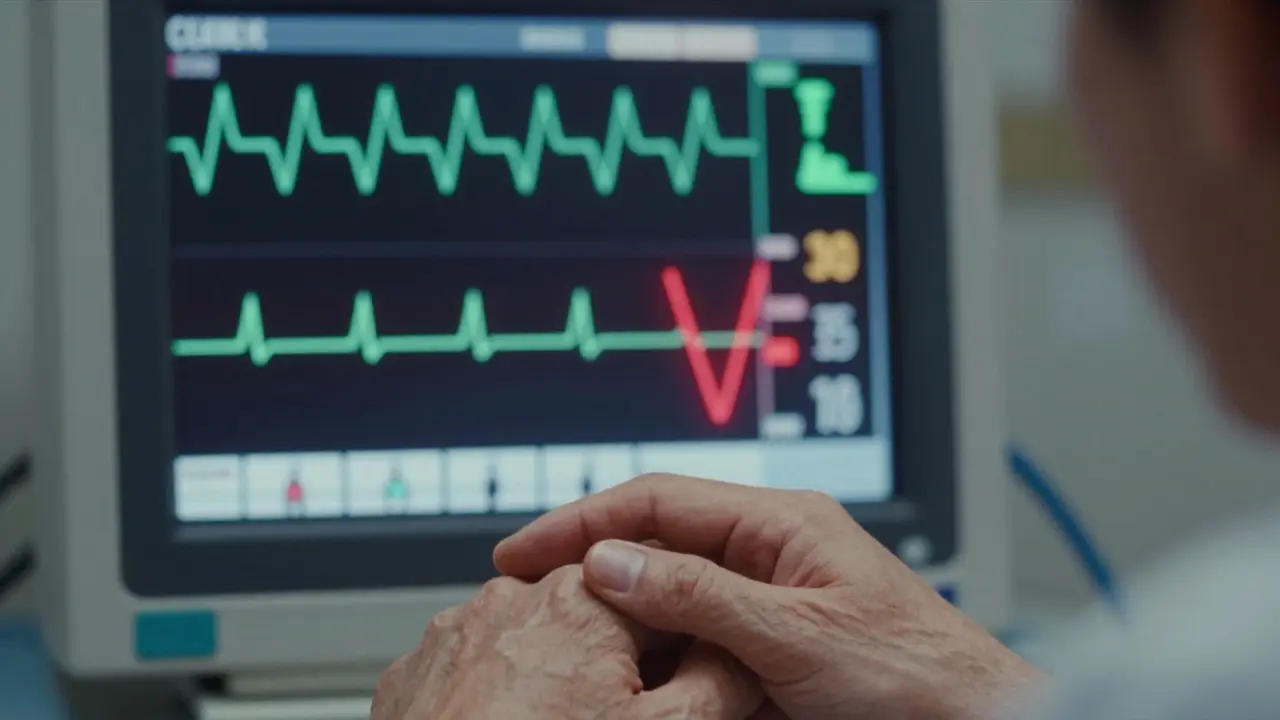
Recognizing Early Signs of Over-Sedation
Technology is powerful, but human observation remains irreplaceable. You must learn to read the subtle cues that indicate a patient is slipping into deep sedation or overdose. The ASA recommends using validated scales like the Richmond Agitation-Sedation Scale (RASS) to assess consciousness objectively.
On the RASS scale, a score of 0 means the patient is alert and calm. A score of -1 indicates slightly drowsy. However, scores below -2 signal moderate to deep sedation requiring immediate attention. A score of -5 means the patient is unarousable.
- Slowed Breathing: Watch for pauses between breaths (apnea) or shallow chest movements. If the rate drops below 8 breaths per minute, act immediately.
- Inability to Wake Up: Try to rouse the patient by shaking their shoulder or speaking loudly. If they do not respond consistently, they may be oversedated.
- Change in Skin Color: Look for cyanosis (bluish tint) around the lips or fingertips, though remember this is a late sign.
- Irregular Heartbeats: Bradycardia (slow heart rate) often accompanies respiratory depression in opioid overdoses.
Dr. Richard Applegate, Chair of the ASA Task Force, notes that seniors require 30-50% lower doses of sedatives due to pharmacokinetic changes. Ignoring this rule is a common cause of iatrogenic (medically induced) harm.
The Role of Advanced Algorithms and Technology
Newer technologies are bridging the gap between raw data and clinical action. One such innovation is the Integrated Pulmonary Index® (IPI). This algorithm combines end-tidal CO2, respiratory rate, oxygen saturation, and heart rate into a single score from 1 to 10.
An IPI score below 7 requires clinical intervention. In a 2021 multicenter study involving 1,245 elderly patients, the IPI demonstrated 89% sensitivity for detecting respiratory compromise. Crucially, it identified issues 12.7 minutes before oxygen desaturation occurred. This early warning system allows medical teams to reduce sedative doses or provide ventilation support before a crisis unfolds.
Another emerging tool is Respiratory Volume Monitoring (RVM), which uses bioimpedance technology to measure actual air movement in the lungs. While highly effective at detecting hypoventilation, it faces challenges in geriatric care. Roughly 22% of implementations fail in elderly patients due to fragile skin, which cannot tolerate the electrode placement required for accurate readings. Caregivers must balance technological benefits with physical comfort and skin integrity.

Practical Steps for Caregivers and Families
If you are caring for a senior at home or in a facility, you have specific roles to play in ensuring their safety during procedures or medication management.
- Know the Medications: Ask for a list of all sedatives, opioids, and benzodiazepines. Understand their half-lives and potential interactions.
- Advocate for Age-Adjusted Dosing: Remind providers that "start low and go slow" is the mantra for geriatric pharmacology. Use the formula: Dose = Standard Dose × (1 - 0.005 × (Age - 20)) as a discussion point with doctors.
- Ensure Proper Equipment: Verify that the facility uses continuous monitoring, not just intermittent checks. Ask if capnography is available for procedures.
- Protect the Skin: If electrodes are used, request hydrocolloid dressings underneath. These reduce skin injury by 67%, protecting delicate elderly skin from breakdown.
- Watch for Alarm Fatigue: Be aware that false alarms are common (up to 47% in some studies). Do not ignore them, but also distinguish between technical glitches and genuine distress.
Communication is key. Ensure that everyone on the care team knows the patient's baseline breathing pattern and any pre-existing conditions like COPD, which can alter normal waveform readings.
Regulatory Standards and Compliance
Safety is not just a best practice; it is a regulatory requirement. The Joint Commission mandates individualized sedation protocols for high-risk patients under standard NPSG.02.02.01. Furthermore, CMS Condition of Participation §482.52(c) requires continuous monitoring of oxygenation, ventilation, and circulation during moderate sedation.
Compliance has improved significantly, with 92% of US hospitals now meeting ASA monitoring standards for seniors, up from 67% in 2015. However, gaps remain. Outpatient endoscopy centers lag behind, with only 42% adoption of comprehensive monitoring protocols. If your loved one is undergoing a procedure in an outpatient setting, ask specifically about their monitoring capabilities.
The future of monitoring looks promising. The FDA cleared the Opioid Risk Monitoring System (ORMS) in May 2023, which integrates IV pumps with monitors to automatically pause drug delivery if breathing slows. Trials show this reduces respiratory depression events by 58% in seniors. As these systems become widespread, the margin for error will shrink, making care safer for our aging population.
What is the most important sign of over-sedation in seniors?
The most critical sign is a drop in respiratory rate below 8 breaths per minute or an inability to rouse the patient. Unlike younger adults, seniors may not show obvious struggle; instead, they may simply become quiet and unresponsive. Capnography is the best tool to detect this early, as it identifies hypoventilation before oxygen levels drop.
Why is pulse oximetry not enough for monitoring seniors?
Pulse oximetry only measures oxygen saturation, not ventilation. If a senior is receiving supplemental oxygen, their SpO2 levels may remain normal (>94%) even if they are breathing too slowly to clear carbon dioxide. This condition, known as silent hypoxia, can lead to respiratory arrest without warning from a pulse oximeter alone. Capnography is needed to monitor CO2 levels.
How much should sedative doses be reduced for elderly patients?
Seniors generally require 30% to 50% lower doses of sedatives compared to younger adults. This is due to decreased liver metabolism and kidney function. A common guideline is to start with the lowest possible effective dose and titrate up slowly, waiting longer between doses to observe effects.
What is the Richmond Agitation-Sedation Scale (RASS)?
RASS is a validated tool used to assess a patient's level of consciousness. Scores range from +4 (combative) to -5 (unarousable). For seniors under sedation, a score below -2 indicates moderate to deep sedation, signaling the need for immediate clinical review to prevent respiratory depression.
Can technology replace human monitoring?
No. While advanced algorithms like the Integrated Pulmonary Index (IPI) provide early warnings, they cannot replace clinical assessment. Experts warn that overreliance on technology without human judgment leads to 28% of monitoring failures. Human caregivers must interpret data in context, considering the patient's history and physical state.
Sarah Boomgaard
July 5, 2026 AT 21:38it is not about safety it is about control and the system wants to keep us dependent on their machines and pills because we are weak and broken and they profit from our fear of dying alone in the night without their constant watching eyes
Mohit Patil
July 7, 2026 AT 00:48you think this is real? the data is cooked by big pharma to sell more monitors while the real cure is being suppressed by the elite who want us sedated and compliant dont trust the government stats they lie to protect their profits
Gavin Edley
July 8, 2026 AT 18:00I find it hilarious how everyone jumps on the 'safety' bandwagon without questioning why seniors need this much monitoring in the first place. It’s like we’re treating aging like a disease rather than a natural process. Also, who has time to watch a monitor all day? The average person isn’t a nurse. This guide assumes you have unlimited resources and energy, which is laughably out of touch with reality. Plus, all these devices are probably overpriced tech junk designed to scare families into buying unnecessary services.
And let’s be honest, if your grandpa stops breathing, he’s probably done anyway. Why prolong the inevitable with fancy gadgets? We should focus on comfort, not keeping them alive at all costs. This whole narrative is just fear-mongering disguised as care.
Ashley Loera
July 9, 2026 AT 05:00OMG this is so scary!! i had no idea my mom could be in danger just from sleeping after her meds. i feel like such a bad daughter for not knowing this sooner. the part about silent hypoxia made me cry because she uses oxygen at home now. please tell me there is something i can do right now to save her?? i am shaking reading this.
Divya Prakash
July 11, 2026 AT 00:57It is truly lamentable that the general public requires such elementary instruction on basic physiological principles, yet here we are, discussing the rudimentary mechanics of hepatic metabolism as if it were some arcane secret reserved for the intellectual elite. One must wonder what other fundamental aspects of human biology remain shrouded in ignorance among the masses, necessitating such patronizingly simplified explanations of capnography and its superiority over pulse oximetry in detecting hypoventilation. The very notion that a layperson might possess the requisite knowledge to interpret an Integrated Pulmonary Index score suggests a level of sophistication rarely found outside of specialized academic circles, where one might expect such nuanced understanding to be commonplace rather than treated as novel information worthy of widespread dissemination. Furthermore, the suggestion that hydrocolloid dressings are a novel solution to skin integrity issues reveals a profound disconnect from the realities of modern wound care protocols, which have long established the efficacy of such materials in preventing pressure ulcers and electrode-related trauma in geriatric populations. It is incumbent upon caregivers to elevate their discourse beyond mere alarmism and engage with the scientific literature directly, rather than relying on secondary summaries that inevitably dilute the complexity of pharmacokinetic adjustments required for elderly patients undergoing sedation procedures.
fred morgan
July 12, 2026 AT 05:22The emphasis on continuous multimodal monitoring is clinically sound and aligns with current ASA guidelines. Capnography remains superior to pulse oximetry for early detection of hypoventilation, particularly in patients receiving supplemental oxygen. Caregivers should prioritize verifying equipment availability during pre-procedure consultations.
Gilbert Bankual
July 12, 2026 AT 11:44This is great info! Start low and go slow is key. You got this!