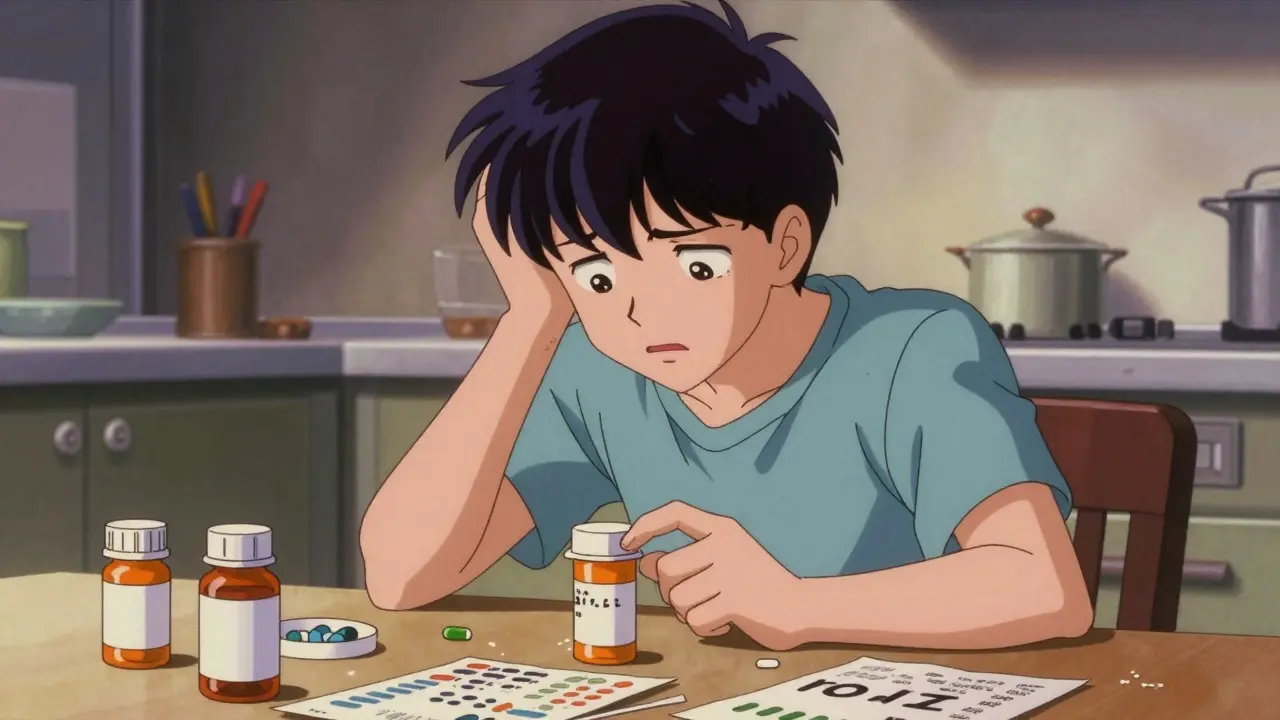
Confusing medication instructions are not just a minor inconvenience; they are a critical patient safety issue. Ambiguous language, inconsistent manufacturer guidelines, and inappropriate abbreviations can lead to serious medication errors. The Institute for Safe Medication Practices (ISMP) identifies unclear instructions as a leading cause of preventable adverse drug events. In fact, these errors contribute to approximately 1.5 million medication-related injuries annually in the United States. If you are unsure about how to take your medicine, asking for clarification is the single most important step you can take to protect your health.
Why Clear Instructions Matter
The stakes are high because so many people rely on daily medication. The CDC reports that four out of five American adults take at least one medication, and one in four takes three or more. When instructions are vague, the risk of harm increases significantly. For example, confusing "take with food" with "take on an empty stomach" can drastically change how your body absorbs a drug. Similarly, misunderstanding timing can reduce effectiveness or increase side effects. Clear communication between you and your healthcare provider is essential for public health and personal safety.
Regulatory bodies like the U.S. Food and Drug Administration (FDA) recognize this danger. Since 1998, the FDA has required Medication Guides for certain high-risk prescription drugs. These guides provide specific patient education to prevent serious adverse reactions. As of 2023, over 200 prescription drugs require these guides, including isotretinoin (Accutane), oral contraceptives, and opioids. However, even when a guide is provided, patients often find the language technical or confusing. This is why proactive clarification is necessary.
Common Sources of Confusion
Misunderstandings often stem from ambiguous abbreviations or inconsistent formatting. The ISMP’s 2019 Electronic Guidelines mandate strict formatting rules to prevent these errors. For instance, prescriptions should use only Arabic numerals for doses (e.g., 5 instead of V). Writing out "intranasal" is required rather than using "IN," which could be confused with IV (intravenous) or IM (intramuscular). Abbreviations like "q.d." or "QD" for daily are prohibited because they can be misread as "q4h" (every four hours).
Another major source of confusion arises when different manufacturers produce the same medication with varying instructions. The National Institutes of Health (NIH) published guidelines in August 2021 stating that inconsistent drug instructions between manufacturers require clinician review. Without this review, patients might receive conflicting advice depending on which brand their pharmacy dispenses. This lack of standardization means you cannot assume that generic instructions will match those of the brand-name drug perfectly.
- Avoid ambiguous abbreviations: Never assume "d" means day or dose without confirmation.
- Check for manufacturer differences: Generic brands may have slightly different usage instructions.
- Clarify timing: "Twice daily" usually means every 12 hours, but confirm with your pharmacist.

How to Decode Specific Instructions
Understanding the intent behind common phrases is crucial. Joanne Doyle Petrongolo, a pharmacist at Harvard-affiliated Massachusetts General Hospital, explains that "take as needed" requires additional guidance. It is not safe to take a medication anytime you feel you need it. You must know the maximum amount allowed in a day and how far apart doses should be spaced. For example, if you are taking pain relief, knowing whether you can take one dose or three, and the minimum gap between them, prevents overdose.
Timing also affects therapeutic outcomes. Harvard Health notes that cholesterol-lowering medications are generally taken once a day at bedtime because the body produces more cholesterol overnight. Conversely, MD Anderson Cancer Center specifies that medications taken "twice daily" should be administered as close to 12 hours apart as possible, such as at 8 am and 8 pm. Setting timers or reminders can help you adhere to these schedules accurately.
| Instruction Term | Meaning | Action Required |
|---|---|---|
| PO | By mouth | Swallow the medication orally. |
| BID | Twice a day | Take every 12 hours (e.g., 8 am and 8 pm). |
| QD | Daily | Take once every 24 hours. |
| PRN | As needed | Confirm max daily dose and spacing intervals. |
| STAT | Immediately | Take right away, usually for acute symptoms. |
When and How to Ask for Help
If you are unsure exactly how to take a medication, even if it was already explained, ask for clarification. Dr. Anthony L. Komaroff, Editor in Chief of Harvard Health Letter, emphasizes this point strongly. Do not hesitate to call your pharmacist or doctor. Pharmacists are trained to interpret complex prescriptions and explain them in plain language. They can also check for interactions with other medications you are taking.
In outpatient settings like community pharmacies, pharmacists are required to provide FDA-approved Medication Guides each time a drug is dispensed directly to you. Use this opportunity to ask questions. In inpatient settings like hospitals, providers must counsel you on appropriate use, potential side effects, and follow-up requirements. If you leave the hospital with a new regimen, ensure you understand the transition. Ask for a written summary of your medications and their purposes.
Documentation plays a key role in safety. The Montana Department of Public Health and Human Services specifies that healthcare providers must compare the medication picked up to the prescription copy to ensure they match before administration. For patients, this means verifying that the bottle label matches what your doctor told you. If there is a discrepancy, do not take the medication until you have clarified the difference with a healthcare professional.

Practical Steps for Patients
To manage your medications safely, adopt a proactive approach. Start by keeping an updated list of all your prescriptions, including dosage, frequency, and purpose. Share this list with every healthcare provider you see. This helps prevent duplicate therapies and dangerous interactions.
- Ask specific questions: Instead of "Do I understand?" ask "Can you show me how to take this?" or "What should I do if I miss a dose?"
- Use technology: Set alarms on your phone for medication times. Many apps allow you to track adherence and refill reminders.
- Review regularly: Schedule annual medication reviews with your pharmacist or doctor to assess if all medications are still necessary.
- Seek second opinions: If instructions seem contradictory, consult another healthcare provider or a specialist.
The regulatory landscape continues to evolve. The FDA is reviewing electronic Medication Guide delivery options, with draft guidance in 2022 suggesting expanded electronic distribution methods. While digital tools offer convenience, they must maintain patient access and clarity. Until then, paper guides and direct conversation remain the gold standard for ensuring understanding.
Conclusion
Getting clarification on confusing medication instructions is a vital part of self-care. By understanding common terms, recognizing sources of ambiguity, and actively engaging with your healthcare team, you can prevent errors and improve your health outcomes. Remember, no question is too small when it comes to your safety. Always verify, always ask, and always prioritize clear communication.
What should I do if my medication instructions are unclear?
Contact your pharmacist or prescribing doctor immediately. Do not guess or assume. Ask for clarification on dosage, timing, and any special instructions like taking with food. Your pharmacist can also provide a Medication Guide if applicable.
Are generic medications always interchangeable with brand names?
While generics contain the same active ingredient, instructions can vary slightly between manufacturers. The NIH recommends clinicians review instructions from different manufacturers to determine if modifications are needed. Always inform your pharmacist if you switch brands.
What does "take as needed" mean?
It means you take the medication when symptoms occur, but within specific limits. You must know the maximum daily dose and the minimum time between doses. Ask your pharmacist for these details to avoid overdose.
Why are some abbreviations banned in prescriptions?
Abbreviations like "QD" (daily) can be mistaken for "Q4H" (every four hours), leading to dangerous overdoses. The ISMP prohibits such abbreviations to prevent medication errors. Prescriptions should use clear, written-out terms.
How often should I review my medications?
At least once a year, or whenever a new medication is added. Regular reviews help identify unnecessary drugs, potential interactions, and opportunities for simplifying your regimen. Keep an updated list of all medications for every appointment.