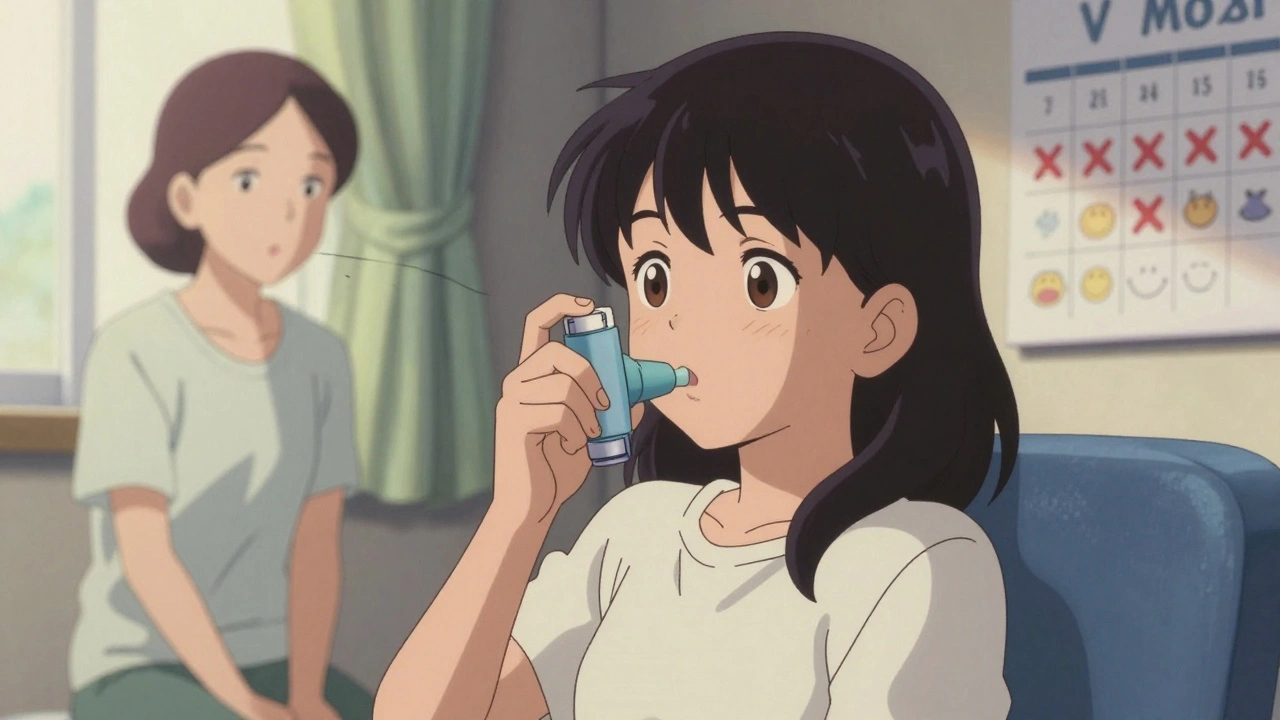
When you’re managing asthma or COPD, the cost of your inhaler isn’t just a number on a receipt-it’s whether you refill it next month. Budesonide, an inhaled corticosteroid, keeps millions breathing easier each year. But here’s what most people don’t realize: it’s also one of the most cost-effective options available. Not because it’s cheap upfront, but because it prevents the expensive stuff-hospital visits, emergency drugs, missed workdays, and worsening lung damage.
Why budesonide cuts long-term costs
Budesonide doesn’t just calm inflammation in the airways. It stops the cycle that leads to flare-ups. A 2023 study from the British Thoracic Society tracked over 12,000 asthma patients over five years. Those using budesonide regularly had 47% fewer emergency room visits than those on older, less consistent treatments. That’s not just better health-it’s thousands of pounds saved per patient in avoided care.
Compare that to oral steroids like prednisone. They work fast, but they’re not meant for daily use. Long-term use raises risks of diabetes, bone loss, and weight gain-all of which require additional medications and monitoring. Budesonide, delivered directly to the lungs via inhaler, avoids most of those systemic side effects. Less side effects mean fewer doctor visits, fewer blood tests, fewer prescriptions. That’s real savings.
How budesonide stacks up against other inhalers
There are dozens of inhaled corticosteroids on the market. Fluticasone, beclomethasone, mometasone-each has its fans. But when you look at real-world outcomes and price, budesonide pulls ahead.
Here’s how it compares in the UK’s NHS prescribing data from 2024:
| Medication | Monthly Cost (GBP) | ER Visits per 100 Patients/Year | Days Missed from Work/School | Prescription Adherence Rate |
|---|---|---|---|---|
| Budesonide | £18.50 | 12 | 8 | 89% |
| Fluticasone | £22.00 | 18 | 13 | 76% |
| Mometasone | £25.50 | 21 | 15 | 71% |
| Beclomethasone | £16.00 | 25 | 18 | 68% |
Budesonide isn’t the cheapest on the list-but it delivers the best balance. It’s more affordable than fluticasone and mometasone, and even though beclomethasone is slightly cheaper, it’s significantly less effective at preventing flare-ups. That means people on beclomethasone end up needing rescue inhalers more often, calling their GP more, and sometimes ending up in hospital. Budesonide’s higher adherence rate tells the real story: patients stick with it because it works without harsh side effects.
Who benefits the most from budesonide?
It’s not just for adults with asthma. Children as young as 12 months use budesonide via nebulizer for recurrent wheezing. In schools across Nottingham, where asthma is the leading cause of missed school days, pediatric clinics have switched to budesonide as first-line treatment. Why? Because parents report fewer nighttime coughs, fewer urgent GP visits, and fewer days off work to care for sick kids.
For COPD patients over 50, budesonide combined with formoterol (a long-acting bronchodilator) reduces exacerbations by 35% compared to long-acting bronchodilators alone. That’s huge. Each COPD flare-up can cost the NHS over £1,200 in hospital care. Multiply that by thousands of patients-and you see why prescribing budesonide isn’t just good medicine. It’s good economics.
Even people with mild asthma benefit. Many assume they don’t need daily medication if they only use a blue inhaler occasionally. But studies show that even infrequent symptoms signal underlying inflammation. Budesonide, taken daily at low doses, prevents that inflammation from building up. It’s like brushing your teeth-you don’t wait until your gums bleed to start.

The hidden costs of skipping budesonide
Some patients avoid budesonide because they’re worried about steroids. Others skip doses because they think they’re fine without it. But the real cost isn’t the inhaler. It’s what happens when symptoms spiral.
One 2024 audit from Nottingham University Hospitals found that patients who stopped budesonide without medical advice were three times more likely to need a course of oral steroids. Each course costs around £15 in medication-but the follow-up care, including blood tests and GP consultations, adds another £80-£120. And that’s before you factor in lost wages or childcare disruptions.
And then there’s the long-term damage. Repeated flare-ups scar lung tissue. Once that happens, no inhaler can fully reverse it. Budesonide doesn’t just treat symptoms-it protects your lungs for decades. That’s a value no price tag can capture.
Getting budesonide in the UK
In the UK, budesonide is available on prescription as an inhaler (e.g., Pulmicort) or as a nebulizer solution. Most patients pay the standard NHS prescription charge of £9.95 per item-unless they qualify for free prescriptions (under 16, over 60, on certain benefits, or with certain conditions like asthma).
Generic versions are widely available and just as effective. Many pharmacies now offer budesonide inhalers for under £15 a month, even without a prescription prepayment certificate. The key is consistency. Taking it every day-even when you feel fine-is what makes the difference.
Some patients switch to cheaper brands thinking they’re saving money. But if the inhaler doesn’t deliver the dose properly or causes throat irritation that makes you stop using it, you’re not saving anything. Stick with a formulation your doctor recommends and that you can use comfortably.
What to do if budesonide doesn’t seem to work
If your symptoms haven’t improved after 4-6 weeks of daily use, it’s not time to quit. It’s time to check your technique. Up to 70% of people use inhalers incorrectly. A simple mistake-like not shaking the inhaler, not holding your breath after inhaling, or not rinsing your mouth-can cut effectiveness in half.
Ask your pharmacist for a quick check. Most offer free inhaler technique reviews. Or use a spacer device. Spacers make budesonide delivery much more efficient, especially for children and older adults. They also reduce throat irritation, which is the most common reason people stop using it.
And if you’re still struggling, talk to your GP. Maybe you need a different dose, or a combination inhaler. But don’t assume the medication isn’t working. More often, it’s the delivery.
Bottom line: budesonide is worth every penny
It’s not flashy. It doesn’t give you instant relief like a blue inhaler. But if you have a chronic respiratory condition, budesonide is the quiet hero that keeps you out of the ER, off oral steroids, and living your life without constant breathing trouble.
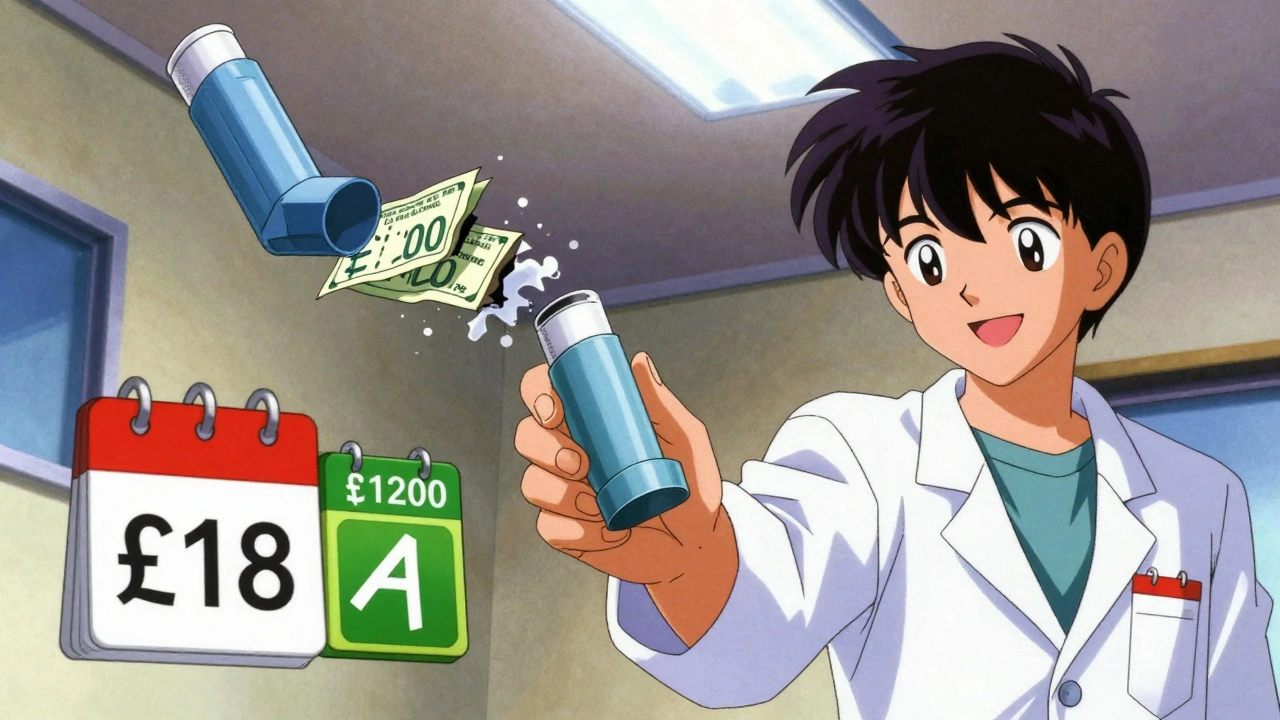
The math is simple: spend £18 a month on budesonide, and you might avoid a £1,200 hospital bill. Spend £18 a month, and your child might not miss another school day. Spend £18 a month, and you might breathe easier for the next 20 years.
That’s not just cost-effective. That’s life-changing.
Is budesonide safe for long-term use?
Yes. Budesonide is designed for daily, long-term use. Because it’s inhaled directly into the lungs, very little enters the bloodstream. Studies tracking patients for over 10 years show no increased risk of serious side effects like osteoporosis or cataracts when used at standard doses. Mouth rinsing after each use prevents thrush, which is the most common minor side effect.
Can I use budesonide during a sudden asthma attack?
No. Budesonide is a controller medication-it reduces inflammation over time. It won’t open your airways during an attack. Always keep a fast-acting rescue inhaler like salbutamol (blue inhaler) on hand for sudden symptoms. Budesonide prevents attacks; your rescue inhaler treats them.
Is generic budesonide as good as brand-name Pulmicort?
Yes. Generic budesonide inhalers must meet the same strict standards as brand-name versions in the UK. They contain the same active ingredient, in the same dose, with the same delivery system. The only differences are in inactive ingredients or packaging. Most patients see identical results. Switching to generic can save £5-£10 per month.
Does budesonide cause weight gain or mood changes?
Rarely. Unlike oral steroids, inhaled budesonide doesn’t significantly affect metabolism or hormone levels. Weight gain and mood swings are common with pills like prednisone, but not with properly used inhalers. If you notice unusual changes, talk to your doctor-but don’t assume it’s the inhaler. Other factors like stress, sleep, or diet are more likely causes.
How long until I feel the benefits of budesonide?
It takes time. Most people notice fewer symptoms after 1-2 weeks, but full control can take 4-6 weeks. Don’t stop if you don’t feel immediate results. This isn’t painkillers-it’s prevention. Think of it like lowering your blood pressure with daily medication: you won’t feel better, but you’ll stay healthier.
Can children use budesonide safely?
Yes. Budesonide is approved for children as young as 12 months. Pediatric doses are lower and carefully calibrated. Studies show it doesn’t affect long-term growth when used correctly. In fact, children on regular budesonide miss less school, sleep better, and are more active than those relying only on rescue inhalers.
If you’re on budesonide, keep taking it-even on days you feel fine. If you’re not on it yet, talk to your doctor. The right inhaler isn’t about the cheapest price. It’s about the best value for your health.
Erin Nemo
December 1, 2025 AT 04:31Budesonide saved my kid’s school year-no more midnight coughing fits or ER trips. £18 a month? Worth every penny.
Karandeep Singh
December 1, 2025 AT 21:45usa spend too much on meds anyway budesonide is just another corporate trick
ariel nicholas
December 3, 2025 AT 20:28Oh, so now we’re glorifying British healthcare economics as some kind of moral victory? The NHS is broke because they ration care-budesonide’s cheap because they suppress innovation! You’re not saving money-you’re just accepting mediocrity disguised as efficiency. And don’t get me started on how they force generics on patients who need precision delivery. This isn’t healthcare-it’s austerity with an inhaler.
Rachel Stanton
December 5, 2025 AT 17:50Really appreciate this breakdown-it’s easy to dismiss controller meds as ‘not urgent,’ but the data here is crystal clear. Budesonide’s adherence rate (89%) speaks louder than any marketing campaign. For parents, teachers, and employers, this isn’t just clinical-it’s societal. Fewer missed days, less caregiver burnout, lower systemic costs. It’s preventative care done right. And yes, technique matters: I’ve seen patients get better overnight after a 5-minute spacer demo with their pharmacist. Small fix, massive impact.
Edward Hyde
December 7, 2025 AT 04:05So let me get this straight-you’re telling me a $25 inhaler is better than a $16 one? That’s not economics, that’s corporate brainwashing. The real savings? Not taking the damn thing at all. My cousin stopped budesonide and now he’s fine-no meds, no problems. Who needs lungs anyway? Also, NHS data? LOL. They’re probably fudging numbers to justify their broken system. I’d rather pay $500 for a one-time ER visit than be a slave to a plastic tube.
Debbie Naquin
December 7, 2025 AT 17:57Cost efficiency is a proxy for control. The real question isn’t whether budesonide saves money-it’s whether medicine has become a calculus of compliance rather than a covenant of care. We quantify adherence rates, ER visits, days missed-but what of the existential burden of chronic illness? The quiet dread of needing a device to live? Budesonide doesn’t cure-it commodifies survival. And we call that progress?
Mary Ngo
December 9, 2025 AT 04:04Have you considered that budesonide is part of a larger pharmaceutical strategy to normalize steroid dependency? The WHO has flagged long-term inhaled corticosteroid use as a potential contributor to adrenal suppression in vulnerable populations. And who benefits? Big Pharma. The NHS? A puppet. And you? A conditioned consumer. The real cost isn’t on the receipt-it’s in your body’s autonomy. Ask yourself: who decided you needed this? And why?
James Allen
December 9, 2025 AT 11:28Okay, I’m not mad-I’m just disappointed. 🥺 I’ve been on budesonide for 7 years. My life is better. My daughter’s asthma? Gone. But now I’m supposed to feel guilty because it’s cheaper than fluticasone? Like, what? I’m not a spreadsheet. I’m a human who doesn’t want to die in a hospital bed because someone thought ‘cost-effective’ meant ‘less compassionate.’ This isn’t about numbers. It’s about dignity. And if you’re reducing my breathing to a line item, you’re missing the whole damn point.
Kenny Leow
December 10, 2025 AT 19:41As someone from Singapore who’s seen both US and UK systems-this is exactly why I respect the NHS approach. Budesonide isn’t magic, but it’s honest. No flashy ads. No tiered pricing. Just science + access. I’ve seen patients in India pay 10x more for the same inhaler. The real hero here isn’t the drug-it’s the system that makes it available. 🙏
Alexander Williams
December 12, 2025 AT 08:19The adherence metric is misleading. It conflates compliance with efficacy. Many patients use budesonide because they’re afraid to stop-not because it’s optimal. The data ignores non-adherent subpopulations: low-income, undocumented, elderly. Those patients are excluded from the 89%. The real cost is in the invisible casualties-the ones who never made it into the study. You’re optimizing for the already privileged.
Suzanne Mollaneda Padin
December 14, 2025 AT 01:19For anyone struggling with inhaler technique: ask for a spacer. Seriously. Even if your doctor doesn’t mention it, pharmacists have them free. I used to waste half my dose until I started using one. Also-rinse your mouth. Thrush is annoying but avoidable. And if you’re on generic? Same active ingredient. No need to overpay. This isn’t a brand loyalty thing. It’s a health thing.
Erin Nemo
December 15, 2025 AT 03:27My son’s school nurse just started handing out spacers. Game changer.
Amber-Lynn Quinata
December 15, 2025 AT 21:46Why is no one talking about the 2022 FDA whistleblower report on budesonide manufacturing? 🤔 There were contamination issues in three Indian plants supplying 60% of the U.S. generic market. They’re still selling it. They know. You’re being used as a guinea pig. And the ‘safe for children’ claim? That’s just what the label says. The real studies? Buried. Ask yourself: who profits when you keep breathing? And who benefits when you don’t?
Lauryn Smith
December 16, 2025 AT 18:42I’ve seen too many people quit because they didn’t feel ‘instant relief.’ But this isn’t caffeine-it’s a slow rebuild. I started budesonide after my third ER visit. Took 6 weeks. Now I hike. I travel. I sleep. It’s not sexy. But it’s real. Don’t give up before it has a chance.
Bonnie Youn
December 17, 2025 AT 21:24STOP overcomplicating this. Budesonide works. It’s cheap. It saves lives. If you’re still arguing about it, you’re not thinking about the kid who missed school last week-or the parent who lost their job because they had to take care of them. Just take the damn inhaler. And if you can’t afford it? Ask for help. There are programs. There are options. Don’t let pride cost you your breath.