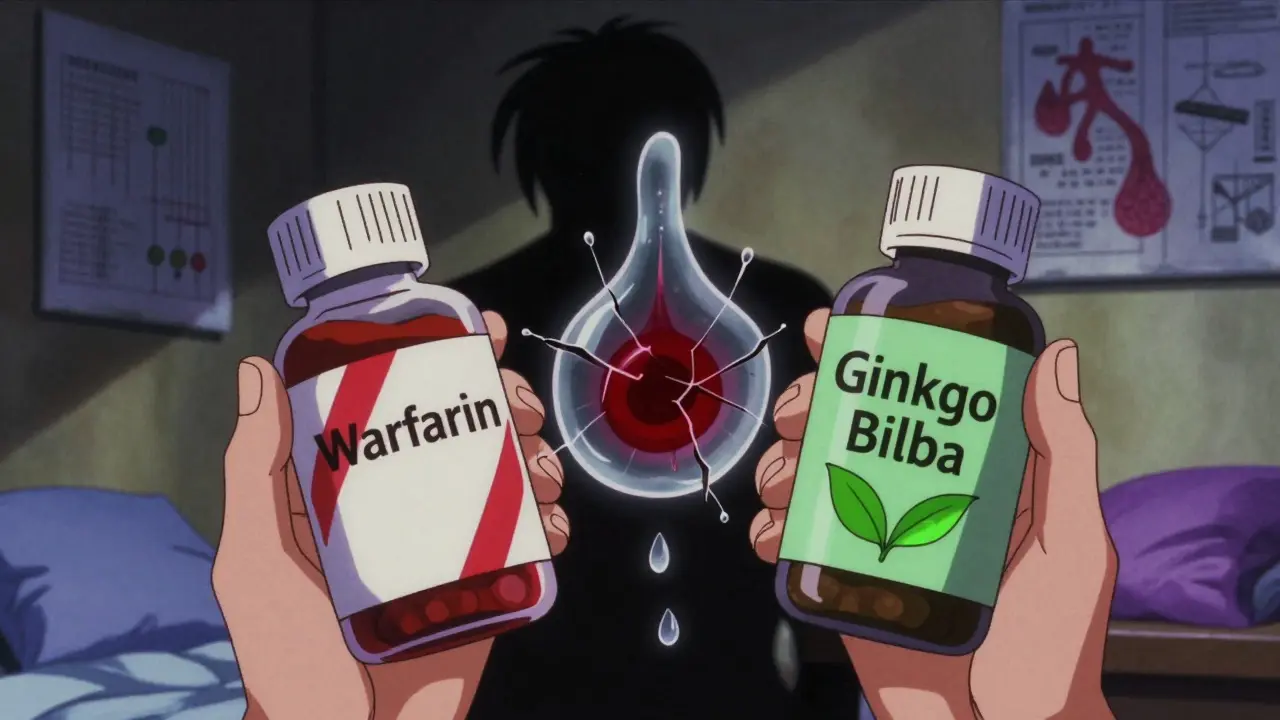
If you're taking a blood thinner like warfarin, aspirin, or clopidogrel, and you're thinking about adding Ginkgo biloba for memory or circulation, stop. Not because it's dangerous-because no one really knows for sure. But because the risk, however small, isn't worth guessing on.
What Is Ginkgo Biloba, Anyway?
Ginkgo biloba comes from the leaves of a tree that's been around for over 270 million years. That's older than dinosaurs. It's been used in traditional Chinese medicine for centuries, and in the 1980s, scientists in Europe started turning it into a standardized extract called EGb 761. This version contains 24% flavonol glycosides and 6% terpene lactones-the parts believed to help with blood flow and brain function.
Today, about 12 million Americans take Ginkgo supplements every year. It's marketed for memory, focus, and even leg pain from poor circulation. But here's the catch: most of the research on safety and effectiveness comes from this one specific extract, EGb 761. If you buy a bottle off the shelf at a health store, there's no guarantee it's the same thing. Many products are poorly made, inconsistently dosed, or even contaminated.
How Ginkgo Might Interact With Blood Thinners
Blood thinners work in two main ways: some stop your blood from clotting (anticoagulants like warfarin), and others stop platelets from sticking together (antiplatelets like aspirin and clopidogrel). Ginkgo biloba appears to affect both.
Studies suggest Ginkgo can reduce platelet aggregation-meaning it makes it harder for your blood cells to clump up and form clots. It may also slightly affect how your liver breaks down warfarin, which could make the drug stronger. That sounds scary, right? But here’s where it gets messy.
Controlled clinical trials, like the one published in PubMed in 2008, found no significant increase in bleeding risk when people took Ginkgo with aspirin or warfarin. The same study pointed out that most reports of bleeding were tied to non-standardized Ginkgo products. In other words, the bad outcomes may come from bad supplements, not the herb itself.
Yet, case reports exist. There are documented cases of brain bleeds, nosebleeds, and bruising in people taking Ginkgo along with blood thinners. The FDA received 18 such reports between 2008 and 2020. No one proved Ginkgo caused them, but they happened. And when it comes to bleeding in the brain, you don’t get a second chance.
What the Experts Say (And Why They Disagree)
There’s a split in the medical world.
The Mayo Clinic and GoodRx say: avoid Ginkgo if you’re on warfarin. Call it high-risk. For aspirin and clopidogrel? Moderate risk. Don’t take it without talking to your doctor.
On the other side, the American Society of Health-System Pharmacists and the American College of Chest Physicians say the evidence doesn’t support a real, clinically meaningful interaction. They call the risk theoretical. They point to solid studies showing no increase in bleeding.
So why the confusion? Because the data is noisy. Most of the bad reports come from people using random supplements from unknown brands. The good studies used one specific, high-quality extract. If you’re taking a cheap Ginkgo pill with no standardization, you’re playing Russian roulette with your blood.

What You Should Do Right Now
Here’s what actually matters, no matter what the studies say:
- Stop taking Ginkgo biloba at least two weeks before any surgery-even a dental extraction. The American Society of Anesthesiologists, the Cleveland Clinic, and most surgeons agree on this. Why? Because bleeding during surgery can be deadly, and no one wants to find out halfway through that your supplement is making things worse.
- If you’re on warfarin, don’t start Ginkgo. Even if the science is mixed, the stakes are too high. Warfarin has a narrow safety window. A tiny change in how it works can send your INR levels through the roof.
- Don’t assume “natural” means safe. Garlic, ginger, danshen, and even fish oil can thin your blood too. Ginkgo isn’t the only one. If you’re on a blood thinner, treat every supplement like a drug-because it acts like one.
- Talk to your pharmacist. Pharmacists see this every day. A 2022 survey found 78% of pharmacists routinely warn patients about Ginkgo-blood thinner combinations. They know which brands are reliable and which are risky. Ask them to check your whole supplement list.
What About Other Supplements?
You’re not alone if you’re taking more than one herb. Nearly half of people who use Ginkgo also take other supplements that affect bleeding. Garlic? Common. Fish oil? Very common. Danshen? Used in traditional Chinese medicine for heart health. Evening primrose? Popular for hormonal balance.
All of these can add up. It’s not just Ginkgo. It’s the combo. One supplement might be fine. Two or three together? That’s when your risk goes from low to unpredictable.
And don’t forget NSAIDs-like ibuprofen or naproxen. They also thin your blood. Mixing them with Ginkgo? That’s another layer of risk you didn’t even think about.

What Do the Labels Say?
Here’s something surprising: 42% of Ginkgo supplement manufacturers now put warnings on their labels about blood thinners. That’s up from 28% in 2018. Companies are getting the message-even if the science isn’t rock-solid, the legal risk is too big to ignore.
But here’s the problem: those warnings are buried in tiny print. Most people don’t read them. Or they think, “I’ve been taking this for years, nothing happened.” That’s exactly how accidents happen.
Bottom Line: Play It Safe
There’s no clear-cut answer. Science doesn’t give you a yes or no. But medicine isn’t about perfect answers-it’s about minimizing risk when the stakes are high.
If you’re on a blood thinner, and you want to take Ginkgo biloba for memory or circulation, the safest choice is simple: don’t. There are other ways to support brain health-exercise, sleep, omega-3s from real fish, and managing blood pressure. You don’t need a supplement that might mess with your medication.
If you’re already taking it? Don’t quit cold turkey. Talk to your doctor. They might want to check your INR or monitor you more closely. But don’t wait until you’re in the ER with a brain bleed to ask the question.
The truth? Most people who take Ginkgo with blood thinners never have a problem. But one problem is enough. And when it comes to your blood, you don’t get to test the limits.
What to Ask Your Doctor
- “Is Ginkgo biloba safe for me given my current medications?”
- “Could any of my supplements be affecting my INR or bleeding risk?”
- “Should I stop Ginkgo before my upcoming procedure?”
- “Do you know which brand of Ginkgo is the most reliable-if I really need to take it?”
Write down your questions. Bring your supplement bottles. Don’t assume your doctor knows what’s in your medicine cabinet. Most don’t.
Mindee Coulter
January 28, 2026 AT 09:29I’ve been taking ginkgo for years with my aspirin and nothing’s happened. Maybe the risk is overblown? 🤷♀️
Mark Alan
January 28, 2026 AT 21:45Y’all are playing Russian roulette with your brain cells 😱 Ginkgo + blood thinners = ER ticket waiting to happen. I don’t care if it’s ‘natural’-if it thins your blood, it’s a drug. Period. 🚨
Bryan Fracchia
January 30, 2026 AT 14:11It’s wild how we treat ‘natural’ like it’s harmless, but pharmaceuticals get all the warnings. Ginkgo’s been around longer than human civilization-maybe we should trust the longevity instead of the latest FDA report. I’m not saying go wild, but maybe we need better data, not fear.
Also, if your supplement doesn’t say ‘EGb 761’ on the label, you’re basically buying tree dust. Don’t blame the herb for bad manufacturing.
Lance Long
January 30, 2026 AT 23:59LET ME TELL YOU SOMETHING. I had an uncle who took ginkgo with warfarin for 7 years. No issues. Then he got a tooth pulled. Blew out his mouth like a horror movie. They had to stitch him up with a flashlight.
He didn’t even know it was the ginkgo. That’s the problem. It’s silent. It doesn’t scream. It just… waits. And then-BAM. You’re in the OR. Don’t be that guy. Stop. Just stop.
fiona vaz
February 1, 2026 AT 07:50There’s a difference between ‘no proven risk’ and ‘safe.’ The fact that 42% of manufacturers now warn about interactions says more than any study. If they’re worried enough to put it on the label, maybe we should listen. Especially when INR levels can swing like a pendulum.
Also-pharmacists are your real MVPs. Talk to them. They’ve seen this 100 times.
Sue Latham
February 3, 2026 AT 04:46Oh honey. You bought ginkgo from GNC? Sweetie. That’s not ginkgo. That’s a $12 placebo with a tree on the bottle. Real EGb 761 costs $40 a bottle. You think your $7 bottle is ‘the same’? Honey. No. No, it’s not. You’re not protecting your brain-you’re feeding it junk.
And yes, if you’re on warfarin? Stop. Immediately. And get a new doctor if they didn’t tell you this already.
John Rose
February 4, 2026 AT 16:29Interesting how the studies show no significant interaction with standardized extracts, yet case reports are all tied to unregulated products. The real issue isn’t ginkgo-it’s the lack of regulation in the supplement industry. We treat vitamins like candy, but they’re pharmacologically active. We need better labeling, third-party testing, and mandatory disclosure of active compounds. Until then, caution is the only rational response.
Robert Cardoso
February 4, 2026 AT 18:53Let’s be brutally honest: 98% of people taking ginkgo don’t know what’s in their supplement. They don’t know the difference between flavonol glycosides and terpene lactones. They don’t know what EGb 761 is. They just see ‘memory booster’ and buy it. Meanwhile, their INR is floating like a balloon. This isn’t about ginkgo. It’s about the collective ignorance of the American public. We want magic pills without doing the work. That’s the real danger.
Phil Davis
February 4, 2026 AT 23:52So… we’re banning ginkgo because some guy in 2015 had a nosebleed? Meanwhile, ibuprofen is on every corner and no one bats an eye. Funny how we panic about herbs but ignore NSAIDs that cause more GI bleeds than all supplements combined.
Just sayin’. Maybe the real problem is that we’re scared of things we can’t patent.
Irebami Soyinka
February 5, 2026 AT 23:46Y’all in America think ‘natural’ means safe? 😂 In Nigeria, we use ginkgo leaves boiled in tea for stroke prevention-no fancy extract, just the leaf. And we’ve been doing it for generations. But you? You buy a pill with 37 ingredients you can’t pronounce and wonder why you’re bleeding.
It’s not the herb. It’s the greed. The companies don’t care if you live or die. They just want your money. Stop trusting labels. Trust your gut. And if you’re on warfarin? Stick to walking and sleep. No magic pills.
Mel MJPS
February 6, 2026 AT 18:48Thank you for writing this. I’ve been on warfarin for 5 years and was thinking about trying ginkgo for focus. This stopped me cold. I’m going to talk to my pharmacist tomorrow and bring all my bottles. I didn’t realize how many things I’m taking could interact. This post saved me from a mistake I wouldn’t have even known I was making.