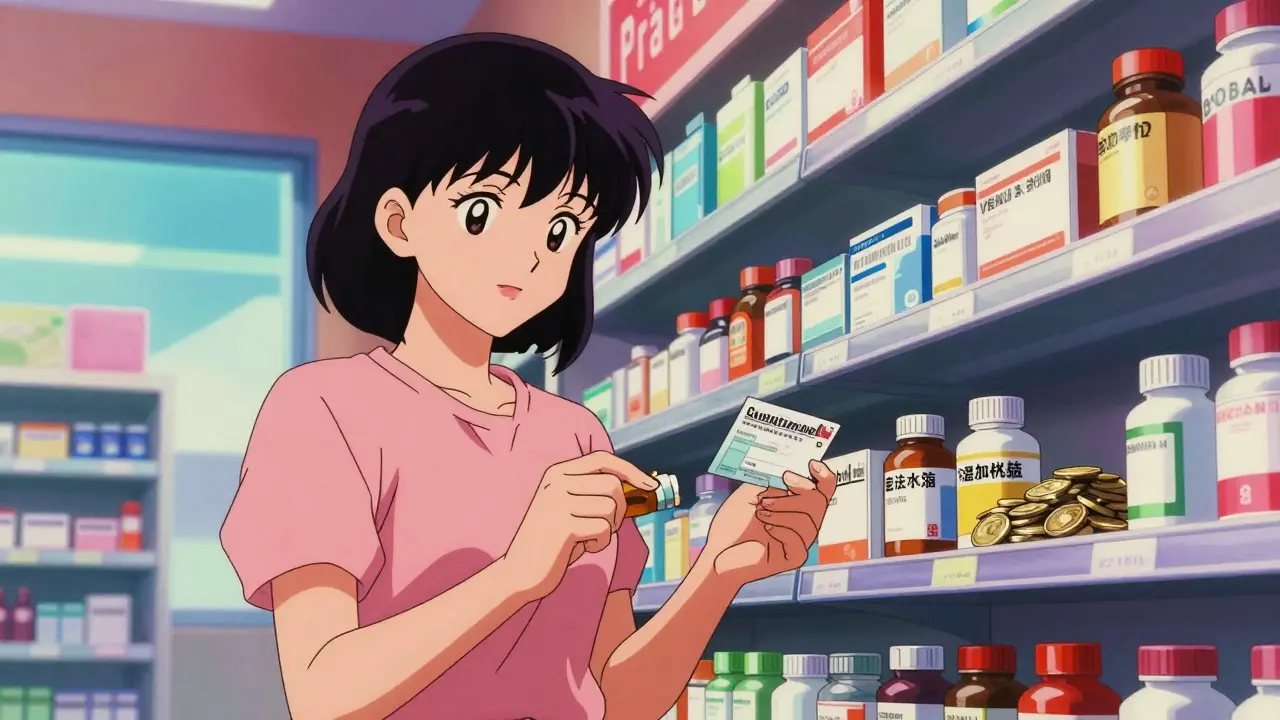
Generics are medications that are identical to brand-name drugs but cost significantly less. They have been a cornerstone of affordable healthcare for decades, especially in a world where healthcare spending is rising rapidly.
The Rising Tide of Global Healthcare Spending
Global healthcare spending is on an upward trajectory, with the US alone projected to spend $5.6 trillion on healthcare by 2025. According to the Centers for Medicare and Medicaid Services (CMS), hospital spending will account for $1.8 trillion of that total. This growth is driven by aging populations, new medical technologies, and rising drug costs. However, the situation varies widely across countries. The global average public healthcare spending is just 3.8% of GDP, as reported by Human Rights Watch in 2025. In many low-income nations, this figure is far lower-some countries spend less than 1.2% of GDP on healthcare, leading to severe access issues.
How Generics Counterbalance Rising Costs
Generics play a critical role in managing these escalating costs. In the United States alone, generic drugs save patients and insurers over $1.1 trillion annually. Without generics, prescription drug costs would be significantly higher, placing immense strain on both individuals and healthcare systems.
IQVIA's 2023 report shows that the global pharmaceutical market is projected to grow at 3-6% annually through 2025. However, this growth is partially offset by the increasing use of generics. When patents expire on blockbuster drugs, generic versions enter the market, driving prices down by up to 90%. For example, when the patent for the cholesterol drug Lipitor expired, generic versions reduced costs by 95% within a year. This price reduction is a key reason why generics account for 80-90% of prescriptions in developed countries like the US and UK.
Regional Differences in Healthcare Financing
Out-of-Pocket Payments remain a major source of healthcare funding in many countries. Over 55 countries rely on out-of-pocket payments as their primary healthcare financing method. In Turkmenistan, Armenia, Afghanistan, and Nigeria, these payments exceed 75% of total healthcare spending.
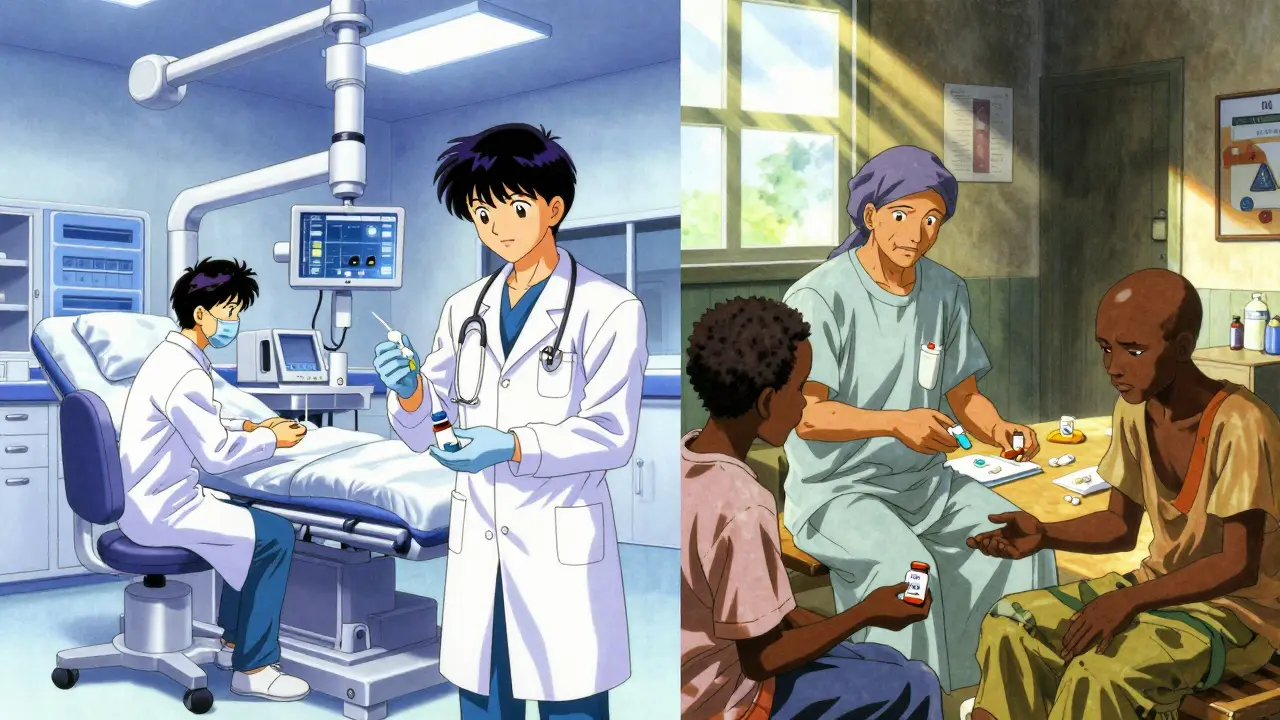
According to the WHO Global Health Expenditure Database, 37 countries have seen declines in real public healthcare spending since the pandemic. Lebanon's healthcare spending dropped by 71%, while Malawi's fell by 41% between 2019 and 2021. These cuts make generic drugs even more vital for maintaining access to essential medicines. In contrast, high-income countries average 5.8% of GDP on healthcare, while low-income nations average just 1.2%. This disparity highlights why generic drugs are a lifeline in resource-constrained settings.
The Role of Biosimilars and New Drugs
Biosimilars are a newer class of drugs that mimic biologic medications. While they offer cost savings, their adoption varies widely due to regulatory differences and physician preferences. In the US, biosimilars for drugs like Humira have only recently entered the market, with limited uptake so far.
Despite the potential of biosimilars, many countries still face high drug costs. PwC's 2025 analysis shows that drug spending in the US grew by $50 billion in 2024, driven by specialty drugs for cancer, obesity, and diabetes. These areas often lack generic alternatives, leading to higher costs. However, as more biologics face patent expirations, biosimilars could play a larger role in reducing expenses. For example, the first biosimilar for Humira is expected to save $15 billion annually once fully adopted.
Generics in Developing Countries
Pharmaceutical Market dynamics in developing countries differ significantly from developed nations. In many low- and middle-income countries, generics make up over 90% of the medicine market. This is because they provide affordable alternatives where brand-name drugs are unaffordable for most people.
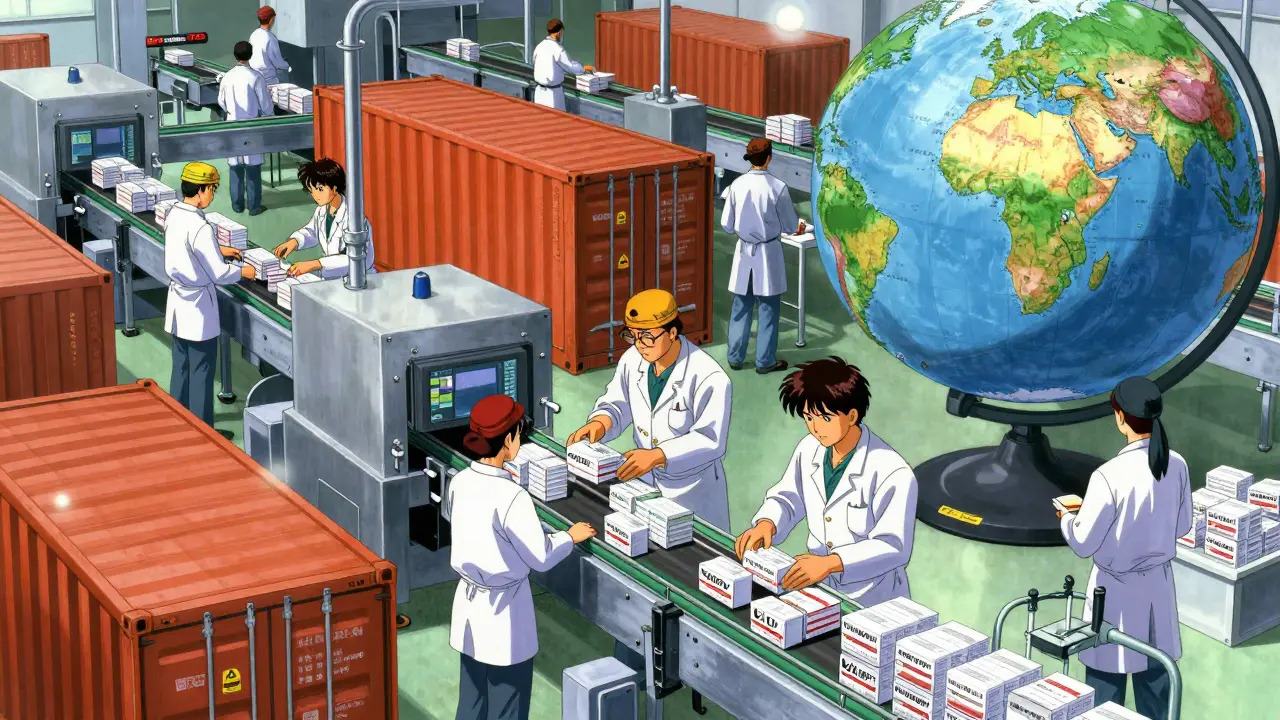
The Institute for Health Metrics and Evaluation reports that development assistance for health is expected to decline to $39.1 billion in 2025-the lowest level since 2009. This reduction in international aid makes domestic investment in generics even more critical. Countries like India and Brazil have become major producers of generic drugs, supplying affordable medications to millions worldwide. India alone exports generic drugs to over 150 countries, playing a pivotal role in global health.
However, challenges remain. In some regions, regulatory barriers and weak patent laws hinder generic production. For example, in parts of Africa, the lack of local manufacturing capacity forces reliance on imported generics, which can be expensive due to tariffs and transportation costs. Addressing these issues requires coordinated efforts between governments, pharmaceutical companies, and international organizations.
What the Future Holds
Drug Pricing remains a complex issue with regional variations. In the Middle East and Africa, medical costs are projected to grow by 12.1% in 2025-the highest among all regions. Meanwhile, Europe and Latin America show cooling trends, with costs rising only 6-7% annually.
The WTW Global Medical Trends Survey reveals that 67% of insurers expect higher demand for healthcare services in the next three years. This increased demand, coupled with rising costs, makes cost-effective treatments like generics even more critical. In the US, out-of-pocket prescription costs are projected to rise from $177 per person in 2025 to $231 by 2033. Generics will be essential to keep these costs manageable for patients.
| Region | Projected Cost Growth Rate |
|---|---|
| North America | 8.7% |
| Asia Pacific | 12.3% |
| Middle East and Africa | 12.1% |
| Europe | 6.5% |
| Latin America | 7.2% |
Frequently Asked Questions
How much do generics save compared to brand-name drugs?
Generics typically cost 80-90% less than brand-name drugs. In the US, they save patients and insurers over $1.1 trillion annually. For example, the generic version of Lipitor costs about $10 per month compared to $150 for the brand-name drug.
Why do some countries rely more on out-of-pocket payments?
Many low-income countries lack robust public healthcare systems. In Turkmenistan, Afghanistan, and Nigeria, out-of-pocket payments account for over 75% of healthcare spending because government funding is insufficient. This makes generic drugs critical for access to essential medicines.
What role do biosimilars play in healthcare costs?
Biosimilars are copies of complex biologic drugs and can reduce costs by 15-30% compared to the original biologics. However, adoption is slow due to regulatory hurdles and physician preferences. Once fully adopted, biosimilars for drugs like Humira could save $15 billion annually in the US alone.
How does healthcare spending vary by country?
High-income countries average 5.8% of GDP on healthcare, while low-income nations spend just 1.2%. For example, the US spends over 17% of GDP on healthcare, while countries like Nigeria spend less than 1.5%. This disparity directly affects access to both brand-name and generic medications.
What trends are expected in global healthcare costs?
Medical costs are projected to grow at 8.7% in North America, 12.3% in Asia Pacific, and 12.1% in the Middle East and Africa by 2025. These increases are driven by new medical technologies and rising demand for services. Generics will continue to be essential in managing these costs, especially in regions with rapid growth.
Mary Carroll Allen
February 6, 2026 AT 15:09Generics are amazin but the data on US spendin seems off. I mean, $5.6 trillion by 2025? That's insane. Why aren't we doin more to lower costs?
Also, the CMS report says hospital spendin is $1.8 trillion. But I've heard it's actually higher. Just a thought.
Joey Gianvincenzi
February 6, 2026 AT 18:37The CMS projection of $5.6 trillion by 2025 is based on outdated models and does not account for recent policy changes. This is unacceptable. We need accurate data to address healthcare costs effectively.
Amit Jain
February 8, 2026 AT 10:51Actually, generics aren't the solution. Look at India's healthcare system-generics are everywhere but people still can't afford them. This whole thing is a scam. The real issue is corporate greed, not drug prices.
Sarah B
February 9, 2026 AT 01:28US needs to produce more generics domestically no more imports
Tola Adedipe
February 9, 2026 AT 18:07The CMS data is accurate. The real problem is how funds are allocated, not the numbers themselves. We need better resource management, not just more generics.
Eric Knobelspiesse
February 9, 2026 AT 19:05Hmm... the whole generics debate is just a facade. Capitalism vs. healthcare. But hey, maybe i'm overthinking it. Anyway, stats show generics save $1.1tr, but what about quality? Are we sacrificing safety for cost?
Heather Burrows
February 11, 2026 AT 16:36Healthcare spending data often overlooks the human impact. We need to prioritize patient care over cost-cutting measures.
Ritu Singh
February 12, 2026 AT 13:51The role of generics in developing nations is crucial. However, the data on India's exports must consider local manufacturing challenges. Quality control is a key issue. We need international cooperation to address this.
Mark Harris
February 13, 2026 AT 03:40Yes! Let's get behind India's generic production. They're doing great work. More support for them means better access globally. We can do this!
Savannah Edwards
February 13, 2026 AT 14:38Global healthcare spending is a complex issue with layers of problems. The US spending $5.6 trillion by 2025 is staggering, but what's really concerning is how much of that is wasted on unnecessary procedures and inflated drug prices. Generics should help, but even they face hurdles. For example, in developing countries, regulatory barriers prevent local production of generics. In Africa, many nations rely on imported generics, which are expensive due to tariffs. This makes the problem worse. The WHO data shows that low-income nations spend only 1.2% of GDP on healthcare, which is nowhere near enough. Meanwhile, high-income countries average 5.8%, but even that's not enough for equitable access. The rise in biosimilars could be a game-changer, but adoption is slow. In the US, Humira biosimilars are only now entering the market. Why? Regulatory red tape and physician resistance. Drug companies have a lot to lose, so they lobby against cheaper alternatives. It's a shame because biosimilars could save billions. But until we address the root causes-profit-driven healthcare systems, lack of investment in public health-we'll keep seeing these disparities. The solution isn't just more generics; it's systemic reform. We need to prioritize people over profits. It's time for governments to step up and ensure everyone has access to affordable healthcare.
Mayank Dobhal
February 13, 2026 AT 23:59Generics save lives. Simple as that. Stop overcomplicating.
Marcus Jackson
February 14, 2026 AT 03:32Actually, the CMS data is wrong. The real figure is higher. I've done the math.
Natasha Bhala
February 14, 2026 AT 21:10Generics are crucial for affordable healthcare. Hope more people get access <3
Gouris Patnaik
February 15, 2026 AT 12:48India's generics are world-class. Other countries should follow. But US is too focused on profits. Sad.