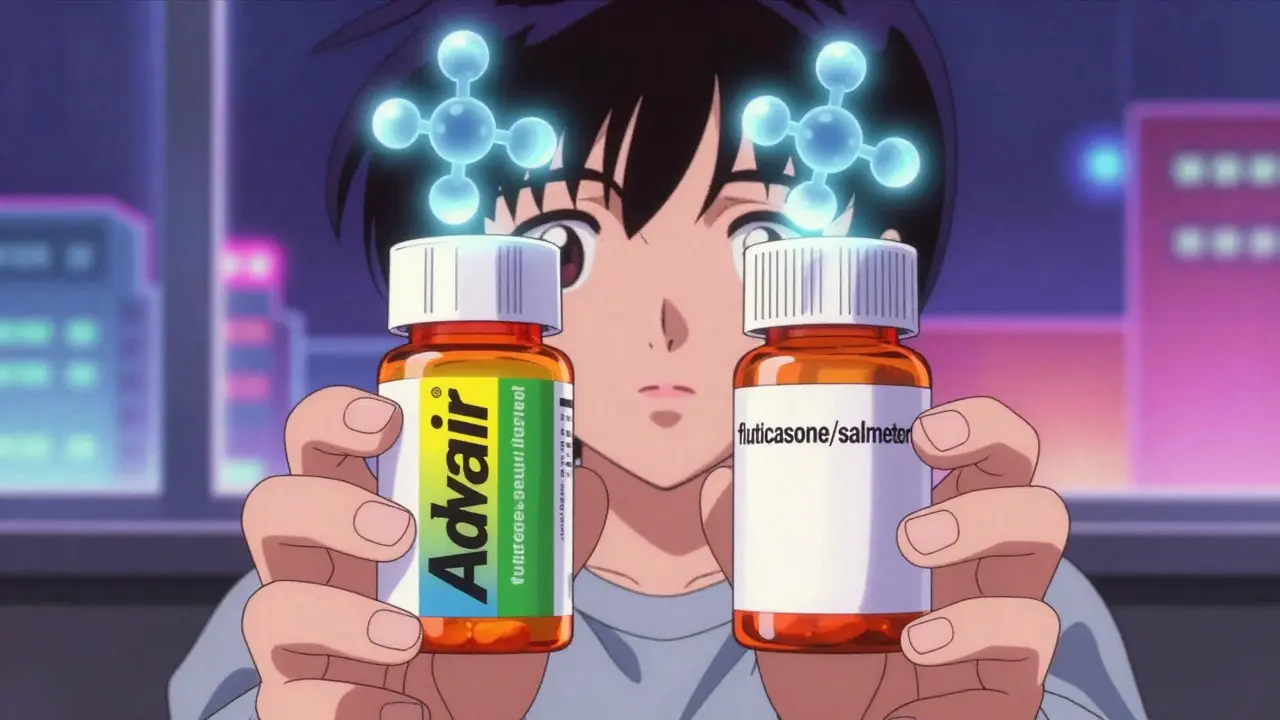
When you pick up a prescription, you might see two names on the label: one you recognize, like Advair or Lipitor, and another that looks like a chemical code, like fluticasone/salmeterol or atorvastatin. The second one is the generic version. And here’s the truth: generic drugs aren’t cheaper because they’re worse. They’re cheaper because they don’t need to pay for ads, celebrity endorsements, or 10 years of clinical trials.
They’re the Same Medicine, Just Without the Branding
The FDA requires that generic drugs contain the exact same active ingredient, in the same strength, and delivered the same way as the brand-name version. That means if your doctor prescribes 10 mg of atorvastatin, the generic version has 10 mg of atorvastatin - nothing more, nothing less. It’s not a copy. It’s the same molecule, made to the same standards.Think of it like buying a plain white t-shirt versus a branded one. Same cotton, same fit, same comfort. The only difference is the logo on the front - and the price tag. Generic drugs follow the same rules. The FDA doesn’t allow them to be sold unless they match the brand-name drug in how quickly and completely the body absorbs the medicine. That’s called bioequivalence. For most drugs, the amount of medicine in your bloodstream has to be within 80% to 125% of the brand-name version. For drugs where small changes matter - like warfarin or levothyroxine - the range is even tighter: 90% to 111%.
Why Are Generics So Much Cheaper?
Brand-name drug companies spend an average of $2.6 billion developing a new drug, according to the Congressional Budget Office. That includes 10 to 15 years of research, clinical trials, and regulatory paperwork. Once approved, they get 20 years of patent protection - but because trials take years, they usually only have 12 to 14 years of market exclusivity to recoup their costs.Generic manufacturers don’t have to repeat those expensive trials. They just need to prove their version behaves the same way in the body. That cuts development costs by 90%. No marketing campaigns. No TV ads. No sales reps visiting doctors. That’s why generics typically cost 80% to 85% less. In 2022, the average out-of-pocket cost for a generic prescription was $12.50. The same drug as a brand-name? $68.30.
That adds up fast. If you take a daily medication for high blood pressure or cholesterol, switching to generic could save you over $300 per prescription - or more than $3,000 a year. The U.S. healthcare system saved $1.67 trillion on generics between 2007 and 2016. That’s not a guess. That’s from the Congressional Budget Office.
What’s Different About Generics?
You might notice the pill looks different. Maybe it’s a different color, shape, or size. That’s because U.S. trademark laws forbid generics from looking exactly like the brand-name version. So, the manufacturer changes the inactive ingredients - the dyes, fillers, or coatings - just enough to make it visually distinct.These inactive ingredients don’t affect how the medicine works. But sometimes, they can cause minor issues. For example, someone with a rare allergy to a dye might react to one generic version but not another. Or a pill with a different coating might be harder to swallow. These are rare, but they happen.
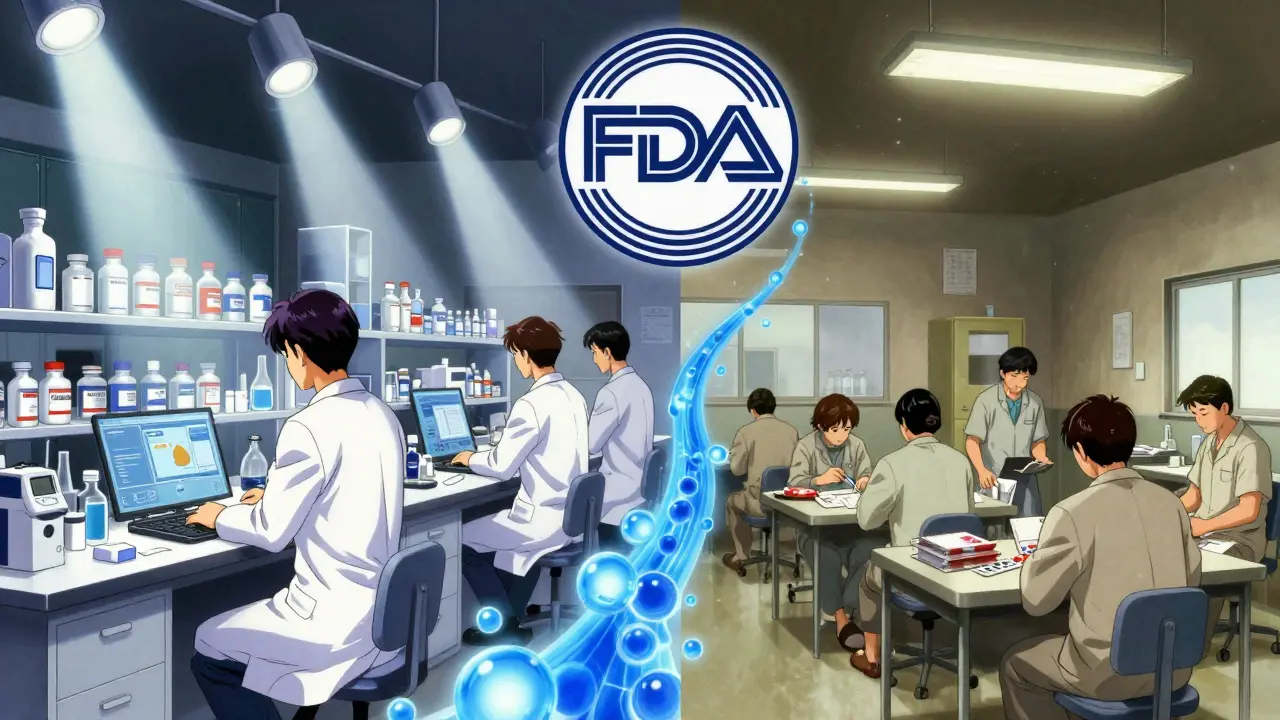
One big myth: generics are made in worse factories. That’s false. The same companies that make brand-name drugs often make the generic versions too. And the FDA inspects both types of facilities using the same standards. In fact, 70% of generic drugs sold in the U.S. are made in facilities owned by brand-name companies.
When Generics Might Not Be the Best Choice
For most people, generics work just as well. But there are exceptions.Some medications have what’s called a narrow therapeutic index - meaning the difference between a dose that works and a dose that’s dangerous is very small. Examples include:
- Warfarin (blood thinner)
- Levothyroxine (for hypothyroidism)
- Lamotrigine (for seizures)
- Cyclosporine (for organ transplants)
Even tiny differences in absorption can cause problems. In 2019, a JAMA study of 38,000 patients on levothyroxine found no meaningful difference between brand and generic versions. But some doctors still prefer to stick with one version - especially if the patient is stable. If you’ve been on the same drug for years and feel fine, switching might not be worth the risk.
Also, not all drugs have generics. About 30% of brand-name medications still don’t have a generic equivalent. That’s usually because the patent is still active, or the drug is too complex to copy - like inhalers, eye drops, or biologics. The FDA has identified over 150 complex drugs that could benefit from generic versions, but developing them takes time and money.
What Patients Are Saying
On Reddit’s r/Pharmacy, over 140 people shared their experiences switching from brand to generic. Eighty-six percent said they noticed no difference in how the drug worked. One user wrote: “Switched from brand Advair to generic fluticasone/salmeterol and saved $400/month with zero difference in asthma control.”But 14% reported problems. One person said their mom’s seizures returned after switching from Lamictal to generic lamotrigine. She had to go back to the brand. That’s rare, but it happens. Consumer Reports found that 89% of 1,247 surveyed patients believed generics were just as effective. Only 7% said they’d had occasional issues.
Pharmacists confirm this. Tattika Soreta, a pharmacy coordinator at Cedars-Sinai, says: “Generic products go through an approval process and the FDA ensures they are continually monitored for safety, efficacy, and quality.”
What You Can Do
You don’t have to accept whatever the pharmacy gives you. Here’s how to take control:- Ask your doctor: “Is there a generic version of this drug?” If they say no, ask why. Is it because there isn’t one? Or because they prefer the brand?
- Check your prescription: If your doctor writes “dispense as written” or “no substitution,” the pharmacy can’t switch it to generic. That’s legal - but it’s not always necessary.
- Use GoodRx or SingleCare: These apps show you prices at nearby pharmacies. Sometimes the brand-name drug is cheaper than the generic at one location.
- Keep a list: Write down both the brand and generic names of your meds. That way, if you switch pharmacies or doctors, you won’t get confused.
- Stick with one version: If you’re on a narrow therapeutic index drug, stay with the same version - brand or generic - unless your doctor says otherwise.
The Bigger Picture
Generics aren’t just a way to save money. They’re a cornerstone of affordable healthcare. In 2022, 90% of all prescriptions filled in the U.S. were for generics. Yet they made up only 25% of total drug spending. That means brand-name drugs - just 10% of prescriptions - cost three times more overall.The FDA is working to speed up generic approvals. Their new GDUFA III program aims to review applications in 10 months by 2027. And with over 450 brand-name drugs set to lose patent protection by 2028, more generics will hit the market. That means lower prices for millions.
Still, the system isn’t perfect. Some drugmakers use tricks like “evergreening” - making tiny changes to a drug to extend their patent. That delays generics. But pressure from lawmakers and public demand is pushing change.
Bottom line: For most people, generic drugs are just as safe and effective as brand-name ones - and dramatically cheaper. Unless your doctor has a specific reason not to use one, there’s no reason to pay more.
Are generic drugs as safe as brand-name drugs?
Yes. The FDA requires generic drugs to meet the same strict standards for safety, strength, quality, purity, and performance as brand-name drugs. They’re held to the same manufacturing rules, and both types are inspected regularly. The FDA states unequivocally that generic drugs are just as safe and effective.
Why do generic drugs look different?
U.S. trademark laws require generic drugs to look different from the brand-name version. That means the color, shape, size, or coating may change - but the active ingredient and how it works in your body are identical. These changes are only to the inactive ingredients, which don’t affect the drug’s effectiveness.
Can I switch from a brand-name drug to a generic safely?
For most medications, yes. Over 90% of prescriptions in the U.S. are for generics, and most patients experience no difference. But for drugs with a narrow therapeutic index - like warfarin, levothyroxine, or lamotrigine - your doctor may recommend sticking with one version to avoid small changes in how your body absorbs the drug. Always talk to your doctor before switching.
Why don’t all drugs have generic versions?
Some drugs are still under patent protection, which prevents generics from being made. Others are too complex to copy - like inhalers, injectables, or biologics. About 30% of brand-name drugs don’t have generic equivalents yet. But over 450 more are expected to lose patent protection by 2028, which will open the door for new generics.
Do pharmacists have to give me the generic version?
In 49 states, pharmacists are legally required to substitute a generic version if one is available - unless the doctor writes “dispense as written” on the prescription. This is meant to save patients money. If you prefer the brand-name drug, you can ask your doctor to block substitution.
Are generic drugs made in worse facilities?
No. The FDA inspects generic and brand-name manufacturing facilities using the same standards. In fact, 70% of generic drugs sold in the U.S. are made in plants owned by brand-name companies. The difference isn’t in where they’re made - it’s in how much they cost to develop.
How much can I save with generic drugs?
On average, generics cost 80% to 85% less than brand-name drugs. In 2022, the average out-of-pocket cost for a generic prescription was $12.50, compared to $68.30 for the brand-name version. For chronic conditions like high blood pressure or diabetes, switching to generic can save hundreds - even thousands - of dollars per year.
Iona Jane
January 14, 2026 AT 21:33Jaspreet Kaur Chana
January 15, 2026 AT 23:22Tom Doan
January 16, 2026 AT 14:27Sohan Jindal
January 17, 2026 AT 07:29Frank Geurts
January 18, 2026 AT 06:26Annie Choi
January 18, 2026 AT 09:00Arjun Seth
January 18, 2026 AT 18:16Mike Berrange
January 18, 2026 AT 23:53Amy Vickberg
January 20, 2026 AT 17:22Ayush Pareek
January 22, 2026 AT 15:45Nishant Garg
January 23, 2026 AT 07:07Nicholas Urmaza
January 23, 2026 AT 23:06Diane Hendriks
January 25, 2026 AT 06:20ellen adamina
January 26, 2026 AT 22:03Gloria Montero Puertas
January 28, 2026 AT 03:21