
Are you trying to conceive but hitting a wall with unexplained infertility? You might be looking in the wrong place. While many women focus on ovulation tracking or lifestyle changes, a silent culprit often lurks behind closed doors: your thyroid. Specifically, your Thyroid-Stimulating Hormone (TSH) levels. If you have been told your thyroid is "normal" based on standard lab ranges, you might still be struggling because those ranges aren't designed for pregnancy.
The truth is, your body needs significantly more thyroid hormone to support a growing baby than it does just to keep you alive. For women planning pregnancy, the target for TSH isn't the same as for the general population. Getting this number right before you conceive can mean the difference between a smooth journey to parenthood and facing preventable miscarriages or delays.
Why Standard Lab Ranges Fail Future Moms
Most blood tests define normal TSH levels anywhere from 0.4 to 4.0 mIU/L, sometimes even up to 4.5 mIU/L. If your result is 3.8 mIU/L, your primary care doctor might say, "You're fine." But if you are trying to get pregnant, that "fine" level could actually be hurting your chances.
The American Thyroid Association (ATA) is a professional organization dedicated to the education of physicians and the public about thyroid function, disorders, and related diseases released updated guidelines in 2017 stating that women with primary hypothyroidism who are planning pregnancy should aim for a preconception TSH concentration below 2.5 mIU/L. This isn't an arbitrary number pulled from thin air. It comes from extensive research showing that even mild thyroid dysfunction within the "normal" range impacts fertility outcomes.
A 2018 study published in PMC (PMC5800836) highlighted this discrepancy clearly. Researchers found that women with unexplained infertility had significantly higher TSH levels than fertile control groups. Nearly twice as many women with unexplained infertility had TSH levels ≥2.5 mIU/L compared to controls (4.8% vs 2.6%). That small gap in numbers represents a massive drop in potential success for those trying to conceive.
The 2.5 mIU/L Threshold: Consensus and Controversy
You will hear a lot about the 2.5 mIU/L mark. It has become the gold standard for preconception care among reproductive endocrinologists. However, medicine is rarely black and white, and there is ongoing debate about how strictly this rule should be applied.
On one side, you have organizations like the ATA and the Endocrine Society, which endorse the <2.5 mIU/L target. They argue that optimizing TSH before conception is one of the most effective preventive interventions available. Dr. Alex Stagnaro-Green, lead author of the ATA’s 2017 guidelines, emphasizes that thyroid dysfunction is a modifiable risk factor for adverse pregnancy outcomes.
On the other side, some studies suggest the threshold might be less critical than previously thought. A study by Karakis et al. (2017) looked at women undergoing intrauterine insemination (IUI). They found no significant difference in clinical pregnancy rates, delivery rates, or miscarriage rates between women with TSH levels between 2.5-4.5 mIU/L versus those with TSH <2.5 mIU/L. This creates a confusing landscape for patients. Does treating subclinical hypothyroidism help, or is it unnecessary medication?
The consensus leans toward treatment when thyroid antibodies are present. The American Society of Reproductive Medicine (ASRM) 2023 guideline notes that women with thyroid autoimmunity (like Hashimoto's) but normal TSH face a one-fold increased risk of miscarriage. In these cases, pooled analysis of randomized controlled trials shows that levothyroxine treatment reduces miscarriage rates by 45% and improves delivery rates by 36%. So, while the TSH number itself is debated, the presence of antibodies makes treatment almost universally recommended.
| Organization | Recommended Preconception TSH Target | Screening Recommendation |
|---|---|---|
| American Thyroid Association (ATA) | <2.5 mIU/L | Screen all women planning pregnancy |
| American Society of Reproductive Medicine (ASRM) | <2.5 mIU/L (if hypothyroid) | Screen all infertility patients |
| American College of Obstetricians (ACOG) | Aligns with ATA once diagnosed | No universal screening recommendation |
| European Thyroid Association | <1.8 mIU/L (weeks 1-4 post-conception) | Trimester-specific targets |
Hashimoto's and the Hidden Buffer Zone
If you have Hashimoto's thyroiditis, an autoimmune condition where your immune system attacks your thyroid gland, the stakes are even higher. Your thyroid is already under siege, and pregnancy places a massive additional demand on its output.
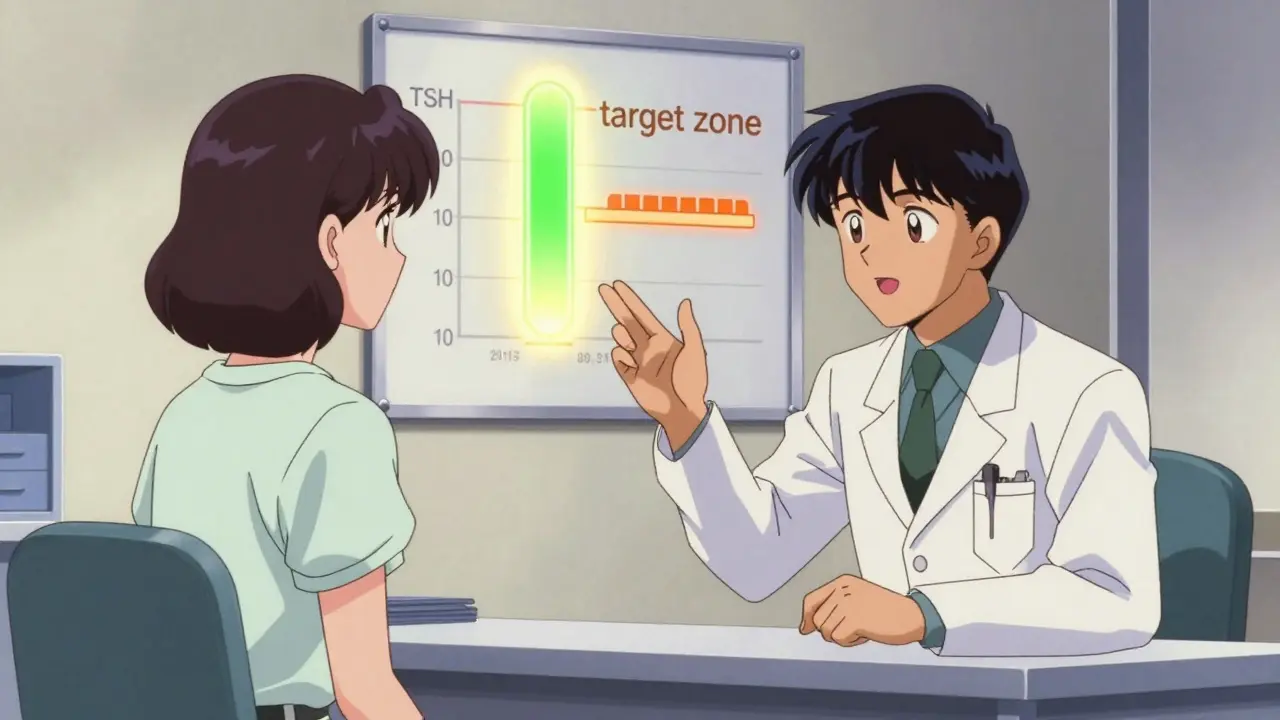
Research published in the ATA’s June 2023 patient information indicates that pre-pregnancy TSH levels for women with Hashimoto's need to be 30-50% lower than the 2.5 mIU/L threshold. This means aiming for approximately 1.25-1.75 mIU/L. Why so low? Because once you conceive, your thyroid hormone requirements skyrocket immediately. If you start at 2.5 mIU/L, you might not have enough reserve to handle that spike, leading to a rapid rise in TSH during the first trimester-a critical window for fetal brain development.
This is why monitoring isn't a one-time event. The standard protocol involves measuring TSH every 4 weeks during preconception optimization. You are essentially building a buffer zone to ensure your thyroid can keep up with the sudden demands of early pregnancy.
Levothyroxine: The Right Tool for the Job
If your TSH is too high, the solution is usually medication. But not all thyroid medications are created equal when it comes to fertility.
Levothyroxine is a synthetic form of thyroxine (T4), the main hormone produced by the thyroid gland is the gold standard. It is safe, effective, and well-studied in pregnancy. However, desiccated thyroid preparations (like Armour Thyroid), which contain both T4 and T3 hormones derived from pig thyroids, are strongly discouraged. The InVia Fertility Center specifically warns against them because they can lower serum T4 levels unpredictably and should not be used during pregnancy or preconception.
Dosing levothyroxine requires precision. Adjustments are typically made in small increments of 12.5-25 mcg. Crucially, thyroid hormone replacement takes approximately 6 weeks to reach steady state in your bloodstream. This means if you change your dose today, you won't see the full effect on your TSH until six weeks later. Patience is key here. Retesting too soon leads to over-correction, swinging your levels from too high to too low (hyperthyroidism), which is also risky for fertility.
How you take your medication matters just as much as the dose. The British Thyroid Foundation’s 2022 guidance highlights simple but critical rules:
- Take levothyroxine on an empty stomach with water.
- Wait at least 30 minutes before eating breakfast or drinking coffee.
- Avoid calcium or iron supplements within 4 hours of dosing, as they block absorption.
The Post-Conception Spike: Are You Prepared?
Here is where many women fall through the cracks. Once you get that positive pregnancy test, your thyroid hormone requirements increase by 25-50% almost overnight. Most providers fail to anticipate this.
A 2019 study in PMC (PMC6532810) found that only 37.2% of hypothyroid women received timely dose adjustments after conception. This delay can lead to suboptimal thyroid levels during the first trimester, when the baby relies entirely on maternal thyroid hormone for brain development. The Pacific Fertility Center’s 2023 clinical data underscores that a natural rise in serum total T4 levels is essential for proper fetal intellectual development.
To avoid this pitfall, discuss your plan with your doctor *before* you conceive. Many experts recommend having a prescription ready to increase your dose immediately upon a positive test, rather than waiting for a blood test weeks later. Some protocols suggest adding two extra doses per week (e.g., taking your daily pill plus two additional pills on weekends) as soon as you suspect pregnancy, then confirming with a blood test.

Economic and Emotional Impact
Beyond the physical risks, the emotional and financial toll of untreated thyroid issues is staggering. Approximately 15-20% of women presenting with infertility have abnormal TSH levels, according to ASRM 2023 data. Thyroid dysfunction is one of the most treatable causes of infertility, yet it remains a frequent source of despair.
An economic analysis from the Journal of Managed Care & Specialty Pharmacy (2021) demonstrates that preconception thyroid optimization generates $1,850-$2,400 in cost savings per pregnancy. This saving comes from reducing miscarriage rates and preterm deliveries. Levothyroxine costs approximately $4-$10 monthly, whereas managing a miscarriage averages $7,200. From a purely financial standpoint, getting your TSH checked and optimized is a no-brainer. Emotionally, it provides peace of mind, knowing you’ve addressed a major modifiable risk factor.
Action Plan for Preconception Thyroid Health
If you are planning to conceive, don't wait for symptoms. Fatigue, weight gain, and hair loss are late signs. Here is your checklist:
- Get Tested Early: Ask for a full thyroid panel including TSH, Free T4, and Thyroid Peroxidase Antibodies (TPO Ab) at least 3-6 months before trying to conceive.
- Aim for <2.5 mIU/L: If your TSH is above 2.5 mIU/L, work with your provider to adjust medication. If you have Hashimoto's, aim for 1.25-1.75 mIU/L.
- Optimize Absorption: Take your levothyroxine correctly-empty stomach, no coffee or supplements for 4 hours.
- Monitor Frequently: Test every 4-6 weeks until your levels are stable, then every 4-6 weeks during the first half of pregnancy.
- Plan for the Spike: Have a clear plan with your doctor for increasing your dose immediately upon a positive pregnancy test.
Your thyroid is the engine of your metabolism and your baby’s early brain development. Don't let outdated lab ranges dictate your fertility journey. Advocate for yourself, ask for the right tests, and optimize your health before you conceive.
What is the ideal TSH level for getting pregnant?
The American Thyroid Association recommends a TSH level below 2.5 mIU/L for women planning pregnancy. For women with Hashimoto's thyroiditis, an even lower target of 1.25-1.75 mIU/L is often advised to account for the increased thyroid demands during early pregnancy.
Can high TSH cause infertility?
Yes. High TSH levels indicate hypothyroidism, which can interfere with ovulation and egg release. Studies show that women with unexplained infertility often have higher TSH levels than fertile women, and subclinical hypothyroidism is associated with a higher risk of pregnancy loss.
Should I take thyroid medication if my TSH is normal but I have antibodies?
If you have thyroid autoimmunity (positive TPO antibodies) but normal TSH, you may still be at risk for miscarriage. The ASRM notes that levothyroxine treatment can reduce miscarriage rates by 45% in these cases. Discuss this with your reproductive endocrinologist or OB-GYN.
How quickly does levothyroxine affect TSH levels?
It takes approximately 6 weeks for levothyroxine to reach steady state in your bloodstream after a dose change. Therefore, doctors typically wait 4-6 weeks before retesting TSH to ensure accurate results and avoid over-adjusting the dose.
Is Armour Thyroid safe for pregnancy?
No. Desiccated thyroid preparations like Armour Thyroid are generally not recommended for preconception or pregnancy because they can lead to unpredictable fluctuations in T3 and T4 levels. Levothyroxine is the preferred and safest option.
When should I increase my thyroid medication after finding out I'm pregnant?
Thyroid hormone requirements increase by 25-50% immediately upon conception. Many experts recommend increasing your dose right away upon a positive home pregnancy test, rather than waiting for confirmation from a doctor's office blood test, to protect fetal brain development during the critical first trimester.