The U.S. Food and Drug Administration (FDA) doesn’t just approve new drugs - it keeps millions of Americans from overpaying for prescriptions. Every day, 9 out of 10 prescriptions filled in the U.S. are for generic drugs. But behind that simple statistic is a complex, tightly controlled system managed by the FDA’s Office of Generic Drugs (OGD). This isn’t a backdoor shortcut. It’s a science-backed, legally defined pathway called the Abbreviated New Drug Application (ANDA), created by the Hatch-Waxman Act of 1984. The goal? Let safe, effective generics reach the market faster and cheaper - without compromising quality.
What Exactly Is an ANDA?
An ANDA isn’t a simplified version of a brand-name drug application. It’s a completely different process. While innovator companies must submit a New Drug Application (NDA) with full clinical trials proving safety and effectiveness, generic manufacturers don’t need to repeat those studies. Instead, they prove one critical thing: bioequivalence.
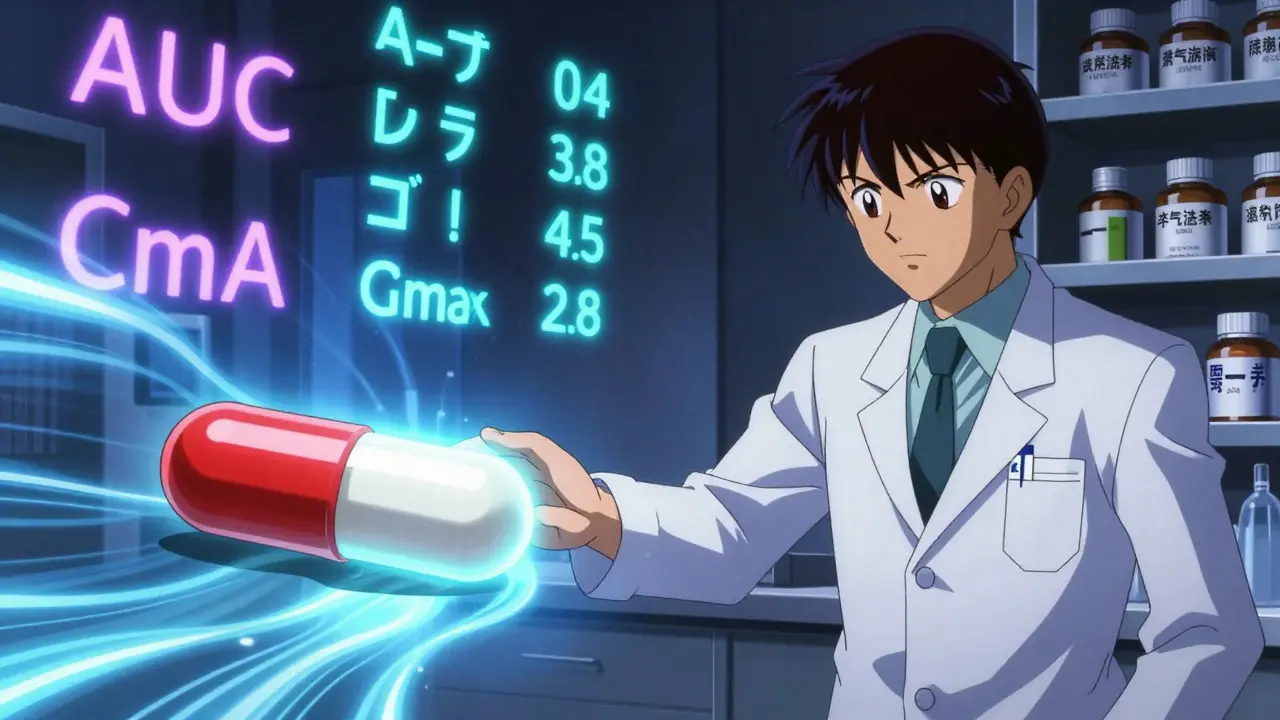
That means the generic drug must deliver the same amount of active ingredient into the bloodstream at the same rate as the brand-name drug. The FDA requires this to be shown through pharmacokinetic studies in 24 to 36 healthy volunteers. The data must show that the 90% confidence interval for two key measurements - AUC (total drug exposure) and Cmax (peak concentration) - falls between 80% and 125% of the reference drug. If it doesn’t, the application gets rejected.
But bioequivalence isn’t the only requirement. The generic must also have the same active ingredient, strength, dosage form (tablet, capsule, injection), and route of administration. It must be used for the same medical conditions. Even the label must match. Inactive ingredients (like fillers or dyes) can differ, but they can’t affect how the drug works.
The Approval Timeline: From Submission to Shelf
Submitting an ANDA doesn’t mean instant approval. The FDA’s review process has clear stages, and deadlines. Under the Generic Drug User Fee Amendments (GDUFA) III, which took effect in October 2022, standard applications have a target review time of 10 months. Priority applications - like first generics or drugs in shortage - get 8 months.
Here’s how it breaks down:
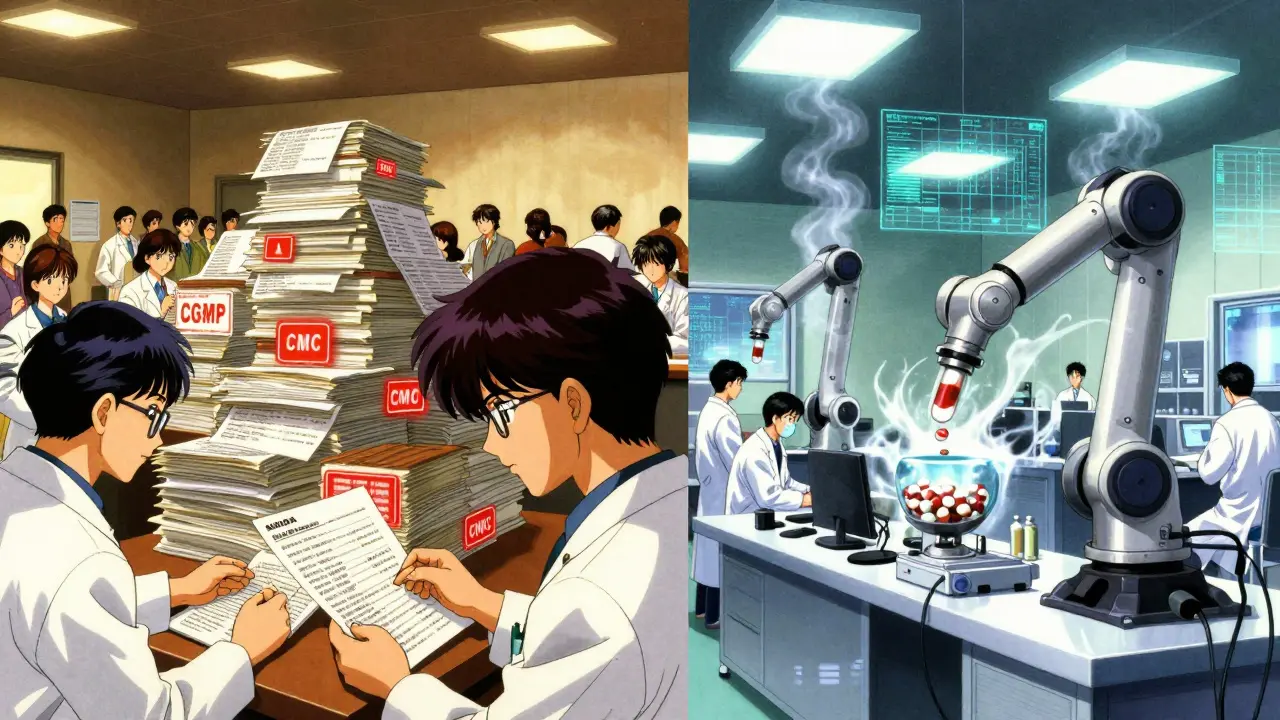
- Filing Review: The FDA checks if the application is complete. In 2022, 15.3% of submissions were refused outright because they were missing critical data - often in the chemistry, manufacturing, and controls (CMC) section. This is the first major hurdle.
- Substantive Review: If filed, the application moves to scientific review. Experts examine bioequivalence data, manufacturing details, labeling, and facility compliance.
- Inspection: The manufacturing site must pass a Current Good Manufacturing Practice (CGMP) inspection. In 2023, the FDA inspected 82.7% of generic drug facilities annually. If the site fails, approval is delayed.
- Approval or Complete Response Letter: If everything checks out, the drug gets approved. If not, the FDA issues a complete response letter explaining what’s missing. In 2022, 14.8% of applications received this notice - often due to flawed bioequivalence studies.
Applicants who skip early communication with the FDA often get stuck. In 2022, 78.4% of approved ANDAs had used pre-ANDA meetings to get feedback before submitting. That’s not optional advice - it’s how successful companies avoid costly delays.
Costs, Fees, and Paperwork
The ANDA pathway saves money - a lot of it. While developing a brand-name drug can cost over $2.6 billion (according to the Tufts Center for the Study of Drug Development), a generic application runs between $2.4 million and $6.3 million (RAND Corporation, 2020). But that doesn’t mean it’s cheap or easy.
The FDA charges applicants:
- $389,490 per ANDA application (GDUFA III fee as of October 2022)
- $207,700 to $415,400 per year in facility fees, depending on size and type
And the paperwork? Each application averages 15,000 to 20,000 pages. That’s why the FDA’s Electronic Submission Template and Resource Center (eSTaR) was introduced - it cut formatting errors by 63.2% in 2023. Still, many small companies struggle with the complexity. First-time applicants often need 18 to 24 months just to learn how to submit properly.
Complex Generics: The New Frontier
Not all generics are created equal. Simple tablets? Easy. Inhalers, injectables, topical creams, or extended-release pills? Not so much. These are called complex generics, and they’re the fastest-growing segment. In 2023, 37.5% of FDA-approved ANDAs involved complex products - up from just 22.1% in 2018.
Why? Because these drugs don’t dissolve the same way. A generic inhaler might look identical to the brand, but if the particle size or spray pattern is off, the patient won’t get the right dose. The FDA has spent years developing new testing methods - including in vitro tests and advanced imaging - to ensure these products work the same.
The agency’s Complex Generic Drugs Initiative has paid off. First-generic approval rates jumped from 67.2% in 2018 to 83.6% in 2023. The FDA’s 2024-2026 Strategic Plan aims to use real-world evidence and AI-assisted review to speed up approvals even more, targeting 25% of complex generics approved using non-traditional data by 2026.
Why It Matters: Savings, Access, and Trust
Generic drugs save the U.S. healthcare system $132.6 billion a year, according to the Generic Pharmaceutical Association. That’s not just corporate profit - it’s real money in patients’ pockets. Pharmacists report generics cut out-of-pocket costs by 80-85% compared to brand-name drugs. A Reddit user shared how their patient’s insulin bill dropped from $390 to $98 per month after switching to the FDA-approved biosimilar Semglee.
But trust is fragile. The FDA’s FAERS database recorded 1,485 adverse event reports involving generics between 2020 and 2023. Over 22% of those cited perceived differences in effectiveness. Yet, FDA investigations found 92.3% of those cases were due to disease progression - not the drug. A 2023 CVS Health survey showed 78.4% of patients trusted FDA-approved generics, and 63.2% said they noticed no difference in how they worked.
That’s the point. The FDA’s system isn’t about lowering standards. It’s about removing unnecessary duplication while holding generics to the same high bar as brand-name drugs.

Global Differences: How the U.S. Compares
The U.S. system is unique. In the European Union, the European Medicines Agency (EMA) sometimes requires additional clinical data - even for simple generics. Japan mandates in vivo bioequivalence studies for every single product, regardless of complexity. The U.S. ANDA system is the most streamlined in the developed world - and that’s why it’s the global benchmark.
But challenges remain. As of Q1 2024, there were 2,147 pending applications for first generics. Many are stuck because of patent litigation, supply chain delays, or under-resourced review teams. The FDA’s Drug Competition Action Plan has cut approval times for first generics by 37.2% since 2017 - from 42.1 months down to 26.4. But with 78% of active pharmaceutical ingredients coming from outside the U.S., supply chain vulnerabilities are a real threat.
What’s Next?
In October 2025, the FDA launched a pilot program to speed up reviews for generic manufacturers that produce drugs in the U.S. Qualifying applications will see Target Action Dates reduced by 30%. And with GDUFA IV securing $2.1 billion in funding through 2027 - $412 million specifically for complex generics - the agency is doubling down on innovation.
By 2027, experts predict the FDA will approve 1,500 to 1,700 ANDAs annually. That’s not just about more drugs. It’s about more affordable options for people with chronic conditions - diabetes, heart disease, asthma, depression. The system works because it’s grounded in science, not guesswork. And as long as the FDA keeps enforcing its standards, generics will keep saving lives - and money.
How does the FDA ensure generic drugs are as safe as brand-name drugs?
The FDA requires generic drugs to prove bioequivalence - meaning they deliver the same amount of active ingredient into the bloodstream at the same rate as the brand-name drug. This is tested in clinical studies with healthy volunteers. The drug must also have identical active ingredients, strength, dosage form, and intended use. Manufacturing facilities must pass strict CGMP inspections, and the FDA continues to monitor safety through its adverse event reporting system (FAERS).
Why do some people say generic drugs don’t work as well?
Perceived differences often come from changes in inactive ingredients (like fillers or dyes), which can affect how a pill looks or tastes - but not how it works. In rare cases, patients may notice a difference when switching from a brand to a generic, but FDA investigations show over 92% of these reports are due to underlying health changes, not the drug itself. Patient confidence has improved, with 78.4% of users in a 2023 survey saying they trusted generics.
How long does it take for the FDA to approve a generic drug?
Under current rules (GDUFA III), standard ANDA applications have a target review time of 10 months. Priority applications - such as first generics or drugs in shortage - are reviewed in 8 months. But this is a target, not a guarantee. Delays happen if the application is incomplete, manufacturing fails inspection, or the bioequivalence data is flawed. On average, the entire process from submission to approval takes 12 to 18 months.
Are all generic drugs the same?
No. Simple generics - like pills with one active ingredient - are easy to replicate. But complex generics - like inhalers, injectables, or extended-release tablets - require advanced testing and specialized manufacturing. The FDA approves these under the same standards, but the science is more demanding. In 2023, nearly 40% of approved generics were complex products, up from 22% in 2018.
What happens if a generic drug is found to be unsafe after approval?
The FDA continuously monitors drug safety through its Adverse Event Reporting System (FAERS) and inspections. If a safety issue arises - such as contamination, unexpected side effects, or manufacturing problems - the agency can issue a recall, require labeling changes, or suspend production. Manufacturers are legally required to report problems immediately. In 2023, the FDA took action on over 40 generic drug safety issues, including recalls for contaminated injectables and labeling errors.
Donnie DeMarco
March 11, 2026 AT 02:23Yo, I just had to say this - the FDA’s generic drug system is one of the few things in gov that actually works like a charm. I’m a pharmacist in Ohio, and I’ve seen patients cry when their insulin dropped from $400 to $90. That’s not magic, that’s science. And yeah, some folks still think generics are ‘watered down’ - but if you’ve ever read an ANDA, you know it’s way more rigorous than most people realize.
The bioequivalence thresholds? 80-125%? That’s not a guess. That’s math. That’s stats. That’s 36 healthy volunteers hooked to IVs while scientists watch every molecule like it’s the last slice of pizza.
And don’t even get me started on complex generics. Inhalers? Topical creams? Those ain’t just ‘same pill, different color.’ The particle size on an asthma inhaler has to be precise to the micron. One micrometer off, and the drug doesn’t reach the lungs. The FDA’s got laser scanners and AI models now to catch that. Wild, right?
Also, 15,000 pages per application? Bro, I’ve seen my tax returns that were shorter. No wonder small companies get crushed. But hey - at least we’re not Japan, where they make you do live animal trials for every damn tablet. U.S. system’s the gold standard. Period.
And yeah, I’m salty about patent trolling delaying first generics. But the 37% drop in approval time since 2017? That’s progress. Keep pushing, FDA. We see you.
Tom Bolt
March 12, 2026 AT 03:54The notion that generic drugs are somehow ‘lesser’ is not only scientifically ignorant, it’s economically reckless. The FDA’s ANDA framework is a triumph of regulatory precision - not a loophole. To claim otherwise is to misunderstand the very definition of bioequivalence, which is not merely ‘similar,’ but statistically indistinguishable in pharmacokinetic parameters under controlled conditions.
Moreover, the assertion that patients ‘notice a difference’ is often confounded by placebo and nocebo effects, compounded by changes in inactive ingredients that alter pill appearance, taste, or dissolution profile - none of which impact therapeutic efficacy. The FDA’s own FAERS data, when properly contextualized, confirms that over 92% of perceived adverse events are attributable to disease progression, not pharmacological failure.
Furthermore, the claim that ‘generics are cheaper’ is misleading without acknowledging the $400,000 application fee and multi-year compliance burden. This is not a path to easy profit - it’s a gauntlet of regulatory rigor. To dismiss it as ‘bureaucratic red tape’ is to glorify ignorance.
Let us not confuse convenience with competence. The U.S. system is the most efficient, most evidence-based, and most transparent in the world. Any alternative - whether EU’s additional clinical requirements or Japan’s redundant in vivo studies - is an inefficient duplication of effort. We should be exporting this model, not apologizing for it.
Chris Bird
March 13, 2026 AT 14:08Generic drugs? Yeah right. All I see is big pharma and FDA playing footsie. You think they really test all this? 15,000 pages? That’s just a fancy way of saying ‘we don’t want to look too close.’
My cousin works at a factory in India that makes pills for U.S. brands. They use the same powder. Same machine. Same guy. One day it’s for brand, next day it’s for generic. Same batch. Same everything. You tell me how they’re different.
And that ‘bioequivalence’ thing? 80-125%? That’s a 45% window. That’s like saying your car gets 20 mpg - but it actually gets between 10 and 35. You call that ‘same’?
People die because they switch to generics and their blood pressure spikes. You think the FDA cares? They get paid by the companies. It’s all a show.
David L. Thomas
March 14, 2026 AT 13:43Okay, let’s unpack this. The ANDA pathway isn’t just about saving money - it’s about leveraging scientific equivalence to remove redundant clinical trials. That’s not cutting corners - that’s smart regulation.
The bioequivalence model (AUC and Cmax with 80–125% CI) is rooted in pharmacokinetic theory and validated over decades. It’s not arbitrary. It’s a threshold derived from population variability - not a ‘loophole.’
And the rise in complex generics? That’s huge. Inhalers, transdermal patches, extended-release tablets - these aren’t just ‘copycat pills.’ They’re engineered systems. The FDA’s shift toward in vitro testing and AI-assisted review is a game-changer. Real-world evidence integration? That’s the future.
Also, 82.7% of facilities inspected annually? That’s more than most industries get. The fact that 78.4% of approved ANDAs used pre-ANDA meetings? That’s collaboration, not bureaucracy. The system’s not broken - it’s evolving. And honestly? It’s working.
Also - shoutout to GDUFA IV funding. $412M for complex generics? That’s not just money. That’s commitment.
Bridgette Pulliam
March 15, 2026 AT 02:06I’ve spent over 20 years as a clinical pharmacist, and I can tell you this: patients who are skeptical of generics often aren’t wrong - they’re just scared. And honestly? That’s understandable. They’ve been sold a narrative that ‘brand = better’ for decades.
But what we’ve learned, time and again, is that when patients are educated - when they see the data, when they understand the bioequivalence standards - their trust grows. One woman I worked with was terrified to switch from her brand-name seizure med to the generic. We sat down. I showed her the 24-patient study. I explained the 80–125% range. She cried. Not from fear - from relief.
The FDA doesn’t just approve drugs. They protect people. And yes, there are failures. But the system has mechanisms to catch them - inspections, FAERS, recalls. It’s not perfect. But it’s the best we have.
And to those who say ‘it’s all corporate’ - I say: look at the numbers. $132 billion saved annually. That’s not a corporate profit. That’s a mother keeping her child on insulin. That’s a veteran with diabetes not choosing between food and medicine.
We need more voices like this. Not less.
Mike Winter
March 15, 2026 AT 11:03There’s a quiet elegance to the FDA’s approach here - not in the sense of grandeur, but in the precision of restraint.
They didn’t invent a new science. They didn’t lower standards. They simply recognized that if two substances behave identically in the human body - in concentration, in timing, in effect - then they are, for all practical and therapeutic purposes, the same.
This is not a compromise. It is a refinement. A distillation of medical ethics into regulatory form.
And yet, we live in an age where skepticism is fashionable, and trust is seen as naivety. We’ve forgotten that systems can be both rigorous and humane.
The fact that 78.4% of patients trust generics - and that this trust is growing - tells me we’re not losing our way. We’re remembering it.
Perhaps the real innovation isn’t in the science - but in the humility to let proven methods speak for themselves.
Randall Walker
March 17, 2026 AT 07:07So… let me get this straight. The FDA spends 10 months reviewing 15,000 pages of paperwork… to make sure a pill is ‘basically the same’ as another pill… that costs 85% less… and saves people billions…
Meanwhile, my dog’s prescription for ‘chewy joint tablets’ costs $120 and has a 3-page label with 7 emojis.
Also, I once took a generic for anxiety. It made me feel like a zombie. Then I switched back. Felt like myself again. So… what’s the deal?
…Wait. You’re telling me it’s not the drug? It’s… my brain? And the FDA says 92% of these cases are ‘disease progression’? So… I’m just… imagining my anxiety?
…I’m not mad. I’m just… confused.
Miranda Varn-Harper
March 18, 2026 AT 19:45It is imperative to acknowledge that the regulatory framework governing generic pharmaceuticals is predicated upon a rigorous, science-based methodology that adheres to internationally recognized pharmacokinetic benchmarks. The Abbreviated New Drug Application (ANDA) protocol, codified under the Hatch-Waxman Act, represents a paradigm of evidence-based regulatory efficiency.
Furthermore, the assertion that patients experience differential therapeutic outcomes is not substantiated by empirical data, as evidenced by the FDA’s Adverse Event Reporting System (FAERS), wherein 92.3 percent of reported anomalies were attributable to confounding clinical variables rather than pharmacological equivalence.
It is therefore not merely prudent, but ethically incumbent upon the informed citizenry to reject anecdotal narratives in favor of statistically validated outcomes. The notion that generics are inferior is a relic of misinformation perpetuated by non-scientific discourse.
One must also consider the fiscal implications: $132.6 billion in annual savings is not a trivial figure. It is a societal imperative.
Consequently, any skepticism toward the FDA’s methodology is not only unfounded - it is a disservice to public health.
Alexander Erb
March 20, 2026 AT 11:26Bro, I just got my generic metformin last week - $5 for 90 pills. My old brand? $180. Same pill. Same effect. I didn’t turn into a vampire or anything. 😅
And the FDA’s whole bioequivalence thing? Yeah, it’s wild. They don’t just say ‘eh, close enough.’ They test it in real people. 24–36 volunteers. Blood drawn every hour. Like a science fair project but with more needles.
Also - complex generics? Inhalers? Those are next level. The spray pattern has to be perfect. One wrong micron and you’re not getting the drug into your lungs. The FDA’s using lasers and AI now? That’s insane. In a good way.
And 78% of approved apps used pre-submission meetings? That’s like asking your teacher for feedback before turning in your essay. Smart move. 🙌
Bottom line: generics = lifesavers. Stop being scared. The science is solid. 💪
Shourya Tanay
March 21, 2026 AT 07:31As a pharmacokinetics researcher in India, I can confirm: the U.S. ANDA model is the most elegant solution to the generic access problem. Other countries either over-regulate (Japan’s mandatory in vivo studies) or under-enforce (some developing nations with no CGMP oversight).
The 80–125% bioequivalence window is not arbitrary - it’s derived from inter-individual variability in absorption. It’s mathematically sound. And the shift toward in vitro methods for complex products? That’s where the field is heading globally.
What’s often missed is the role of manufacturing consistency. A generic isn’t just a chemical formula - it’s a process. The FDA’s CGMP inspections are brutal, but necessary. I’ve seen factories in Asia that produce for U.S. markets - they’re cleaner and more regulated than local brand-name facilities.
The real challenge? Supply chain fragility. 78% of APIs come from outside the U.S. That’s a vulnerability - not a flaw in the approval system.
The FDA isn’t perfect. But it’s the most rational system we’ve built. And it’s working.
LiV Beau
March 21, 2026 AT 18:27I’m a nurse, and I’ve seen this firsthand - patients switch to generics and suddenly they’re breathing easier, their blood sugar’s stable, they can afford their rent. It’s not magic. It’s the FDA doing its job.
And yeah, I get why people are nervous. I was too, at first. But then I read the data. The studies. The inspections. The 15,000-page applications. It’s not a joke. It’s a marathon of science.
And the fact that 40% of approved generics are now complex products? That’s huge. That means more people with asthma, diabetes, heart disease are getting affordable, effective meds.
Also - shoutout to the FDA’s pilot program for U.S.-made generics. That’s the kind of policy that rebuilds trust. Not just in drugs - in government.
We need more of this. Less fear. More facts. 💖