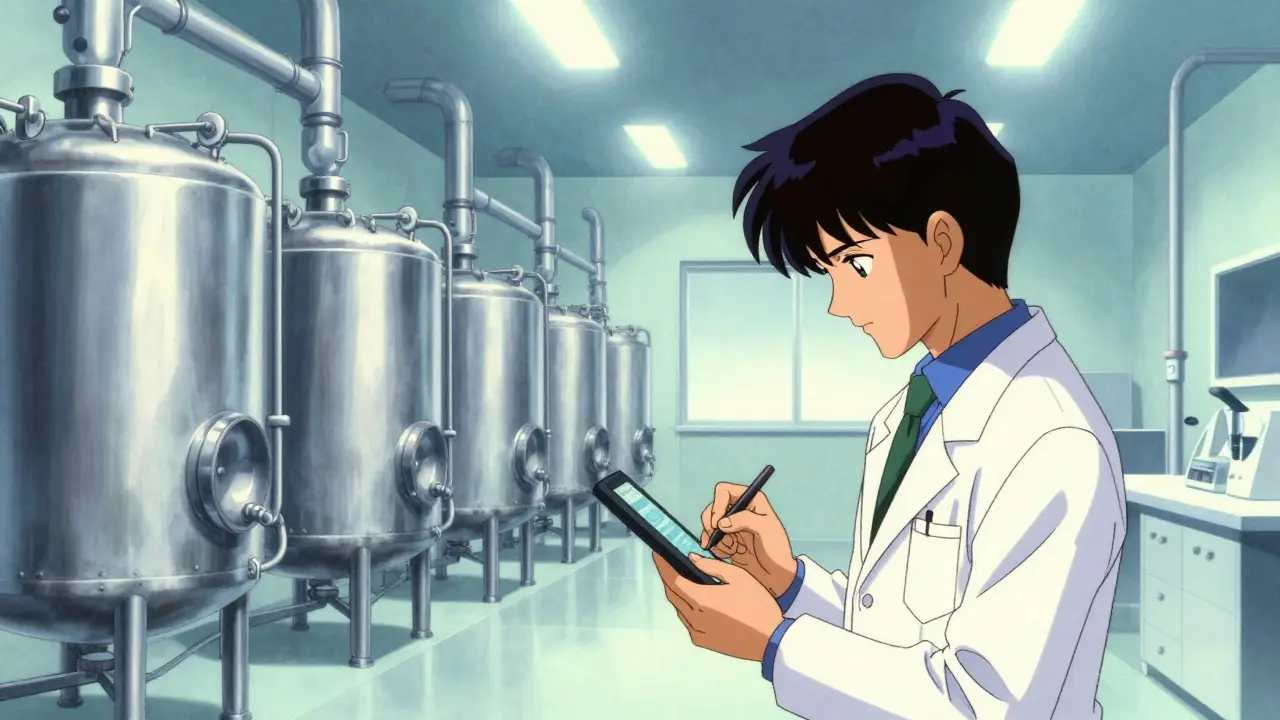
Imagine buying a generic medication for a chronic condition, only to find out later that the facility where it was made had a history of falsifying records. For millions of Americans, this isn't a hypothetical scenario; it's a systemic risk. Since roughly 80% of the active pharmaceutical ingredients (APIs) in U.S. medicines and 40% of finished drugs are produced overseas-mostly in India and China-the safety of the American medicine cabinet depends heavily on how well the U.S. government polices factories thousands of miles away.
The Gold Standard: Understanding cGMP
Whether a drug is made in a lab in New Jersey or a plant in Hyderabad, it must meet the same rules. Current Good Manufacturing Practices is a set of regulations enforced by the FDA that ensure the quality, safety, and purity of drug products by monitoring every step of the production process. Commonly referred to as cGMP, these standards require companies to perform rigorous in-process testing and maintain meticulous documentation of every batch produced.
The FDA looks for specific evidence during these checks. They don't just glance at the facility; they dive into personnel training protocols, equipment maintenance logs, and contamination control procedures. If an inspector finds a violation of the Federal Food, Drug, and Cosmetic Act, they issue a Form 483, which is a formal document listing observations of non-compliance found during an inspection. This serves as the first warning that a facility is failing to meet the necessary safety thresholds.
The Inspection Gap: Domestic vs. Foreign Oversight
For years, there was a glaring "double standard" in how the FDA handled inspections. Domestic plants faced surprise visits, meaning they had to be "audit-ready" every single day. Foreign plants, however, typically received 8 to 12 weeks of advance notice. This gave some facilities enough time to scrub their floors-and potentially their records-before the inspectors arrived.
The data shows this gap had real consequences. In 2024, the FDA found that 45% of foreign inspections uncovered failures to meet basic cGMP standards or serious data integrity issues. Compare that to domestic facilities, where violation rates for data integrity were only 17.2%, while foreign facilities hit a staggering 38.7%. When it comes to contamination control, foreign plants were more than twice as likely to fail (22.4%) than domestic ones (9.8%).
| Metric | Domestic Facilities | Foreign Facilities |
|---|---|---|
| Data Integrity Violations | 17.2% | 38.7% |
| Contamination Control Failures | 9.8% | 22.4% |
| Inspection Style | Unannounced | Mostly Pre-announced |
| Annual Inspection Volume | ~12,000 | ~3,000 |

Closing the Loop: The Shift Toward Unannounced Inspections
The era of the "heads-up" is ending. Following Executive Order 14135 signed in May 2025, the FDA is moving aggressively to eliminate the disparity between how it treats local and foreign plants. FDA Commissioner Marty Makary has made it clear that unannounced inspections are the only way to catch "bad actors" who hide violations or forge documents.
By the second quarter of 2026, the FDA aims to make at least 50% of all foreign inspections unannounced-a massive jump from the previous rate of about 15%. To make this happen, the agency is hiring 200 additional foreign inspection specialists to increase its international reach by 40%. For manufacturers in India and China, this means the window for "cleaning up" before an audit has effectively slammed shut.
Lessons from Europe: The Qualified Person Model
Is the FDA's inspection-based model the best way to ensure safety? Some experts think we can do better. In the European Union, the system doesn't just rely on periodic audits. They use a Qualified Person (QP) model, where a specific individual is legally responsible for certifying that every single batch of a drug meets GMP standards before it can be released to the market.
Research from the Brookings Institution suggests that if the U.S. adopted a similar layer-requiring U.S.-based importers to designate a qualified individual to certify batches-foreign facility violations could drop by 30-40%. Currently, the U.S. relies heavily on manufacturer self-policing, which can be risky when the manufacturer is located on the other side of the globe. While the FDA's Foreign Supplier Verification Program (FSVP) exists for food safety, expanding a similar rigorous verification to pharmaceuticals remains a key point of debate among policymakers.
The Cost of Compliance and Supply Chain Risks
Tightening the screws on foreign manufacturing isn't without a price. The Generic Pharmaceutical Association and other industry groups have pointed out that the shift to unannounced visits creates a significant financial burden. A survey by the Parenteral Drug Association found that 68% of foreign manufacturers expect compliance costs to rise by 15-25% as they invest in real-time monitoring and constant readiness.
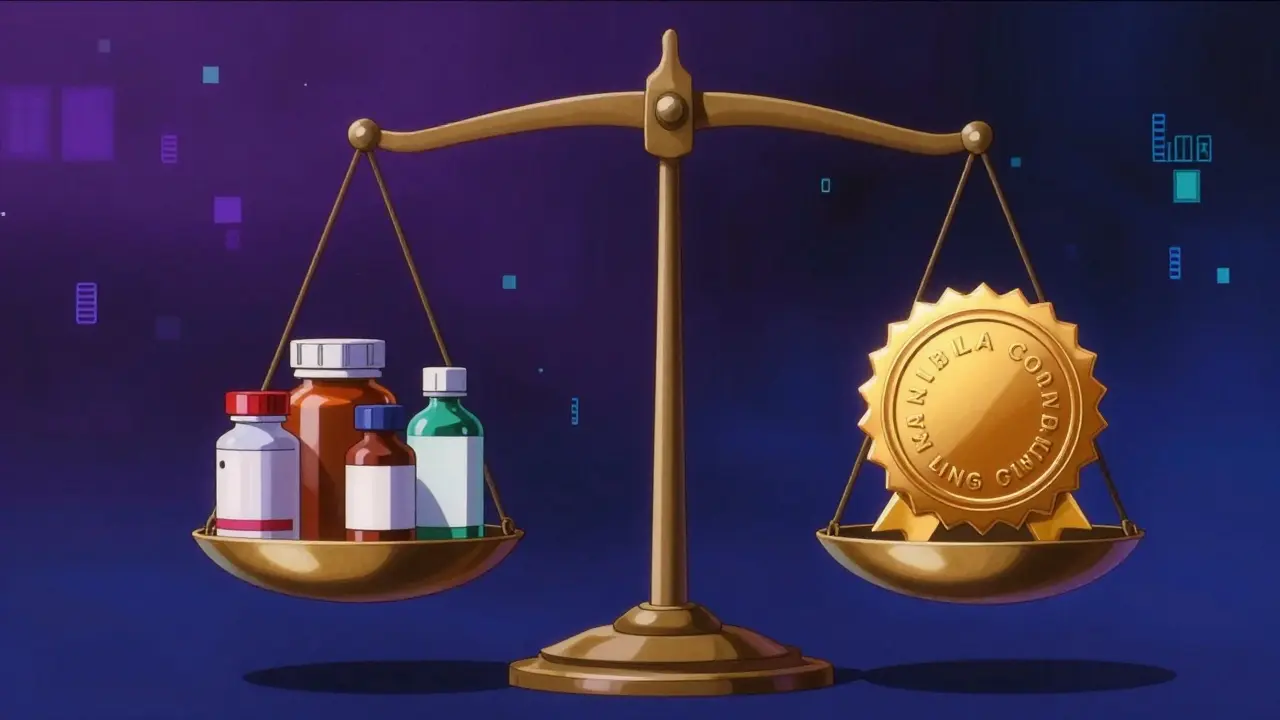
There is also a worrying trade-off: supply stability. If the FDA suddenly bans several major plants in India or China due to failure in an unannounced audit, the U.S. could see a short-term shortage of critical generics. Some analysts warn that this could disrupt the availability of up to 20% of generic drugs during the transition phase. It's a classic regulatory tension-balancing the need for absolute safety with the need for a steady supply of affordable medicine.
How Foreign Plants are Adapting
For a foreign manufacturer, the new reality is a state of constant readiness. The learning curve for this shift usually takes about 6 to 9 months. To survive, companies are moving away from "exam prep" and toward a culture of continuous compliance. This includes:
- Daily Quality Audits: Instead of monthly reviews, plants are conducting daily checks of their quality systems.
- Mock Inspections: Quarterly "surprise" drills to identify gaps in documentation or contamination control.
- Real-time Documentation: Moving away from paper logs that can be easily edited to digital systems with immutable timestamps.
- Strict Access Protocols: Ensuring staff are trained to permit FDA entry immediately, as refusing an inspector can trigger an import alert that blocks all products from that facility.
What happens if a foreign facility refuses an FDA inspection?
Refusing entry to FDA inspectors is a serious offense. It typically triggers an import alert, which allows the FDA to block all products from that specific facility from entering the U.S. market until the facility demonstrates compliance and allows an inspection to take place.
Why are India and China so central to this issue?
These two countries are the primary hubs for global pharmaceutical production. India provides about 40% of the active pharmaceutical ingredients (APIs) used in the U.S., and China provides about 13%. Because such a huge volume of the generic drug supply comes from these regions, any quality failure there has a massive impact on U.S. public health.
What is the difference between a Form 483 and a Warning Letter?
A Form 483 is an initial list of observations made by an inspector at the end of a visit; it's essentially a report of "things we found that might be wrong." A Warning Letter is a more formal, escalated notification from the FDA headquarters stating that the company has significantly violated regulations and must take corrective action or face legal consequences, such as seizures or injunctions.
Does the FDA coordinate with other countries?
Yes. The FDA uses Mutual Recognition Agreements (MRAs) to share inspection findings with other major regulators, including the European Medicines Agency (EMA) in Europe, the PMDA in Japan, and the TGA in Australia. This helps them identify problematic plants faster by pooling global data.
Will unannounced inspections make drugs more expensive?
Potentially. Industry surveys suggest compliance costs for foreign manufacturers could rise by 15-25%. Since generic drug margins are already very thin, some companies may pass these costs on to buyers or exit the market entirely, which could paradoxically increase prices by reducing competition.
Ethan Davis
April 8, 2026 AT 05:36Typical government move. They tell us it's about safety, but they're just creating a reason to bankrupt foreign plants and force us into some new corporate monopoly system. Why now? Because the real data is probably even worse and they're panicking. Trust me, the 'inspection gaps' are just a cover for something bigger going on behind the scenes.
Del Bourne
April 9, 2026 AT 09:27It is quite fascinating to see the shift toward unannounced inspections. In my experience with regulatory compliance, the 'heads-up' system almost guaranteed that only the surface-level issues were fixed, while systemic failures remained hidden. The move toward digital, immutable timestamps is particularly crucial here. Paper logs are far too easy to manipulate after the fact, and moving to a cloud-based, time-stamped system removes the incentive for facilities to 'back-date' their cleaning or testing records. It's a necessary evolution for public safety, even if the transition period is bumpy.
GOPESH KUMAR
April 9, 2026 AT 12:17The West always thinks they can fix the world by imposing their rigid boxes on others. You call it 'data integrity,' I call it an obsession with bureaucracy over actual chemistry. If the drug works, why does the paperwork need to be a masterpiece? This is just the American empire trying to control the global supply chain under the guise of health. It's all very predictable and frankly quite boring.
Darius Prorok
April 10, 2026 AT 01:11The EU model is way better. Just have a person responsible for the batch. Simple.
Benjamin cusden
April 10, 2026 AT 12:52The naivety in some of these threads is astounding. The QP model isn't some magic wand; it requires a level of professional integrity and legal infrastructure that the U.S. simply hasn't integrated into its pharmaceutical law. Moreover, the cost increase mentioned is an inevitable byproduct of eliminating inefficiency. If a company cannot survive a 20% increase in compliance costs to ensure their product doesn't kill people, then that company has no business operating in the healthcare sector. It is an evolutionary pruning of the industry.
jack hunter
April 11, 2026 AT 22:14wow sure let's just trust the fda to 'fix' things by hring more people... lol. its all just a cycle of bureaucracy where the only thing that actually grows is the amount of paperwork. we are just pawns in a game of reguatory theater. who cares about a form 483 when the systemic failure is the greed itself? the philo sophy of safety is just a mask for profit margins
Kathleen Painter
April 13, 2026 AT 08:47I can see why everyone is feeling a bit anxious about the potential for drug shortages during this transition, but maybe we can look at this as an opportunity to diversify our sources. It's a bit scary to think that 80% of our APIs come from just two countries, and while the push for unannounced inspections might cause some short-term ripples in the supply chain, it's probably the gentle nudge the industry needs to start building more resilient, localized manufacturing hubs. We should support the inspectors who are doing the hard work on the ground, because they're the ones actually making sure the meds we give our families are safe, and that's a goal we can all get behind, regardless of where the factory is located.
Ruth Swansburg
April 14, 2026 AT 10:41This is a vital step forward! Safety must always come first.
Jitesh Mohun
April 15, 2026 AT 18:12too much talk about rules and not enough about how it hurts the small plants in india who actually try their best while the big giants just pay for better lawyers to hide the mess
Michael Flückiger
April 17, 2026 AT 07:12This is such a great move!!! Finally getting some real accountability!!!! I'm so optimistic that this will lead to a whole new era of transparency for everyone!!!! Let's go!!!!
Nikhil Bhatia
April 18, 2026 AT 17:47Just more paperwork.
Jamar Taylor
April 20, 2026 AT 08:10Keep pushing for those higher standards! It's a tough climb for the manufacturers, but the end result is a safer world for all of us. We've got this!
dwight koyner
April 20, 2026 AT 13:23The transition to unannounced inspections is indeed a significant undertaking. It is important to recognize that for many facilities, the challenge is not a lack of will, but a lack of infrastructure. Implementing real-time monitoring and digital logs requires substantial capital investment. While the FDA's stance is firm, the industry will likely need a period of grace or technical assistance to ensure that the pursuit of safety does not inadvertently lead to a critical shortage of life-saving medications. We must balance the rigor of oversight with the pragmatism of supply chain stability.