Antibiotic Use & Resistance Risk Estimator
This tool demonstrates how certain habits increase the likelihood of developing drug-resistant bacteria in your system. (For educational purposes only; not a clinical diagnostic tool)
Resistance Risk Profile
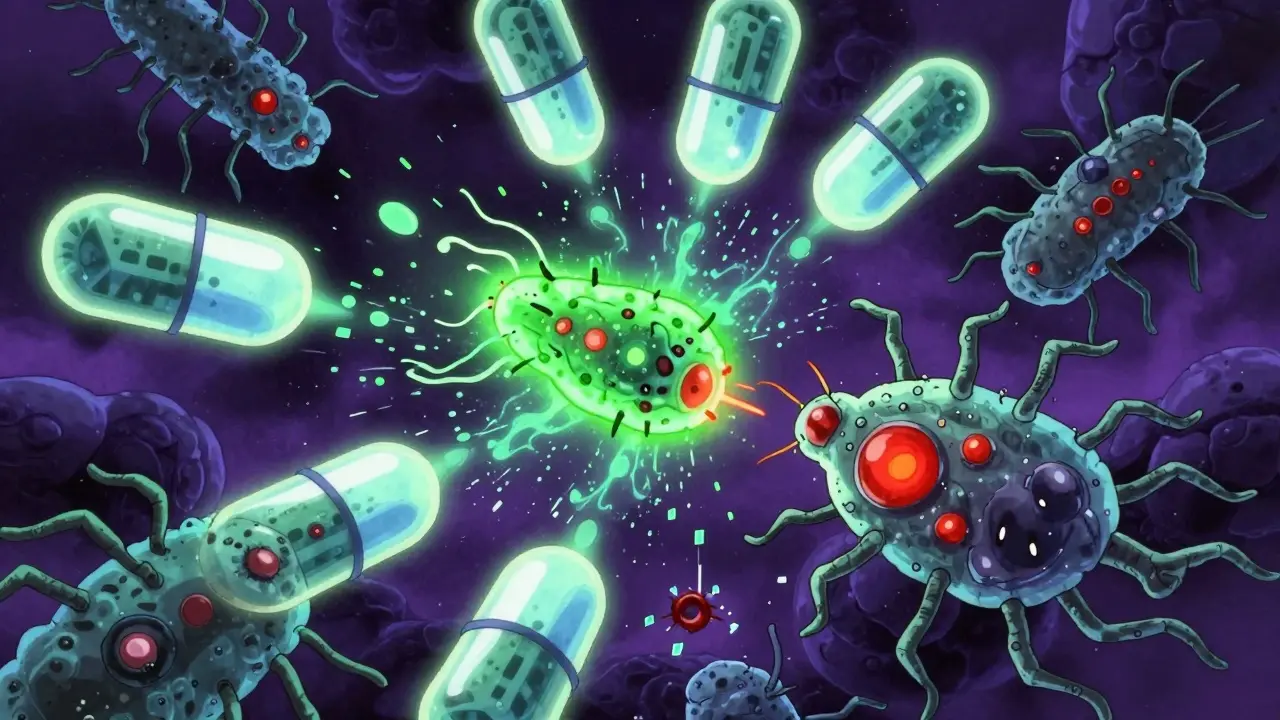
Imagine waking up with a simple scratch or a routine urinary tract infection, only to find out that the medicine meant to cure it doesn't work. It sounds like a plot from a dystopian movie, but for thousands of people, this is a daily reality. We are currently facing a "silent pandemic" called antimicrobial resistance (or AMR), where bacteria evolve to withstand the drugs designed to kill them. The scariest part? Our own habit of using antibiotics repeatedly is the primary engine driving this evolution.
The Biological Price of Repeated Use
Every time you take an antibiotic, you aren't just killing the "bad" bacteria. You are creating a high-pressure environment where only the toughest microbes survive. This process, known as selective pressure, forces bacteria to adapt. Through chromosomal mutations or horizontal gene transfer, which is basically bacteria "swapping" resistance secrets like trading cards, they build defenses against our best medicines.
This isn't just a theoretical risk. The World Health Organization has noted that resistance rates for common infections are climbing. For instance, about 1 in 5 urinary tract infections caused by Escherichia coli now show reduced susceptibility to standard drugs like ampicillin. When we use these drugs too often or for the wrong reasons, we essentially train the bacteria to ignore them.
The Rise of the "Superbugs"
When bacteria become resistant to multiple types of drugs, they earn the nickname "superbugs." One of the most alarming examples today is Carbapenem-resistant Enterobacterales (or CRE). These are particularly dangerous because they resist carbapenems, which doctors usually save as a "last resort" treatment. In the U.S., infections from NDM-producing CRE surged by a staggering 460% between 2019 and 2023.
Other well-known threats include MRSA (methicillin-resistant Staphylococcus aureus), which often plagues hospital settings, and Candida auris, a fungal pathogen that is resistant to nearly all major antifungal classes in 90% of clinical cases. When these pathogens hit, the mortality rate for bloodstream infections can skyrocket to 40-50% because there are simply no effective tools left in the medical kit.
| Pathogen | Threat Level | Key Characteristic | Impact |
|---|---|---|---|
| NDM-CRE | Urgent | Resists last-resort carbapenems | 40-50% mortality in bloodstream infections |
| MRSA | Serious | Resists methicillin and beta-lactams | Prolonged hospital stays and surgical complications |
| C. auris | Urgent | Multi-drug resistant fungus | 90% resistance to major antifungals |
| E. coli | Concerning | Reduced susceptibility to first-line drugs | Increasing failure of UTI treatments |
Real-World Consequences for Patients
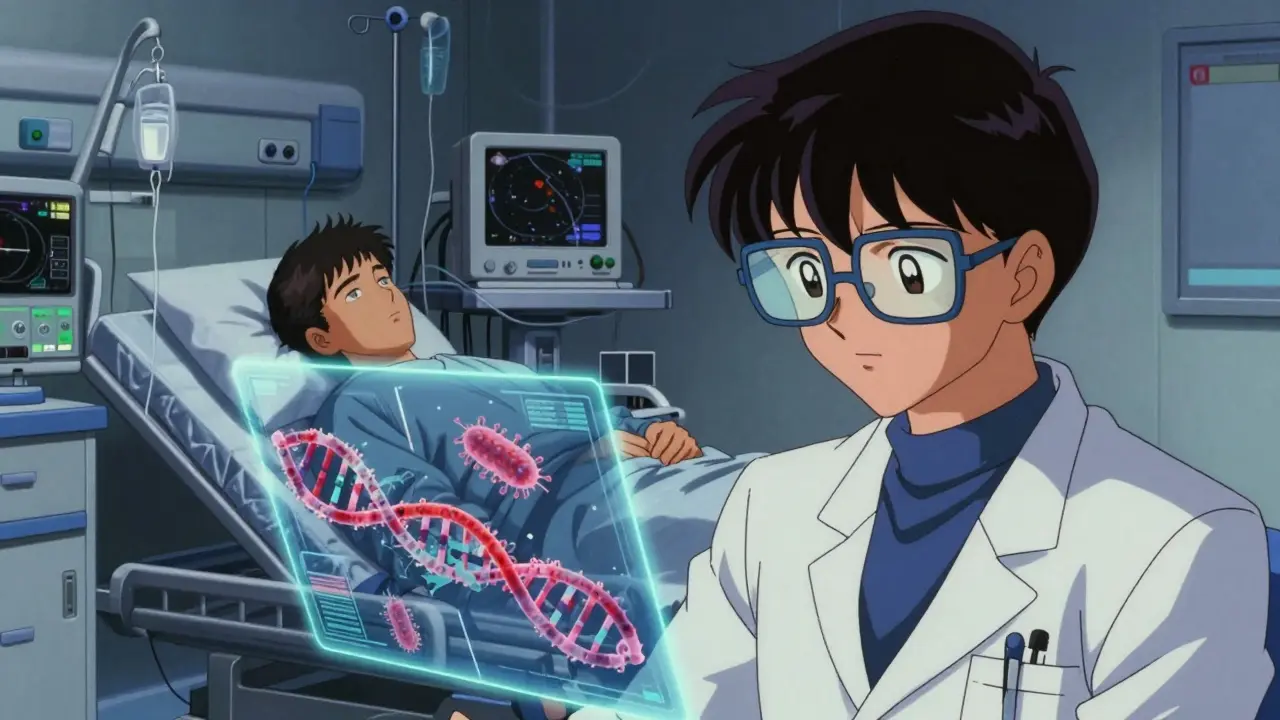
The numbers are grim, but the human stories are worse. Consider a patient with cystic fibrosis struggling against drug-resistant Pseudomonas aeruginosa. In some documented cases, patients have required 18 months of continuous IV therapy with multiple failures, costing over a million dollars in hospital bills. It's not just about the money; it's the emotional exhaustion of knowing the medicine might not work.
For a regular person, a resistant infection often means a "diagnostic delay." According to a survey by the AMR Industry Alliance, nearly 68% of patients with resistant infections face delays averaging over nine days while doctors scramble to find a drug that actually works. This leads to longer hospital stays-averaging nearly 15 days compared to just 5 for susceptible infections-and a much higher chance of permanent health complications.
The Economic and Medical Deadlock
You might wonder why we don't just invent new antibiotics. The problem is the money. Developing a new drug is incredibly expensive, but once a new antibiotic is released, doctors (rightly) use it sparingly to prevent resistance. This means pharmaceutical companies don't make their money back. A Boston Consulting Group analysis found that developers recover only $0.20 for every $1 invested. As a result, most major drug companies have completely exited the market.
The pipeline is now a trickle. Only a handful of new antibiotic classes have been discovered in the last 40 years. While the FDA recently approved cefepime-taniborbactam to fight NDM-CRE, we are fighting a war of attrition. The World Bank predicts that the cumulative lost economic output from AMR could reach $100.2 trillion by 2050 if we don't change our trajectory.
How to Fight Back: Stewardship and Strategy
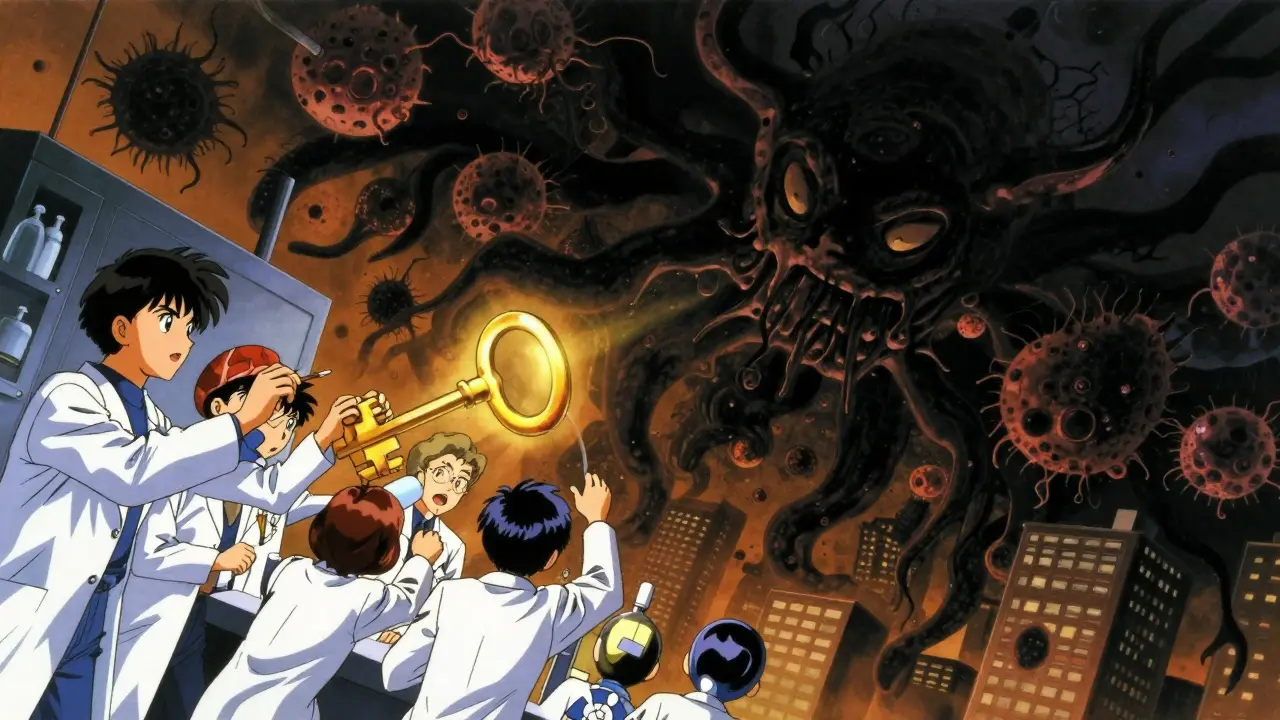
We can't stop bacteria from evolving, but we can slow them down. This is where Antibiotic Stewardship comes in. This isn't just a fancy term; it's a rigorous system of using the right drug, at the right dose, for the right amount of time. Hospitals that implement full stewardship programs-including pharmacy expertise and strict tracking-have seen a 22% drop in inappropriate antibiotic use.
On a personal level, the best defense is simple: stop demanding antibiotics for viral infections. Colds and flus are caused by viruses, not bacteria; antibiotics do absolutely nothing for them. In some parts of the world, self-medication rates are as high as 89%, which is essentially pouring gasoline on the AMR fire. The most successful models, like Sweden's "Strama" program, have combined human, animal, and environmental health strategies to reduce resistance rates by over 30%.
Do antibiotics cause resistance in my body personally?
Yes. Antibiotics don't change the drug; they change the bacteria. When you take an antibiotic, the weak bacteria die, but those with resistant traits survive and multiply. This means the next time you get an infection, the bacteria in your system may be harder to kill.
Can I become "immune" to antibiotics?
Technically, you don't become immune-the bacteria do. Your immune system still works, but the medications used to assist your immune system in fighting bacterial infections lose their effectiveness.
What should I do if I'm prescribed antibiotics?
Always finish the entire course as prescribed, even if you feel better. Stopping early can leave a small population of "survivor" bacteria that are more likely to be resistant, making the infection more likely to return in a stronger form.
Are there any alternatives to antibiotics?
For some infections, bacteriophage therapy (using viruses that eat bacteria) is being explored. However, the best "alternative" is prevention: vaccination, proper hygiene, and avoiding the overuse of antimicrobial drugs in livestock.
Why is the "last resort" drug resistance so scary?
Drugs like carbapenems are the final line of defense. If bacteria evolve to resist these, we are effectively back in the "pre-antibiotic era," where a simple skin infection or a routine surgery could become fatal because there is no medicine left that can kill the pathogen.
Next Steps for a Safer Future
If you're a patient, the best move is to be an active participant in your care. Ask your doctor, "Is this antibiotic absolutely necessary, or could this be viral?" If you're a healthcare provider, lean into rapid molecular testing to identify resistant strains quickly, rather than guessing with broad-spectrum drugs.
For the broader system, we need to move toward a "subscription model" for new drugs, like the proposed PASTEUR Act, which pays companies for the value of the drug rather than the volume sold. Without this shift, we risk a future where 10 million people die annually from AMR, potentially making it a more significant killer than cancer.
Mark Koepsell
April 30, 2026 AT 17:38It is important to emphasize that the overuse of broad-spectrum antibiotics in livestock is a massive contributor to this problem. The transfer of resistance genes from agricultural environments to human pathogens is a well-documented pathway. This is why integrated One Health strategies are the only viable way forward.
Bradley Gusick
May 1, 2026 AT 16:48Real talk, this is exactly how they get us all on a subscription plan for our own lives!!! The government and Big Pharma create the crisis, then they sell us the a a "solution" that only they control. It is a total power grab to ensure we are all dependent on their chemical cocktails. Wake up people, this is just the groundwork for a new form of biological surveillance!
Jenny X
May 2, 2026 AT 11:00The horizontal gene transfer mentioned here is just the tip of the iceberg. If you look into the zoonotic spillover dynamics, it is obvious the bio-labs are accelerating this. They are basically engineering these superbugs to bypass our natural immunities. It is all about the profit margins of the pharmaceutical industrial complex and the strategic devaluation of natural health protocols.
Elizabeth Holden
May 3, 2026 AT 02:56wow lol u guys r so naive. its not a conspracy its just basic science but most of u dont get it. the real issue is that peple keep taking meds for a cold like its candy and then act suprised when the drugs stop working. stop being so dumb and read a book for once.
Spencer Farrell
May 3, 2026 AT 17:49One must contemplate the existential irony of human ingenuity creating the very instruments of its own demise. We sought to conquer the microscopic realm through the alchemy of penicillin, yet in our hubris, we have merely curated a more formidable adversary. It is a testament to the cyclical nature of power and decay.
Mikaela -anonymous 😏
May 5, 2026 AT 11:07Omg... a million dollars for IV therapy??? I can barely afford my iced coffee... just absolutely tragic!!!! The world is ending and we are just watching it happen in slow motion... how very poetic... lol.
Srinivas Komakula
May 5, 2026 AT 14:12The epigenetic modifications... and the sheer audacity of the antimicrobial susceptibility testing (AST) protocols... are fundamentally flawed!!! This is clearly a coordinated effort by the globalists... to implement a systemic biochemical hegemony!!! The pharmacological paradigms are being manipulated... to ensure maximum morbidity!!!
Kelly Feehely
May 6, 2026 AT 05:09I've seen this before and it's obviously a scam to push the PASTEUR Act. Why should taxpayers fund these greedy companies? They failed to innovate for 40 years and now they want a subscription fee? Get real. You all are blindly following the narrative while they bleed us dry.
bharat films
May 7, 2026 AT 04:06Typical corporate greed 🙄 honestly the medical system is just a business and we are the customers they want to keep sick forever 🤡💊
Kartik Agarwal
May 8, 2026 AT 20:44We should focus on how we can implement these stewardship programs in developing regions. Using molecular diagnostics for rapid identification of NDM-CRE can save countless lives if we share the technology openly. Let's work together to bridge the gap in healthcare access.
princess lovearies
May 9, 2026 AT 09:34It's a lot to take in, but maybe we can all just try to be more mindful of how we treat our bodies and the earth. Everything is connected, and a little bit of kindness toward our own health might go a long way in slowing this down.
Allison Maier
May 10, 2026 AT 07:44too long didnt read. just dont take pills if u dont need them 🤷♀️
Jimmy Crocker
May 12, 2026 AT 03:06The sheer lack of intellectual rigor in these discussions is quite taxing, really, as one must observe that the economic disincentives for antibiotic development are not merely a failure of capitalism but a failure of our societal valuation of public goods over privatized profits, which is a tragedy of the commons in the most literal sense.
kelvin villa saab
May 12, 2026 AT 09:09This is absolutly insane. I cant believe people actualy demand meds for a flu. Its like, use your brain!! People are just lazy and want a quick fix instead of actually resting. Totally ridiculuos.