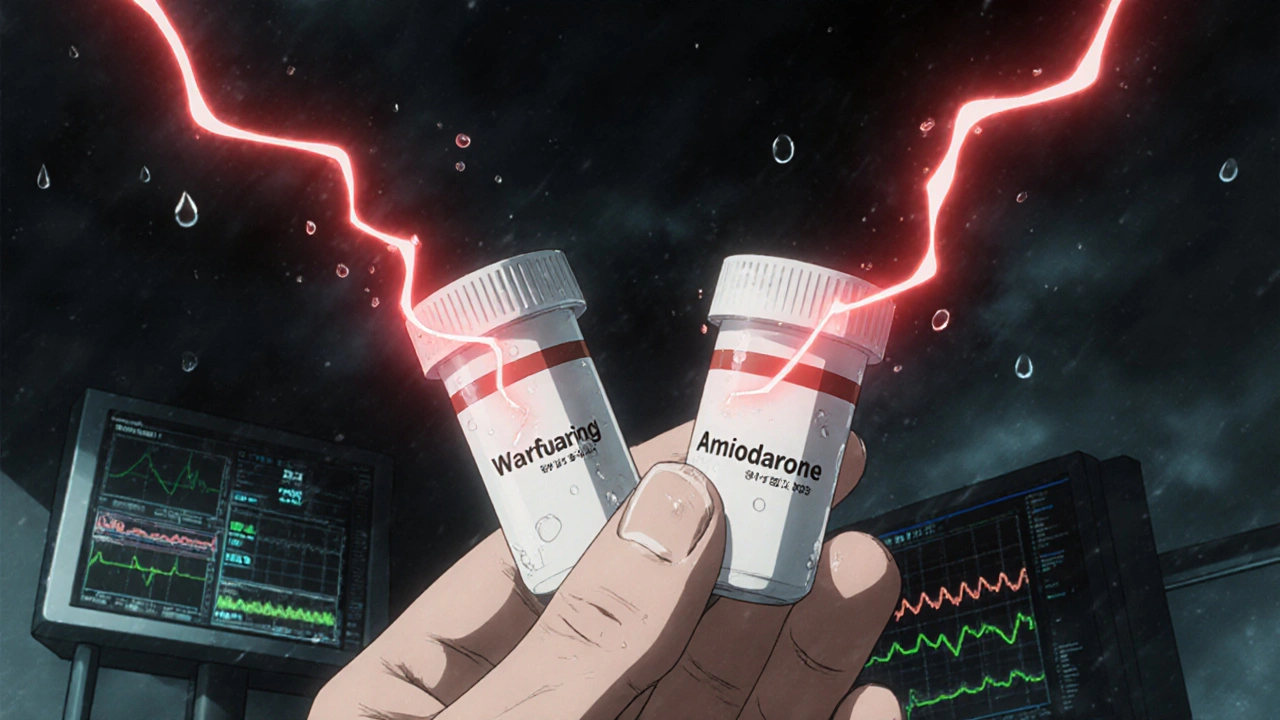
When you’re on a combination of NTI drugs, even a tiny change in dosage can send your body into crisis. These aren’t your everyday pills. They’re the kind where the line between healing and harm is razor-thin-warfarin, lithium, levothyroxine, phenytoin. Now imagine two of them in one pill. That’s the dream: simpler dosing, fewer pills, better adherence. But in reality, it’s a minefield. And right now, almost none of these combination NTI drugs have safe, approved generic versions in the U.S.
What Makes NTI Drugs So Tricky?
Narrow Therapeutic Index isn’t just jargon. It means the difference between the dose that works and the dose that kills is small. For most drugs, your body can handle a 20% swing in blood levels without issue. For NTI drugs? A 10% shift can cause a seizure, a stroke, or organ failure. The FDA defines them by five key traits: tiny safety margin, high risk of life-threatening side effects, need for constant blood testing, low variation within the same person, and frequent small dose tweaks. Think of it like driving a sports car with no speedometer-you can’t afford to guess.Warfarin is the classic example. Too little, and you get a clot. Too much, and you bleed internally. Levothyroxine? A slight overdose can fry your heart. Lithium? A few nanograms per milliliter can mean the difference between mood stability and kidney failure. These aren’t hypothetical risks. They’re daily realities for hundreds of thousands of patients.
Why Combination NTI Drugs Are Rare-Even in Brand Form
Combination NTI therapy isn’t common because it’s dangerous. But when it’s used, it’s because monotherapy failed. In some cancers, combining methotrexate with another NTI agent helps kill resistant cells. In complex heart cases, doctors pair warfarin with amiodarone, both NTI drugs, to control rhythm and prevent clots. But these are rare, last-resort regimens. And they’re almost never available as a single pill.Why? Because mixing two narrow-window drugs into one tablet multiplies the risk. If one component is off by 10%, you’ve got a problem. If both are off by 10%? You’re looking at a 20% total variation in blood levels-far beyond what’s safe. The FDA doesn’t just require bioequivalence for these drugs. It demands near-perfection.
For single NTI drugs, generics must stay within 90%-111% of the brand’s Cmax and 90%-112% for AUC. For regular drugs, it’s 80%-125%. That’s already tight. But for combinations? The FDA’s 2023 draft guidance proposes even stricter limits: 90%-107.69% for Cmax and 90%-110% for AUC. No manufacturer has yet met these standards in a fixed-dose combo. Not one. Not even close.
The Generic Gap: 87% Have Alternatives. Only 13% of Combinations Do.
Generic warfarin? Plenty. Eleven ANDAs approved. Generic levothyroxine? Widely available. But warfarin + amiodarone in one pill? Zero. Lithium + valproate? No. Phenytoin + carbamazepine? Still just two separate pills.The numbers tell the story. In 2023, 87.4% of NTI monotherapies had generic versions. For combination regimens involving NTI drugs? Only 12.6%. That’s not a gap. That’s a chasm. And it’s not because no one tried. Teva, Sandoz, Mylan-they’ve all attempted it. But every time, the bioequivalence data fell short. The FDA rejected them. The science just isn’t there yet.
Europe has a few combo NTI generics-mostly levothyroxine with selenium or iodine. But even there, the data is thin. Less than 2% adverse events? That’s promising, but it’s not the same as the U.S. population. Different genetics, different diets, different monitoring practices. What works in Germany doesn’t automatically work in Ohio.

What Happens When Pharmacists Switch to Generic?
Patients don’t always know when their meds change. A pharmacy swaps a brand for a generic. They assume it’s the same. It’s not. Not with NTI drugs.A 2020 JAMA study found that when a generic replaced a brand in a combo therapy with even one NTI drug, adverse events jumped 27%. For non-NTI combos? Only 8%. That’s a threefold increase. And it’s not just numbers. Real people are getting hospitalized.
One Reddit user on r/medicine posted in June 2023: “My INR went from 2.5 to 6.8 in three days after my pharmacy switched my warfarin to generic. I ended up in the ER. Imagine if both drugs were generic.” That’s not an outlier. A 2023 ASHP survey of 856 pharmacists found 78.3% had seen a therapeutic failure after switching to generic in an NTI combo. Over 40% reported serious events-bleeding, seizures, arrhythmias.
Dr. Aaron Kesselheim’s 2015 study showed 18.7% of warfarin patients had unstable INR after switching to generic. Only 4.3% did on brand. Now multiply that risk by two. That’s the math no one wants to do.
Why Don’t Manufacturers Just Make It Work?
It’s not about money. The NTI drug market was worth $48.7 billion in 2023. A single combo NTI product could be worth hundreds of millions. But the science is the barrier. You can’t just tweak a pill. You need to control particle size, dissolution rate, coating, manufacturing environment-all to within 1% tolerance. For a single NTI drug, that’s hard. For two? It’s like trying to hit two moving targets with one arrow while blindfolded.Some argue modern tech can do it. Sandoz points to their European levothyroxine combos. But those are low-risk combinations. Levothyroxine + selenium isn’t the same as warfarin + amiodarone. The latter affects liver enzymes, protein binding, and metabolism in ways that interact unpredictably. The FDA knows this. That’s why they’re drafting new guidance for “precision bioequivalence” using pharmacometric modeling. But that’s still years away.
What Patients and Providers Are Doing Right Now
They’re managing. With blood tests. With caution. With stress.Patients on combination NTI therapy need monthly INR checks, TSH levels, lithium levels. That’s $1,200 to $2,500 a year just for monitoring-double what non-NTI patients pay. It takes 6-8 weeks to stabilize a patient. Three to four dose adjustments on average. That’s time. That’s money. That’s anxiety.
Pharmacists need 120+ hours of special training to handle these regimens. Only 12 out of 50 major U.S. hospitals have dedicated NTI combo clinics. Most community pharmacies? They’re just filling scripts. And when they do switch generics? Patients are left in the dark.
Enterprise health systems-hospitals, VA, Kaiser-are 3.2 times more likely to block automatic substitution than community pharmacies. Why? Because they’ve seen the fallout. They’ve had the lawsuits. They know the risk isn’t worth the savings.
The Future: Will We Ever Have Safe Combination NTI Generics?
Maybe. But not soon.The FDA’s 2024 pilot program for pharmacometric modeling could be a breakthrough. Instead of testing 40 patients in a crossover trial, they’ll use computer models to simulate thousands of virtual patients. That could reduce development time from 4.7 years to under 2. But it’s unproven. And even if it works, it’ll take years to scale.
Some experts think it’s impossible. Dr. Lewis Nelson at NYU says combining multiple narrow-window drugs creates pharmacokinetic chaos that current technology can’t tame. Others, like former FDA official Dr. Robert Temple, believe manufacturing precision will catch up. The truth? We’re stuck in the middle. The science is advancing, but the regulatory bar is rising faster.
For now, the only safe option is to stick with brand-name combination NTI drugs-or keep them as separate pills. No shortcuts. No substitutions. No compromises.
What You Can Do
- If you’re on a combo NTI regimen, ask your pharmacist: “Is this brand or generic?” Don’t assume.
- Never let your meds switch without your doctor’s approval.
- Track your blood levels religiously. Keep a log. Share it.
- Know your drug’s therapeutic window. If you’re on warfarin, know your target INR. If you’re on lithium, know your target level.
- Ask your doctor if a fixed-dose combo exists. If not, ask why. Push for transparency.
There’s no magic fix. No easy answer. But awareness saves lives. And right now, awareness is the only thing standing between you and a preventable crisis.
jamie sigler
November 30, 2025 AT 11:22This is such a mess. Why do we even let pharmacies switch these without telling patients? I’ve seen people crash from a simple generic swap. It’s not just risky-it’s negligent.
Bernie Terrien
December 2, 2025 AT 06:36Let’s be real-this isn’t about science, it’s about corporate greed wrapped in FDA bureaucracy. Pharma giants don’t want generics because they can’t milk the same patients for $300/month. The ‘precision bioequivalence’ nonsense? Just a delay tactic.
They’d rather keep people on brand-name combos than invest in manufacturing that doesn’t cost a billion bucks to get 0.1% tolerance.
Jennifer Wang
December 2, 2025 AT 23:46As a clinical pharmacist with 18 years in high-risk medication management, I can confirm that the risks outlined in this post are not exaggerated. The pharmacokinetic interactions between dual NTI agents are non-linear and highly variable across populations. The FDA’s proposed 90–107.69% Cmax threshold is scientifically justified.
Any deviation beyond this range in combination therapy carries a statistically significant increase in adverse event risk, particularly in elderly patients with polypharmacy. We routinely document these events in our institutional databases. The data is unequivocal.
Monica Lindsey
December 4, 2025 AT 04:06Of course no one makes these combos. Anyone who thinks you can safely combine two drugs with razor-thin windows is either a med student who just read a textbook or a lobbyist paid by Big Pharma.
It’s not complicated. Two narrow drugs = double the danger. End of story.
Tina Dinh
December 5, 2025 AT 00:05Y’all need to stop acting like this is some new problem 😤 My cousin’s dad almost died after a pharmacy switch-INR spiked to 8.2. He’s lucky he didn’t bleed out.
WE NEED TO SPEAK UP. 🚨 This isn’t just ‘med stuff’-it’s life or death. #NTIawareness
Andrew Keh
December 5, 2025 AT 21:45I understand the fear around switching generics, but we also have to acknowledge that many people can’t afford brand-name meds. The real issue isn’t whether combos are safe-it’s whether we’re willing to pay for safety.
Maybe the solution isn’t just better science, but better access. Not everyone can afford monthly lab tests or a specialist just to stay alive.
Peter Lubem Ause
December 6, 2025 AT 07:05Let me tell you something-this is not just an American problem. In Nigeria, we don’t even have access to reliable generics for single NTI drugs, let alone combinations. People are taking broken pills from unregulated suppliers because they can’t afford the real thing.
So while the FDA debates 0.5% bioequivalence tolerances, real people are dying because they can’t even get a consistent dose of levothyroxine. The global disparity here is criminal. We need global standards, not just American perfectionism.
And yes, I’ve seen patients on warfarin who don’t know what an INR is. That’s the real crisis-not the lack of combo generics, but the lack of education, access, and basic healthcare infrastructure.
linda wood
December 6, 2025 AT 08:59So let me get this straight-we have a system where patients are literally gambling with their lives because we can’t make a pill that doesn’t kill them?
And the answer is… more blood tests? More anxiety? More $2,500/year in lab fees?
Wow. Just… wow. This isn’t healthcare. This is a horror show with a co-pay.
LINDA PUSPITASARI
December 7, 2025 AT 15:41My mom’s on lithium and valproate and she’s had three ER trips from pharmacy switches 😭 I keep a printed log of every pill she takes and the batch numbers. No one else does.
Why isn’t this info on the label? Why can’t the pharmacy just say ‘THIS IS NTI DO NOT SUBSTITUTE’ in red?
Someone needs to fix this. Like yesterday. 💔
gerardo beaudoin
December 7, 2025 AT 18:28My doc won’t let me switch even for single NTI generics. He says if it ain’t broke, don’t touch it. I get it. I’d rather pay more and sleep at night.
Joy Aniekwe
December 8, 2025 AT 10:40Oh please. The FDA is just protecting Big Pharma’s profits under the guise of ‘safety.’
Meanwhile, people in Europe are taking these combos just fine. But oh no-American patients are too ‘special’ to handle generics. Right.
It’s not science. It’s capitalism with a stethoscope.
Latika Gupta
December 9, 2025 AT 16:12Do you think the FDA really wants these combos approved? Think about it-more generics means less control. Less control means less power. And power? That’s what keeps the system running.
They’re not afraid of the science. They’re afraid of what happens when patients realize they’ve been lied to for decades.
Sullivan Lauer
December 11, 2025 AT 15:27Let me tell you what really happens when you mix two NTI drugs into one pill. You don’t just get a 20% variation. You get chaos.
Imagine two people on the same exact dose-one takes a grapefruit, the other takes a multivitamin. One gets a seizure. The other gets a blood clot.
And that’s not even the worst part. The worst part is that the pharmacy doesn’t know. The doctor doesn’t know. The patient doesn’t know.
And when the ER doctor finds out? It’s too late.
This isn’t a drug problem. It’s a system problem. And until we treat patients like people-not dollar signs-we’re just rearranging deck chairs on the Titanic.
Geoff Heredia
December 12, 2025 AT 14:44They’re not banning combo generics because of safety. They’re banning them because the CDC and FDA are in cahoots with the pharmaceutical lobby to keep people dependent on expensive meds.
Remember when they said vaccines caused autism? Same playbook. Same lies. Same silence.
They don’t want you to know that a $5 pill could save your life. They want you to pay $300. And they’ll bury the science to make sure you never find out.