Running out of your daily blood pressure or diabetes medication is a stressful experience. You might be halfway through the month, realize you have three pills left, and suddenly face a scramble to call the doctor, wait for approval, and visit the pharmacy. For millions of people managing chronic conditions with generic medicines that are cost-effective pharmaceutical alternatives to brand-name drugs with identical active ingredients, this gap in treatment can lead to serious health setbacks. This is where automated refill systems step in to take the mental load off your shoulders.
These technology-driven solutions are no longer a futuristic concept; they are the standard operating procedure for major pharmacy chains and digital health platforms. By automatically initiating prescription refills on a set schedule-usually five to seven days before you run out-they ensure you never miss a dose due to administrative friction. But does this convenience actually improve your health, or does it just create more pills in your cabinet? Let’s look at how these systems work, who benefits most, and what pitfalls you need to watch out for.
How Automated Refill Systems Work
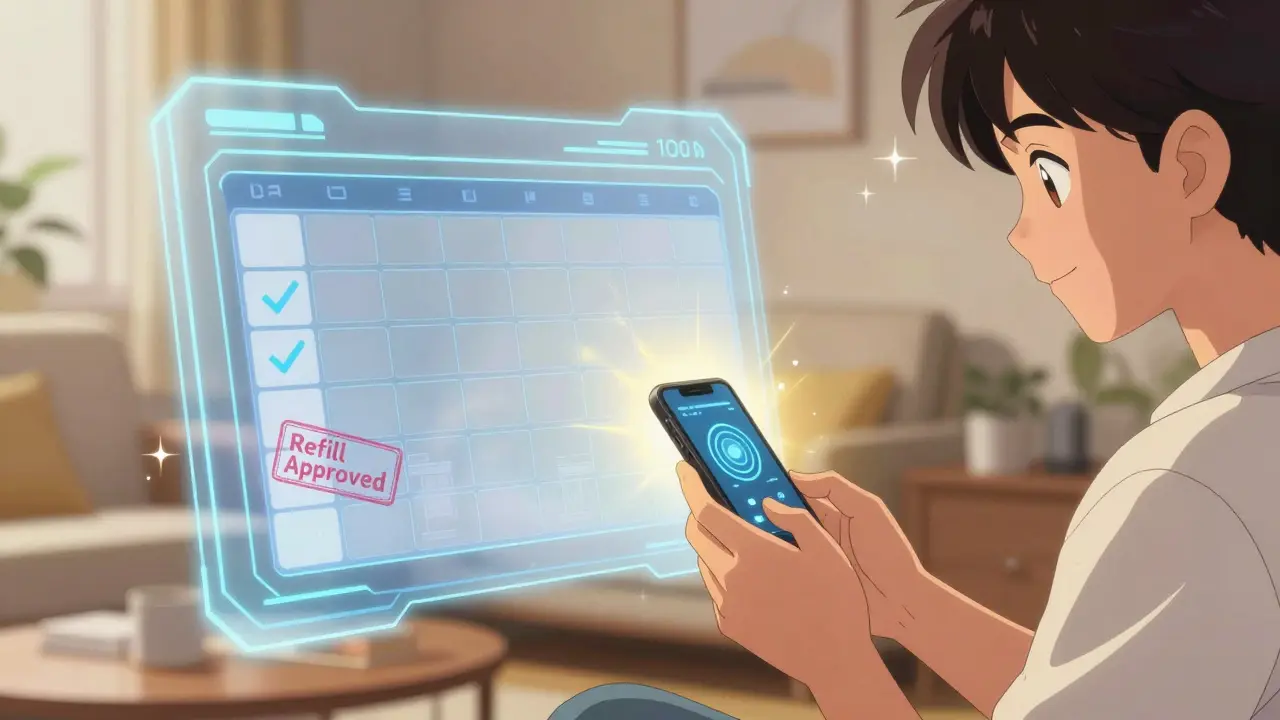
At its core, an automated refill system is a scheduling tool integrated into your pharmacy’s management software. When you enroll, you agree to a specific timeline based on your prescription dosage. If you take one pill a day from a 30-day supply, the system flags your account around day 24 or 25. It then sends the request to your pharmacist for review and approval without you lifting a finger.
The process relies heavily on data integration. Modern systems connect electronic health records (EHRs) with pharmacy databases to verify coverage and check for interactions. Once approved, you receive a notification via SMS, email, or a mobile app alerting you that your medication is ready for pickup or has been shipped. According to industry analysis by Clarity Ventures, 92% of pharmacy automation systems now support multi-channel notifications, ensuring you get the message regardless of your preferred communication method.
This workflow removes the "forgetting factor." Research published in PMC by Lester et al. (2016) highlights that these systems trigger refills proactively, addressing the root cause of nonadherence for many patients: simply forgetting to ask for more medicine. The Centers for Medicare & Medicaid Services (CMS) have even incorporated adherence metrics into their star ratings for Medicare Part D plans, creating a strong regulatory push for pharmacies to adopt these tools.
Does It Actually Improve Adherence?
You might wonder if getting your meds automatically means you’re actually taking them. The data suggests a strong yes, particularly for chronic conditions. The same Lester study found that participants in automatic refill programs showed significantly higher adherence rates compared to those who managed refills manually:
- Statin medications: 7.2% higher adherence rate.
- Diabetes medications: 6.8% higher adherence rate.
- RASA (Renin-Angiotensin System Antagonists): 3.9% higher adherence rate.
These numbers matter because consistent use of generic statins or insulin analogs directly correlates with better long-term health outcomes. However, not everyone agrees. KevinMD published a critical analysis in May 2022 arguing that while convenience increases, true behavioral adherence might not change. They suggest that removing the "touchpoint" of calling the pharmacy reduces opportunities for pharmacists to counsel patients on side effects or lifestyle changes. While valid, this view contrasts with user experiences where 68% of pharmacy community members reported positive outcomes, citing "peace of mind" as the primary benefit.
Convenience vs. Control: The Trade-Offs
Automated refills offer immense convenience, but they come with specific risks that require your attention. The biggest issue arises when your dosage changes. If your doctor adjusts your medication strength mid-cycle, the automated system might not catch the update immediately. Consumer Medication Safety documented cases in late 2024 where patients received their old dosage because the automatic trigger fired before the new prescription was fully processed in the system.
To mitigate this, you must stay engaged. Do not treat automated refills as a "set it and forget it" solution forever. Here are practical steps to maintain control:
- Verify after every doctor visit: Always confirm with your pharmacist that your automated schedule reflects any recent dosage changes.
- Review quarterly: Check your medication list every three months to ensure you still need every item being auto-refilled.
- Monitor delivery dates: If you use mail-order services, track shipments to avoid accumulating unused stock.
Another concern is medication oversupply. Early critics feared these systems would lead to hoarding. However, the CVS Health study (2015) demonstrated that proper implementation actually reduced oversupply by aligning refills more precisely with actual consumption patterns, rather than erratic patient requests.
Comparison: Retail, Mail-Order, and Subscription Models
Not all automated refills are created equal. Depending on your needs, different models offer varying levels of service and cost efficiency. Understanding these differences helps you choose the right path for your generic medicines.
| Feature | Retail Pharmacy Auto-Refill | Mail-Order Services | Subscription Models (e.g., RxPass) |
|---|---|---|---|
| Cost Structure | Standard copay per fill | Often lower copays for 90-day supplies | Flat monthly fee ($5/month for Amazon RxPass) |
| Speed | Ready in 1-2 hours | 3-7 business days shipping | Varies by carrier (usually 2-5 days) |
| Personal Interaction | High (face-to-face counseling available) | Low (phone/chat only) | Low (digital interface primarily) |
| Best For | Patient needing immediate access or complex regimens | Stable chronic conditions requiring long-term supply | Common generics (statins, BP meds) for budget-conscious users |
Amazon Pharmacy’s RxPass, launched in January 2023, represents a shift toward subscription-based convenience. For $5 a month, Prime members can get up to 60 common generic medications. JAMA Network Open (Yeung, 2025) noted this model increased refill frequency among users, likely due to the low marginal cost of adding another drug to the subscription. However, traditional retail pharmacies still hold an edge in satisfaction scores, with Consumer Medication Safety reporting 23% higher satisfaction for retail auto-refills compared to mail-order, largely due to the ability to resolve issues instantly in person.
Setting Up Your Automated Refills
Getting started is straightforward, though it requires a bit of initial effort. Most national chains like CVS or Walgreens allow you to enroll through their mobile apps or website portals. The process typically takes 8-12 minutes. You will need to provide consent for HIPAA-compliant communications and select your preferred notification method.
If you prefer human assistance, 78% of CVS stores offer in-person enrollment help during off-peak hours. This is particularly useful for elderly patients, as pharmacies report that 83% of seniors need some guidance during the first setup. Independent pharmacies may lag behind in adoption-only 47% have implemented these systems compared to 89% of national chains-due to integration costs averaging $18,500 per location. If you shop at an independent pharmacy, ask if they offer manual reminder services as an alternative.
Once enrolled, keep an eye on your first few cycles. Ensure the notifications arrive at a time you’ll see them. Adjust settings if you find SMS texts are buried under spam or if emails go to junk folders. The goal is seamless integration into your routine, not another digital chore.
Future Trends in Pharmacy Automation
The landscape of medication management is evolving rapidly. We are moving beyond simple timers toward AI-driven personalization. Clarity Ventures projects that by 2026, 67% of pharmacy automation systems will incorporate artificial intelligence to analyze individual adherence patterns. Imagine a system that learns you tend to skip doses on weekends and adjusts your refill timing or sends targeted educational content to address barriers.
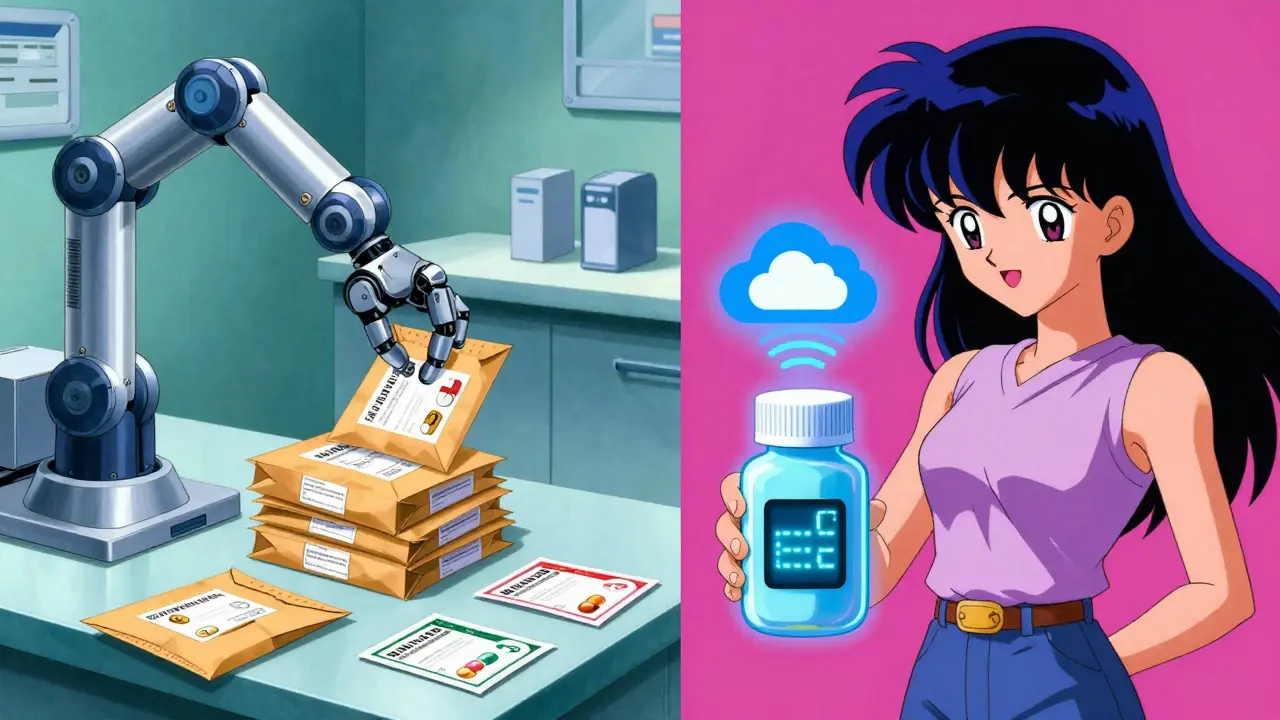
Integration with wearable technology is also on the horizon. CVS Health already announced integration with Apple Health in late 2023, allowing adherence tracking within iOS ecosystems. Future updates may link smart pill bottles directly to refill triggers, creating a closed-loop system where the bottle itself confirms consumption and orders more when empty. As the pharmacy automation market grows from $5.8 billion in 2022 to a projected $12.3 billion by 2027, expect these features to become standard rather than luxury add-ons.
Can I cancel my automated refill anytime?
Yes, you can usually cancel or pause automated refills through your pharmacy’s mobile app, website, or by calling the store directly. However, if a refill has already been processed and is ready for pickup, cancellation may not stop the preparation. Always check the status of your current order before attempting to cancel.
Do automated refills work for controlled substances?
Generally, no. Due to strict federal and state regulations regarding Schedule II-V controlled substances, most pharmacies do not allow fully automated refills for these medications. You typically need to present identification and sometimes speak with a pharmacist in person to pick up these prescriptions. Rules vary by state, so check with your local provider.
What happens if my insurance denies the refill?
If your insurance denies the claim, the automated system will halt, and you will receive a notification explaining the reason. Common issues include prior authorization requirements or quantity limits. You or your pharmacist will need to resolve the denial before the refill can proceed. The system does not charge you until the claim is approved.
Is my data safe with automated refill systems?
Reputable pharmacies follow strict HIPAA (Health Insurance Portability and Accountability Act) standards to protect your personal health information. Data transmission between EHRs and pharmacy systems is encrypted. However, always review the privacy policy of any third-party app or service you use to manage your medications to understand how your data is stored and shared.
Why did I receive a refill I didn’t need?
This often happens if you stopped taking a medication but forgot to cancel the auto-refill, or if there was a delay in updating your record after a doctor changed your therapy. Contact your pharmacy immediately. Many will accept returns of unopened medications for credit or disposal, though policies vary. Use this as a reminder to review your active prescriptions regularly.