Antihistamine and Alcohol Risk Calculator
Enter your antihistamine type and number of drinks to see your risk level
Every year, millions of Americans take antihistamines to manage allergies, colds, or sleep issues-and many of them also have a drink or two. It seems harmless: a pill for sneezing, a beer to unwind. But what happens when these two mix? The answer isn’t just "you’ll feel sleepy." It’s dangerously drowsy-so much so that it can land you in the hospital, cause a car crash, or even stop your breathing.
Why This Combination Is So Risky
Antihistamines and alcohol don’t just add up-they multiply. Both are central nervous system (CNS) depressants. That means they slow down your brain’s activity. Alcohol does this by boosting GABA (a calming brain chemical) and blocking NMDA receptors (which help you stay alert). First-generation antihistamines like diphenhydramine (Benadryl) block histamine in the brain, which is what makes you drowsy in the first place. When you combine them, the effect isn’t 1 + 1 = 2. It’s more like 1 + 1 = 3 or 4.Studies show that mixing alcohol with diphenhydramine can reduce reaction time by 47% more than alcohol alone. That’s not just feeling tired-it’s like being legally drunk. In fact, taking two Benadryl tablets with three or four drinks can push your impairment level to a blood alcohol concentration (BAC) of 0.12-0.15%. That’s way over the 0.08% legal driving limit in every U.S. state.
Not All Antihistamines Are the Same
There’s a big difference between the old-school antihistamines and the newer ones. First-generation types like diphenhydramine (Benadryl), chlorpheniramine, and doxylamine were designed in the 1940s to cross the blood-brain barrier easily. That’s why they make you sleepy-50% of users report drowsiness even without alcohol.Second-generation antihistamines like loratadine (Claritin), cetirizine (Zyrtec), and fexofenadine (Allegra) were created to avoid the brain. They’re marketed as "non-drowsy"-and they usually are, when taken alone. But alcohol changes everything. Even these "safer" options become risky.
Here’s what happens when you add alcohol:
- Benadryl (diphenhydramine): 50-60% chance of severe drowsiness with just 1-2 drinks.
- Claritin (loratadine): Only 10-15% drowsiness alone-but jumps to 30-35% with alcohol.
- Zyrtec (cetirizine): 15-20% drowsiness alone, but climbs to 40-45% when mixed with alcohol.
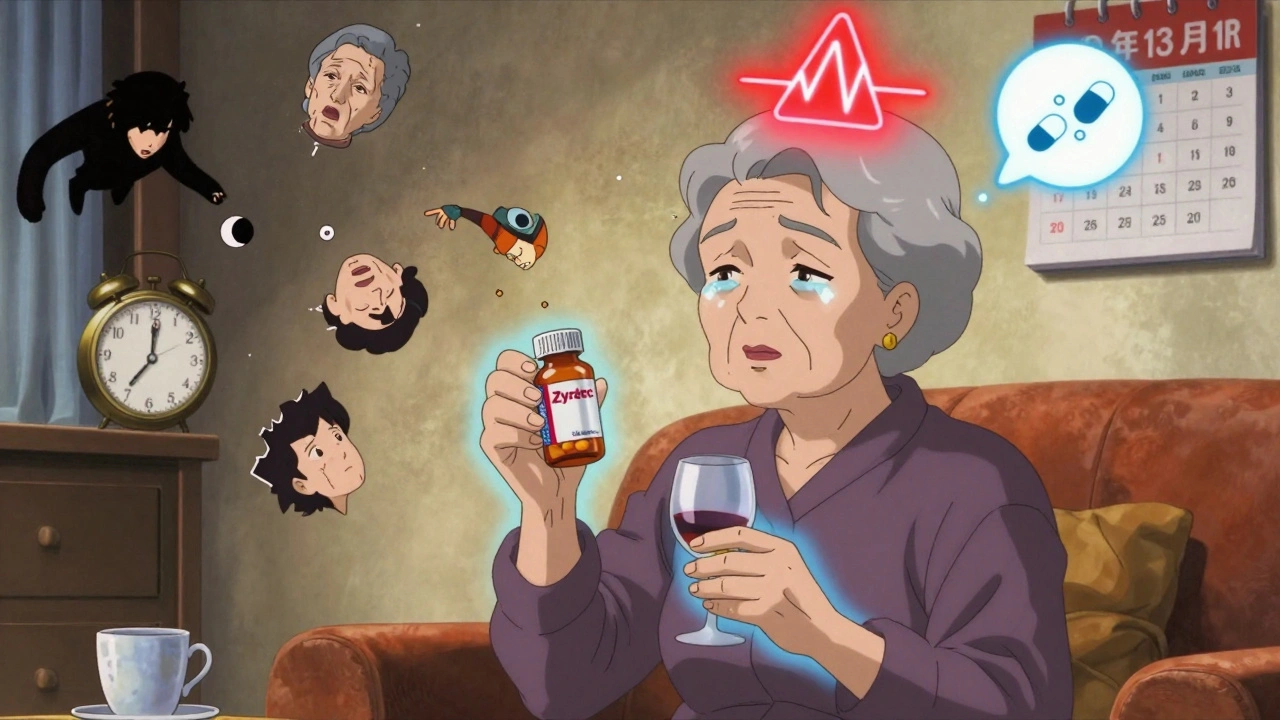
That means Zyrtec, often thought of as safe, can make you just as sleepy as Benadryl when you’ve had a glass of wine. And if you’re over 65? The risk is even worse. Older adults experience 2.3 times more CNS depression from this combo than younger people. That’s why falls, confusion, and hip fractures spike in this group.
What’s Really in Your Medicine Cabinet?
Here’s the scary part: you might not even know you’re taking a first-generation antihistamine. Diphenhydramine isn’t just in allergy pills. It’s in over 72 over-the-counter products, including:- 34 sleep aids (like Unisom and Nytol)
- 18 cold and flu remedies (like NyQuil and TheraFlu)
- 20 motion sickness tablets (like Dramamine)
So if you take a nighttime cold medicine after a drink, you’re not just having a drink and a cold pill-you’re having a drink and a sedative. And the labels? They don’t warn you. The FDA requires black box warnings on prescription antihistamines, but OTC products only say "may cause drowsiness." No mention of alcohol. No mention of how deadly this combo can be.
Real People, Real Consequences
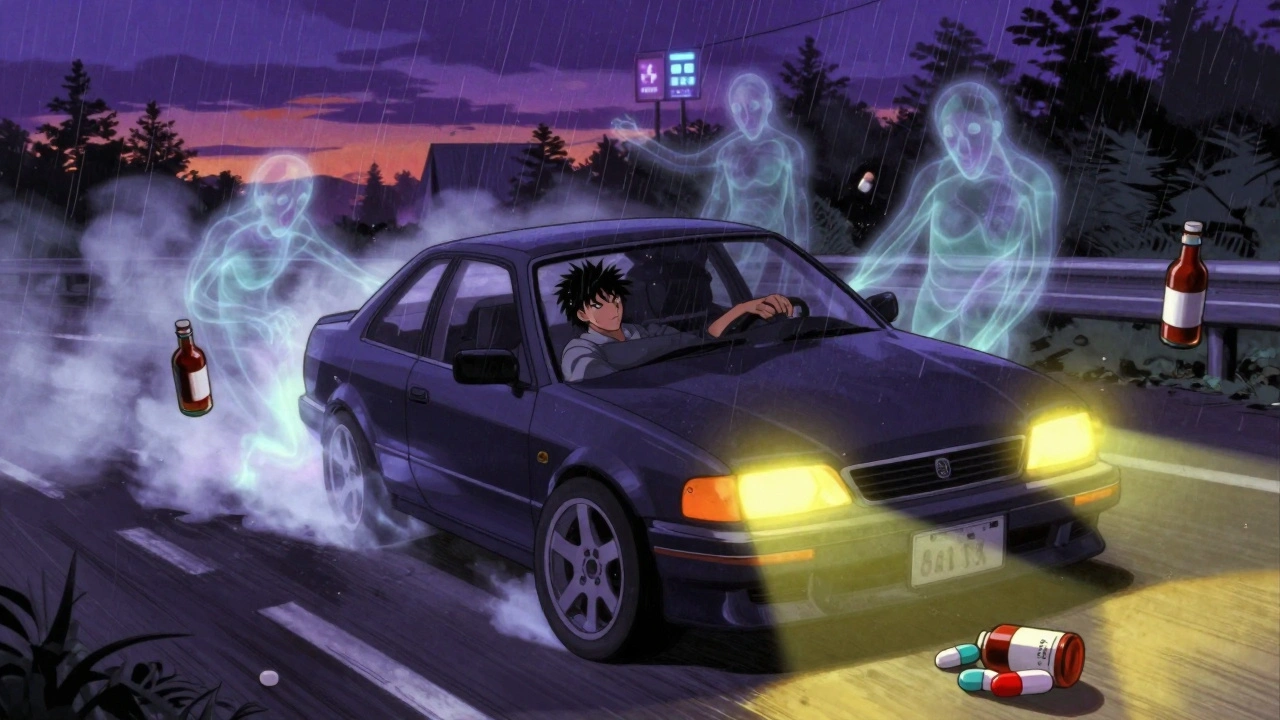
People aren’t just reading warnings-they’re living them. On Reddit’s r/Allergies, 78% of 1,245 users who mixed antihistamines with alcohol said they felt "significantly worse drowsiness" than expected. One in three reported falling asleep while driving home.On drug review sites, the stories are chilling:
- 28% of Benadryl reviewers said they "passed out unexpectedly."
- 19% said they "couldn’t wake up the next morning."
- 41% of Claritin users reported "unexpected drowsiness when having a drink."
- 37% of Zyrtec users said the same.
And for adults over 65? 53% reported confusion or memory loss after combining even small amounts of alcohol with antihistamines. That’s more than double the rate in younger adults.
How Long Should You Wait?
If you’ve taken an antihistamine and want to have a drink, how long should you wait? The answer depends on the drug:- First-generation (Benadryl, Unisom): Wait at least 12-16 hours.
- Second-generation (Claritin, Zyrtec): Wait 8-12 hours.
But here’s the catch: metabolism varies. If you’re older, overweight, have liver issues, or take other medications, your body processes these drugs slower. That means the window should be longer-not shorter. And if you’ve been drinking for hours? The alcohol lingers in your system too. The liver uses the same enzymes (CYP3A4 and CYP2D6) to break down both alcohol and antihistamines. When alcohol is present, it clogs the system, leaving antihistamines in your bloodstream 25-40% longer than normal.
What Can You Do Instead?
You don’t have to choose between managing your allergies and enjoying a drink. There are safer alternatives:- Nasal corticosteroids like Flonase or Nasacort-these are sprays, not pills. They work locally in your nose and have zero interaction with alcohol. But they take 3-7 days to reach full effect.
- Leukotriene inhibitors like Singulair-also alcohol-safe. Used for allergies and asthma, they’re taken once daily.
- Allergy shots (immunotherapy)-if you have chronic allergies, this long-term treatment reduces your need for daily meds altogether.
These options aren’t instant fixes, but they’re far safer than risking your life for a quick fix.
Why This Problem Is Getting Worse
In 2022, 61.5 million Americans used antihistamines. Sales hit $2.8 billion. And yet, a 2023 Consumer Reports survey found that 63% of users regularly drank alcohol within 12 hours of taking their allergy pill. Only 28% knew the specific risks.Emergency visits for this combination have jumped 37% since 2018. The biggest increases? Adults aged 50-64 (up 52%) and women (up 48%). Why? Because more people in these groups are managing chronic allergies, using OTC meds daily, and drinking socially. The message isn’t getting through.
Pharmaceutical companies are working on third-generation antihistamines like bilastine-used in Europe-that show almost no CNS effects even with alcohol. But they’re not approved in the U.S. yet. And even if they were, experts warn: "No antihistamine can be considered completely safe to combine with alcohol."
Can I have one drink with Zyrtec or Claritin?
Even "non-drowsy" antihistamines like Zyrtec and Claritin can cause dangerous drowsiness when mixed with alcohol. While the risk is lower than with Benadryl, studies show drowsiness rates jump from 15-20% to 40-45% with Zyrtec and from 10-15% to 30-35% with Claritin when alcohol is involved. One drink is enough to tip the balance, especially if you’re older, tired, or taking other medications.
Is it safe to take Benadryl after a night of drinking?
No. Alcohol stays in your system for hours-even after you feel sober. Taking Benadryl after drinking can cause extreme sedation, memory loss, or even respiratory depression. The liver can’t process both at once, so the antihistamine builds up to toxic levels. This combination has led to hospitalizations and deaths.
What should I do if I accidentally mixed alcohol and antihistamines?
If you feel extremely drowsy, confused, have trouble breathing, or can’t stay awake, seek emergency help immediately. Call 911. Don’t wait. Even if you feel fine, avoid driving or operating machinery for at least 12 hours. If you’re unsure, contact your pharmacist or poison control at 1-800-222-1222.
Are there any antihistamines that are truly safe with alcohol?
No antihistamine is completely safe with alcohol. Even the newest options carry some risk. The safest approach is to avoid combining them. If you need daily allergy relief and drink occasionally, switch to alcohol-safe alternatives like nasal corticosteroids (Flonase) or leukotriene blockers (Singulair). These work differently and don’t interact with alcohol.
Why do some people say they’re fine mixing alcohol and antihistamines?
Some people have faster metabolisms, lower alcohol tolerance, or take smaller doses-but that doesn’t mean it’s safe. The risk isn’t about how you feel today-it’s about what could happen the next time. One person might get away with it, but the data shows 50 million Americans are at risk. When you combine two depressants, you’re gambling with your brain’s ability to stay alert. That’s not a gamble worth taking.
Michael Bene
December 4, 2025 AT 13:02This is the kind of post that makes me want to scream at my entire family. My aunt takes Zyrtec every day and has a glass of wine with dinner. She says she's 'fine.' Fine? She nearly drove into a mailbox last month. The science here isn't just solid-it's terrifying. That 40-45% drowsiness spike with alcohol? That's not a side effect. That's a death sentence waiting for a red light.
Susan Haboustak
December 5, 2025 AT 01:21Let me be clear: if you're mixing antihistamines and alcohol, you're not just being careless-you're being selfish. You think it's just you? Nope. You're a walking liability. You could kill someone else. And don't even get me started on how the FDA lets these labels slide. It's corporate negligence dressed up as consumer freedom.
dylan dowsett
December 6, 2025 AT 19:02Wait-so you’re telling me that NyQuil isn’t just a cold remedy… it’s a sedative? And I’ve been drinking wine with it for years? Oh my god. My mom’s been doing this since 2015. She thinks it’s ‘helping her sleep.’ She doesn’t know she’s basically dosing herself with a cocktail of brain-slowing chemicals. I’m calling her right now.
Chad Kennedy
December 7, 2025 AT 20:43I’ve been taking Benadryl for years with a beer. Never had a problem. Maybe I’m just built different. People need to stop fearmongering. It’s not like I’m on a motorcycle after two shots.
Cyndy Gregoria
December 8, 2025 AT 14:17Hey, I get it-you’re scared. But don’t panic. There’s a better way. Talk to your doctor about Flonase. It’s a spray. No drowsiness. No alcohol risk. It takes a week to kick in, sure-but think of it as an investment in your safety. You’re worth more than a quick fix. You’ve got this.
Wendy Chiridza
December 9, 2025 AT 15:01The data is clear. First generation antihistamines combined with alcohol significantly increase CNS depression. Second generation are not risk free. Metabolic interference via CYP enzymes prolongs half life. Emergency visits up 37 since 2018. Labeling is inadequate. Public awareness is dangerously low
Pamela Mae Ibabao
December 11, 2025 AT 06:27Okay but like… why are we acting like this is news? I’ve been doing this since college. Everyone does it. I mean… I’ve never passed out. So maybe it’s just me? Or maybe people are just scared of everything now?
Gerald Nauschnegg
December 13, 2025 AT 03:22So if I take Claritin in the morning and have a beer at 7pm, I’m still in danger? That’s ridiculous. I’ve done that for years. I’m not falling asleep. I’m not crashing my car. You’re exaggerating. I’ve got a job. I’ve got responsibilities. I’m not some idiot.
Palanivelu Sivanathan
December 13, 2025 AT 04:08Think about it… alcohol and antihistamines… they’re both modern escapes. One numbs the soul, the other numbs the body. We’re not just mixing chemicals-we’re mixing our desire to forget. We’re not just risking drowsiness… we’re risking our humanity. The real question isn’t ‘can you drive?’ It’s ‘do you even want to wake up?’
Joanne Rencher
December 14, 2025 AT 01:28People like you are the reason we have a drug crisis. You think a blog post with percentages is gonna stop someone from having a glass of wine? Wake up. They don’t care. They’ll keep doing it. And you? You’re just feeding the fear machine. Pathetic.
Erik van Hees
December 15, 2025 AT 08:33Look, I’ve read every study on this. The 47% reaction time drop? That’s from a 2019 Johns Hopkins paper. The BAC equivalent? Valid. But here’s what nobody says: if you’re under 30, healthy, and metabolize fast, you’re probably fine. The real danger is in the elderly, the obese, the polypharmacy crowd. Stop scaring healthy people.
Cristy Magdalena
December 16, 2025 AT 12:00I took Zyrtec and had two glasses of wine last Friday. I woke up at 3am not knowing where I was. I had no memory of walking to the fridge. I thought I was having a stroke. I cried for an hour. I don’t care what the stats say. I’m never doing it again. Not because of the numbers. Because I felt like I lost myself.
Adrianna Alfano
December 16, 2025 AT 14:35Thank you for writing this. I’m 67 and I’ve been taking Benadryl for allergies and a glass of wine every night. I didn’t realize I was at risk for falls. My daughter just moved me into a one-story house because I fell twice last winter. I didn’t know the meds were part of it. I’m switching to Flonase tomorrow. You saved me.
Casey Lyn Keller
December 16, 2025 AT 14:46Did you know that the FDA doesn’t require alcohol interaction warnings on OTC meds because of lobbying? Big Pharma doesn’t want you to know. They profit more when you keep buying pills that make you sleepy so you buy more sleep aids. It’s a cycle. This isn’t an accident. It’s business.